
710 – Harnessing Youth to Build New Clubs
Harnessing Youth to Build New Clubs
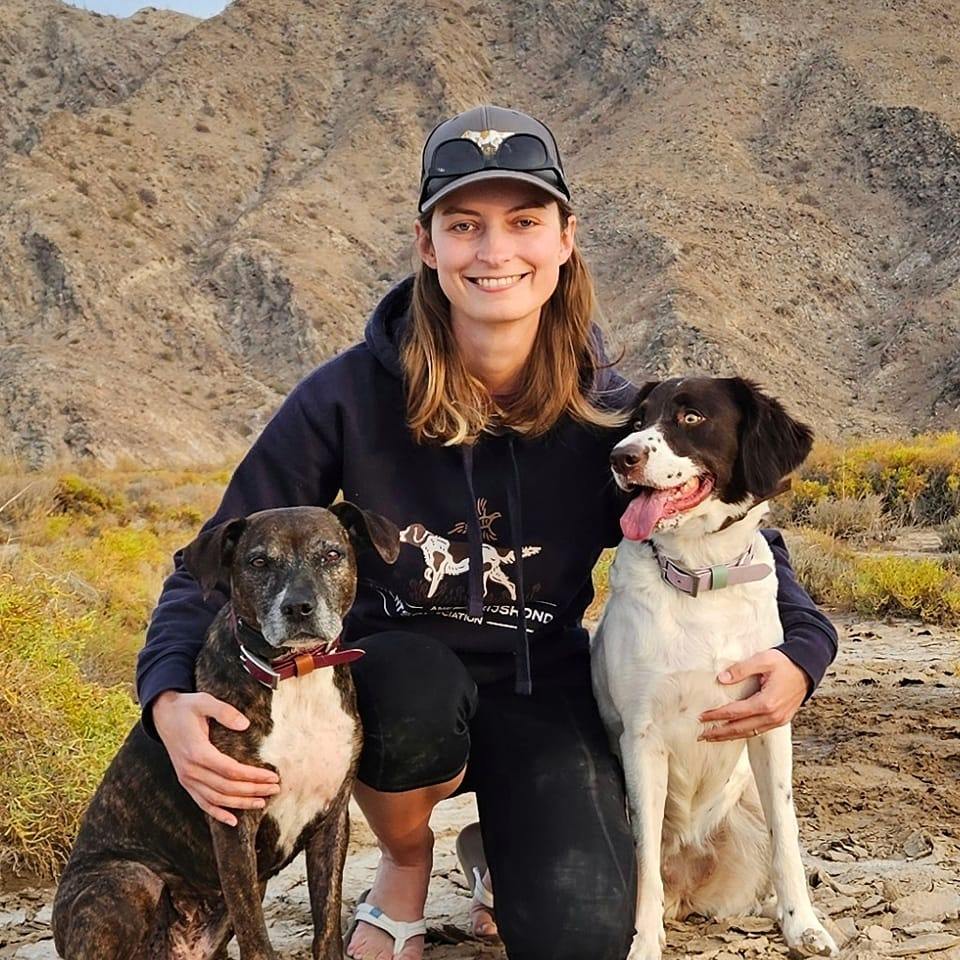
Ellie Ovrom with her Drent and her All American dog.
Host Laura Reeves is joined by Ellie Ovrom, Drentsche Patrijshond enthusiast, who has helped found two brand new clubs with just five years involved in the sport.
“As I got more interested in purebred dogs and in performance sports,” Ovrom said, “I got involved with existing clubs and organizations around me, or in the case of the breed club, the national club, and as I was getting involved, I started to realize that some of the way that things were being done was not necessarily in alignment with my values and interests.
“And not only that, but I was making connections with other folks in those organizations who felt very similarly. And rather than lean into conflict, which is I think unfortunately what ends up happening a lot in dog clubs, we realized that there’s space for all of us and we just want to enjoy the dogs.”
A project manager by trade, Ovrom noted that “a lot of the key skills of a project manager align really well with working in dog clubs or any volunteer organizations, frankly. It’s a lot of managing process and managing people. So particularly in founding two new nonprofit organizations, we had to figure out OK, what is needed, in what order and how do we do this most efficiently and most effectively and try our best to get it right the first time. We don’t always, but we try to get it right the first time, every time.
“Nobody’s getting paid for this. We’re all doing it because we love it. And but people are busy. They have lives, they have families, they have their real jobs. How do you capitalize on people’s skill sets and their passion without burning them out and building community at the same time?
“I think we’ve had things that have worked and things that have not worked, but recognizing that the intent of everybody is good is, I think the basic approach that I try to take is everyone’s doing their best or wants to do their best. How can you help people achieve that is what I try to do.”
699 – Jake Bartells on NAVHDA, Epagneul Breton and Dog Clubs
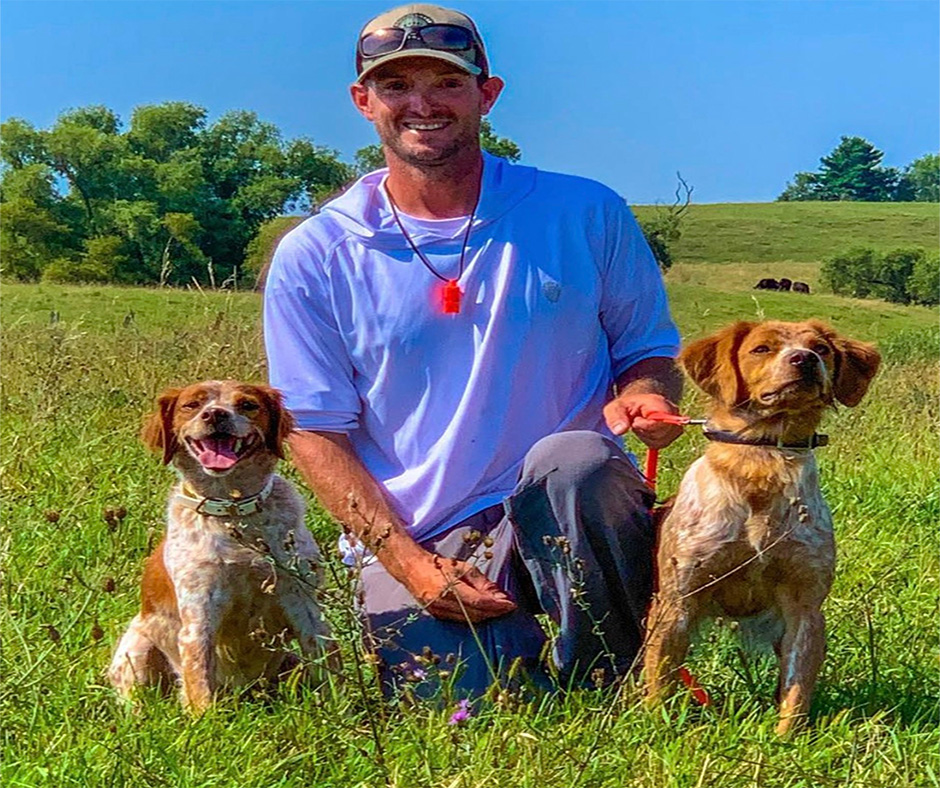
Jake Bartells on NAVHDA, Epagneul Breton and Dog Clubs
Host Laura Reeves is joined by Jake Bartells, a member of the North American Versatile Hunting Dog Association (NAVHDA) and breeder of Epagneul Breton. Their wide-ranging conversation about the inherent challenges of dog clubs is applicable to any club, of any type, anywhere.
About NAVHDA
“NAVHDA is an organization of about 10,000 members,” Bartells said. “It’s mainly a testing organization that gathers data in a registry and that’s where it houses the data is through the registry. All of the tests are done per a standard. So you’re judged against the standard and each dog tested and each member has both a handler record and then the testing record for the dog. That data in an ideal world is used by breeders to then continue and better the breeds that we recognize and it’s super useful.”
About Dog Clubs
“(It’s important) to have a complete transparent communication with (the membership). I think they deserve to know exactly where the organization’s at at all times and not have to ask for it, have it be provided and put out there. I wanna see financial strength in the organization, having money gives you resources that allows you to do more, and then just absolutely upholding our mission, mission first by all stretch. I think that’s done through building teams of great people. Nobody has to do the job alone. For a living, I project manage and I can’t build a house or build a casino or build anything else without teams and upon teams of great talented people. And with 10,000 members, we have an unbelievable amount of very talented people in very specific fields and most of which are willing to do it for the organization.
About Epagneul Breton vs Brittany
“It’s one of those things where on paper, it doesn’t look that different. When you bring two dogs out, it doesn’t take a trained eye to start picking them out at a separate dogs very quickly and especially in the way they run. You know, the French say that they should run like a pig. They should have a shorter, choppier stride that comes from being, “cobby.” They’re as tall at the withers as they are long. And so they should move in that manner that’s a bit different.
“We can have orange and white, liver and white, liver, tri-color, and then orange tri-color, and black and white. The easy distinction is they’re gonna have black nose, black lips, black eyelids, and they can have black on their heads, black toenails. So even the orange and whites are going to have black nose, black eyelids. It’s never going to look like the pink nose of an American Brittany.”
499 – Tips, Suggestions and Ideas for Growing Clubs

Tips, Suggestions and Ideas for Growing Clubs
Pure Dog Talk Patrons join in a roundtable discussion of “how do we grow our clubs.” How do we bring the energy and enthusiasm of new members and combine it with the knowledge and experience of long-term members to make something good that grows. Recorded live at Bonneville Basin Kennel Association in Farmington, Utah.
Outtakes
- “Cute kids and puppies sell newspapers. Get the media here. Get the media here talking about the great thing the dog shows are. It’s a family event. My kids are here doing this instead of off doing something sketchy.”
- Meet the breeds at the mall, Responsible Dog Ownership Days, school presentations and involving the club in the local community activities
- “Our dogs are our gifts to us and if we could only give the humans in our world the grace and the kindness and the forgiveness that our dogs give us every single day…”
- “We’re all trying our very best. If someone accidentally does something that might hurt your feelings, they didn’t do it on purpose. Be kind, say OK and go about your business. Every moment in time is not drama … everybody’s trying to do their best. I just so frustrated with the way we treat each other.
- “If you go to the club and say, ‘hey this is a great idea, you guys should do this,’ club leadership will likely balk. If you come to the club and say, ‘hey guys, I’ve got some amazing idea and I’ve got this entire six-page plan and my staff and this is how I’m going to manage it and this is what I’m going to do and I’m going to make you money while I’m at,’ the clubs be like ‘alright, go for it.’”
- “I’m hearing give grace. I’m hearing kindness. I’m hearing be willing to volunteer your time not just give other people bright ideas. I’m hearing ‘we’re not curing world peace at the dog show.’ Let’s be nice to each other. Mutual respect, participation, support, working in the community, building local communications.”
171 – New AKC Department Supports Clubs
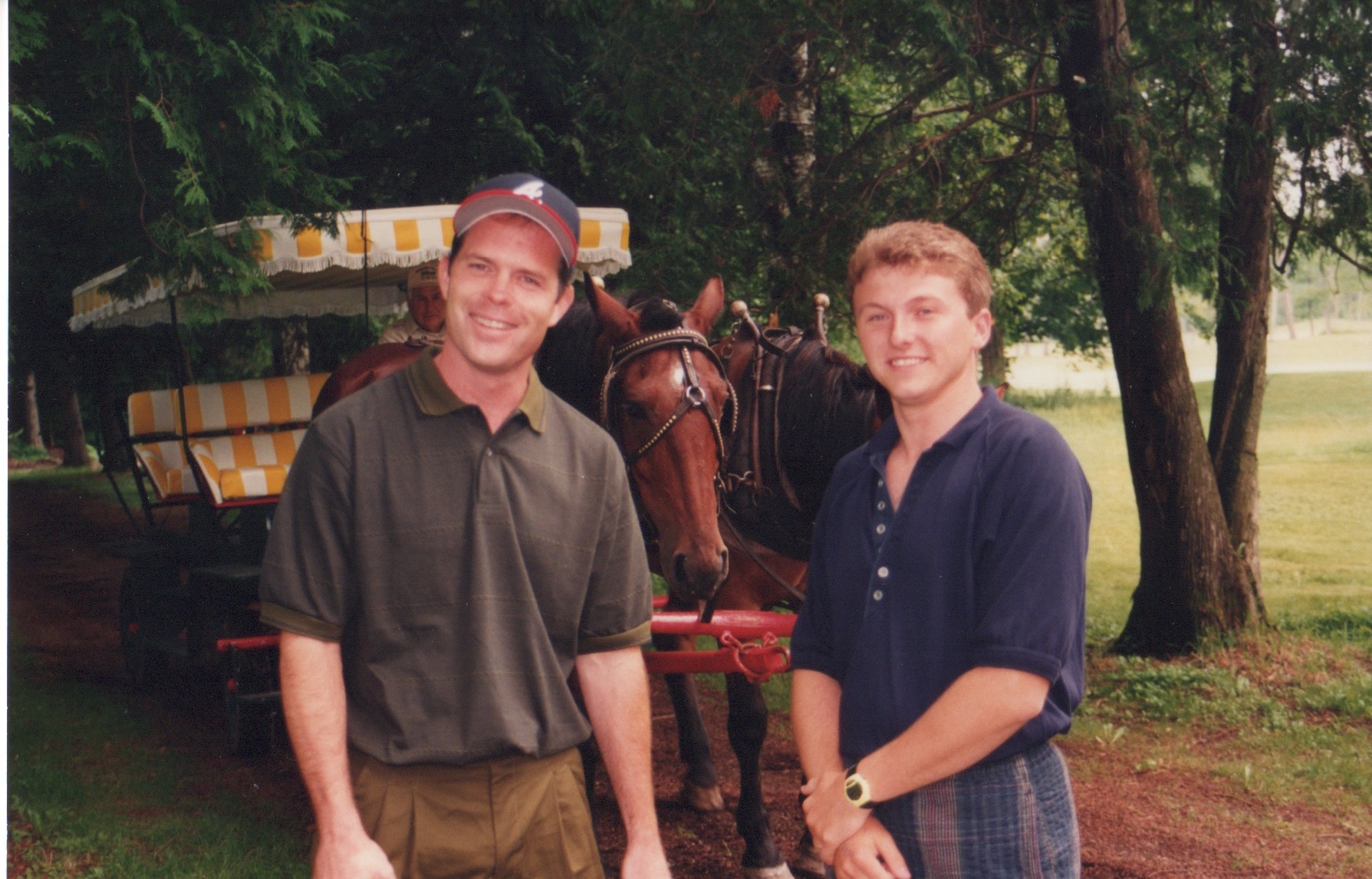
AKC Club Development Has Your Back
All breed and specialty clubs throughout the country are struggling. Members are aging, new members are few and far between. Some clubs are struggling financially, others burdened with a handful of active members. Some have even closed their doors.
AKC Club Development’s main focus is to help clubs grow. Whether that means providing ideas to recruit new members or offering guidance to organize events in a cost-effective and exhibitor-friendly manner. Success should be defined by the club, said Guy Fisher, Manager of Club Development. In a general sense, Fisher noted, success for a club is creating a fiscally strong organization with the means to support its members and community.
New AKC Department Created in 2017
Glenn Lycan, Director of Event Operations Support and Doug Ljungren, Executive Vice President of Sports and Events, looked around a couple years ago and noted that while the AKC had lots of resources for new clubs just getting started, they didn’t have a structured way to help existing clubs thrive.
“We had a goal to assist clubs to be more successful in every aspect of their development,” Lycan said. “… it’s funny you commented about how people think that the AKC is just businessmen in suits … that’s exactly how clubs looked at it, too. So, Guy’s first task, and what Guy has been excellent at, is letting clubs know that we are dog people, that we have a lot of dog experience, but we also have a lot of AKC experience and our phone is always available. We will help you. So, you hear about the glass ceiling. But AKC had a glass wall between clubs and us. And that was our whole goal for year one was to break that wall down so people felt comfortable coming to us.”
Dog people helping dog people
Fisher said he was literally born into the sport. His family raised Boxers and the Boxers raised him. An active member of all-breed and specialty clubs in Michigan, Fisher was a professional handler and his children remain active in the sport.
Lycan’s family bred Samoyeds and put him in charge of the kennel at 13 years old. He later went to work for Houston and Toddie Clark, then professional handlers and today well-respected all-breed judges. He apprenticed with them for three years, met his wife who also worked for them, and eventually began their own professional handling career in Georgia. There they were involved with their local all-breed club events and various national clubs as well.
Clubs Are the Backbone
“The clubs are our backbone of our sport,” Fisher said. “If we don’t have clubs we have nowhere to facilitate our sports and to participate. So, I always viewed it as a club needs to be a source of breeders owners owner handlers professional handlers to come together and educate their community within their territory.
“… And one of my main questions for clubs was what do you do for your membership. And a lot of clubs didn’t do anything … one of my suggestions was ‘how about trying to make it a little bit more of a fun, welcoming environment for these people’ so that they would want to … give off good positive vibes to the rest of the sport.”