
724 — Legendary Handler Andy Linton on Quality, Conditioning and Presentation
Legendary Handler Andy Linton on Quality, Conditioning and Presentation
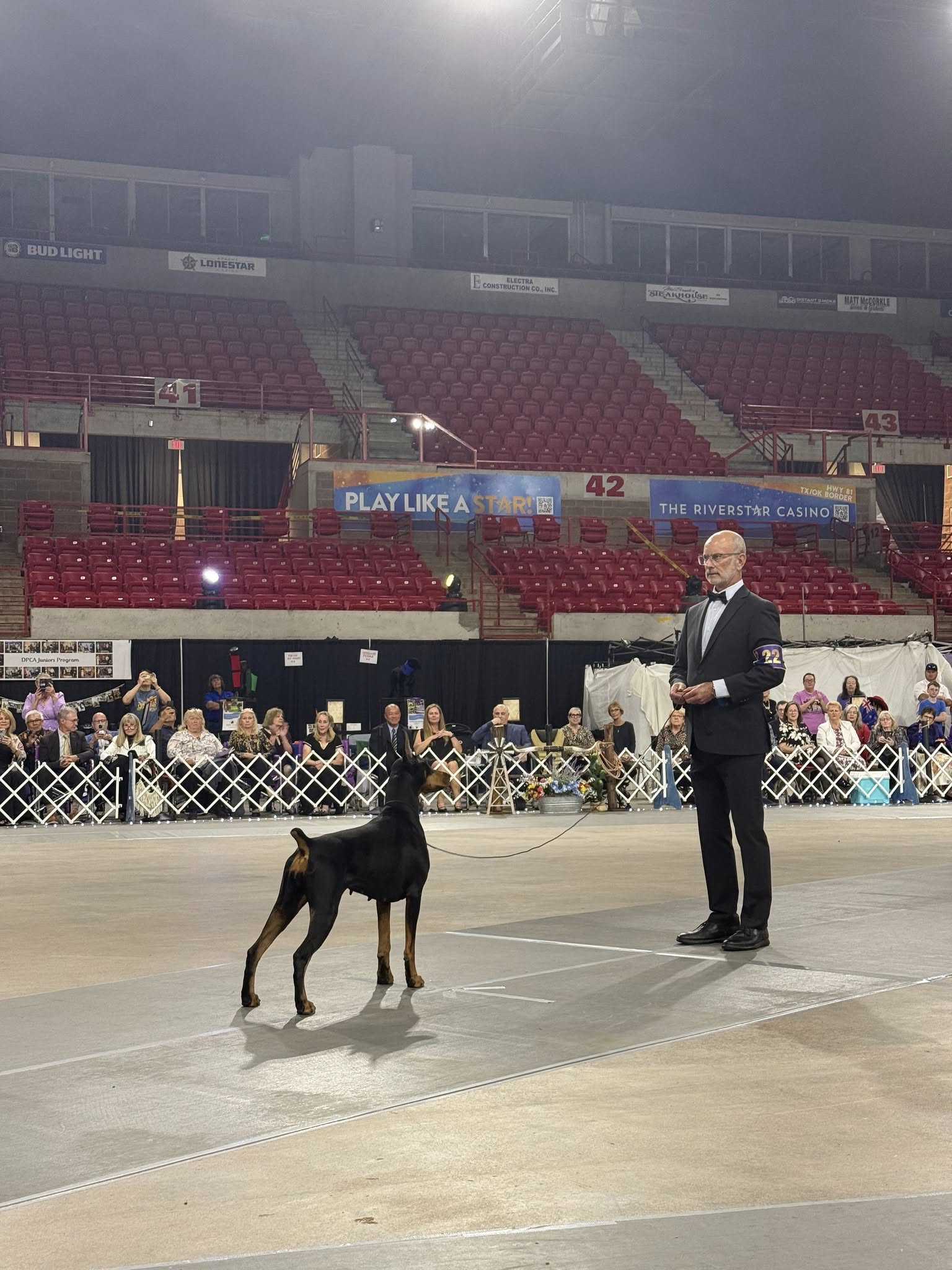
Andy and Penny shine at the DPCA Top 20.
Host Laura Reeves sits down one-on-one with legendary professional handler Andy Linton for an in-depth conversation about a lifetime in the sport. From his beginnings as a Southern California teenager more interested in surfing than dog shows, to handling some of the most iconic Best in Show winners in history — including Indy winning BIS at Westminster Kennel Club — Andy shares the experiences, lessons and mindset that shaped his extraordinary career.
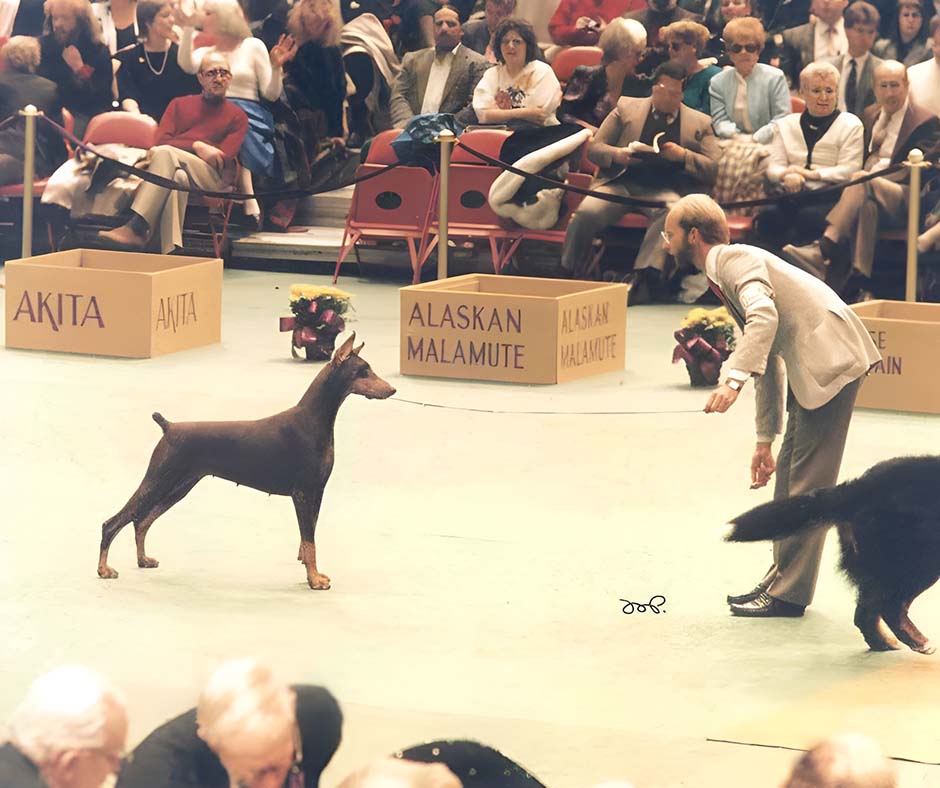
Andy walks listeners through his early days showing a Doberman in the 1970s, learning the ropes by working for top handlers and absorbing invaluable lessons from mentors like Clay Coady, Tim Brazier, Bob and Jane Forsyth, and others. He reflects on the importance of watching, learning and stealing the best ideas — not just how handlers move dogs, but why certain techniques change balance, expression and overall picture in the ring. For Andy, success has never been accidental. It’s the result of dreaming big, setting clear goals and backing those dreams with relentless effort and self-reflection.
Central to the conversation is Andy’s core philosophy of winning: quality, condition and presentation. He explains why even a modest dog can dramatically improve — or undermine — its chances depending on conditioning and handling, and why exhibitors should focus on improving their own skills rather than blaming judges or competition. Conditioning, Andy emphasizes, isn’t about one-size-fits-all roadwork, but tailoring fitness to each dog’s structure and needs while keeping them happy, healthy and enthusiastic about their job.
The discussion also dives into Andy’s trademark quiet hands and free-stacking style, emphasizing trust, simplicity and making the ring feel as relaxed as a dog waiting for a sandwich in the kitchen. He shares practical insight into situational awareness, reading judges, selling a dog’s strengths with integrity, and mastering the small details that can make all the difference at high-pressure events like Westminster.
Beyond the ring, Andy reflects on his role advising breeding programs, watching generational changes in breeds, and helping create great dogs behind the scenes. He also speaks candidly about mentorship, gratitude, and the dog show community, sharing heartfelt thoughts on kindness, legacy and staying engaged in the sport he loves. This episode is packed with timeless wisdom for breeders, owner-handlers and professionals who want to elevate their dogs — and themselves — in the world of purebred dogs.
177 — Developing An Eye For a Dog: Recorded LIVE
Developing An Eye For a Dog: Recorded LIVE
San Mateo Kennel Club invited PureDogTalk to sponsor a live expert roundtable at its all-breed show in March. Exhibitors who participated were treated to a rare opportunity to interact directly with some of the most knowledgeable people in the sport. Judges Pat Trotter, Desmond Murphy, and Ken Murray were joined by professional handler Andy Linton to address the topic of developing an eye for a dog and answer audience questions.
“Lifers” Share Their Knowledge
These folks are what we think of as “lifers” in dogs. They started young with a passion for dogs and have applied that intensity to achieving their goals as breeders, handlers, and judges. Each and every one of the panelists is a lifelong student, who possesses the noted “eye for a dog” we were discussing.
While each of the panelists brought their own perspective to the conversation, there was complete agreement that developing an eye for a dog entails focusing on and rewarding a dog’s virtues rather than picking at faults. Riffing on a quote from the well-known judge of the ‘60s, Bea Godsol, whom Trotter noted was gifted with a tremendous eye for a dog, the panelists each shared their spin.
Ken Murray – “Great dogs carry their faults well,”
Pat Trotter – “An absence of faults doesn’t guarantee virtue,”
Desi Murphy – “Great dogs blind you to their faults.”
Andy Linton agreed, noting also that, “having an eye for a dog gives you responsibility in so many ways. Do I take that dog to show? Do I put that dog up? Do I breed that dog? The more you know, the more responsible you become.”
“An eye for a dog,” according to Trotter, “is when you see one that gets your attention. It’s an arresting animal because it exudes beauty and correctness. Like a work of art.”
Trotter added wryly, “Sometimes great dogs get lost at shows where they are the right look. They’re different from the other dogs who are, shall we say, modest at best.”
Even if a person isn’t “born with it” in terms of that eye for a dog, Trotter does believe that studying and learning, and listening to the greats in a breed will allow someone to develop the skill.
Murphy qualifies that with an observation that some people are simply better at the skill than others.
“I mean there were certain subjects, if I went to school for 10 years on that subject I would never have been any good,” Murphy observed. “… judges are like dogs. You have excellent, very good, good, satisfactory and unsatisfactory.”
When an audience member asked how to know which judges have an “eye for a dog” and how to discern to whom they should show their “great dog that doesn’t look like the others,” Bill McFadden, speaking up from the gallery, noted we all need “an eye for a judge.”
Trotter summed up much of the advice with this observation, “I think one thing that helps breeders is to look at your own dogs with a jaded eye. Look at them with a jaded eye and see their shortcomings. And look at your competition through rose-colored glasses. That will help you advance in your efforts to become a better evaluator as a breeder and exhibitor.”
Please enjoy this special and valuable conversation. What it may lack in our normal audio quality, it more than makes up for in the quality of the knowledge.
Additional Q&A coverage from this event is available ONLY to our PureDogTalk Patrons! Click the button on our website to “Be My Patron on Podbean” for more information about joining the “in” crowd.
And, making a surprise Thursday appearance, Allison Foley’s Tip of the Week from the Leading Edge Dog Show Academy provides insight on dealing with stains on white dogs.