402 – Insight on the Genetics of Hairlessness in Dogs

Insight on the Genetics of Hairlessness in Dogs

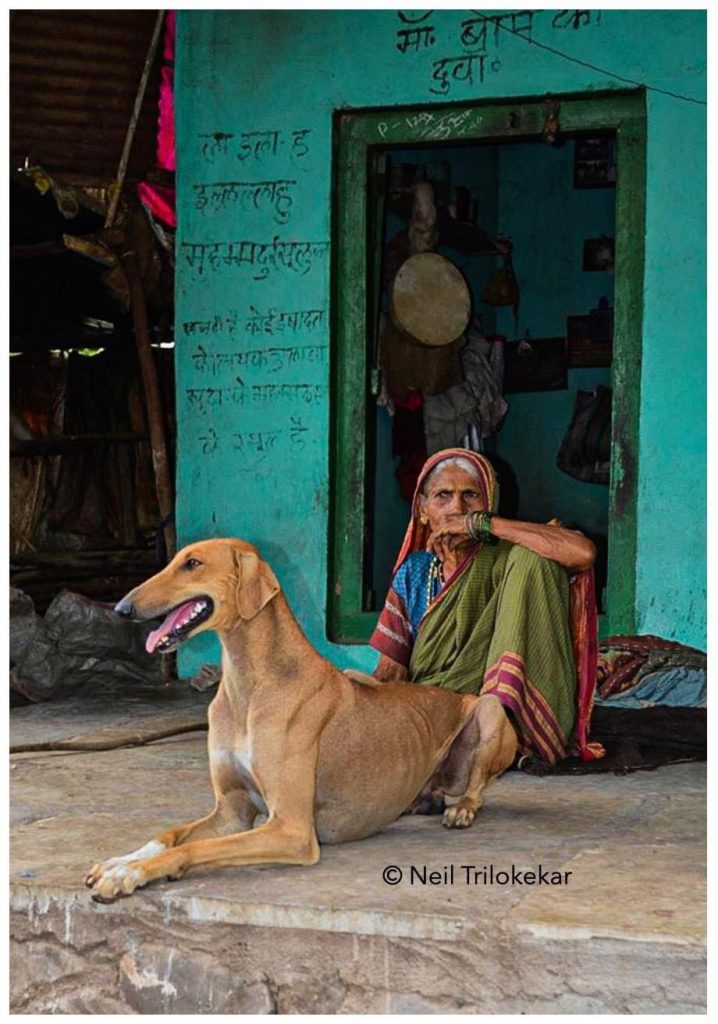
Adam Boyko, Chief science officer and co-founder of Embark, joins host Laura Reeves to talk about the Fox I3 gene, that causes hairlessness in many dog breeds.

“So it’s a gene that’s gonna be involved in what we would call ecto dermal differentiation,” Boyko said. “So it’s going to affect a lot of tissues that are in the ectoderm. Not just hair follicle formation but also things like the inner ear or the sweat glands or dentition. All of these things that are related because they’re coming from the same developmental tissue.”

“The canine genome was first sequenced in 2005, so we have a reference genome now from Tasha the boxer and this was a big $25,000,000 project,” Boyko noted.

“(Some of) my colleagues worked on it. This was before I got into dog genetics. I was graduating from Purdue with a degree in biology but I was studying butterflies at the time. So I didn’t join the dog field until after we had a genome. I switched because there’s so much more cool stuff you can do with an organism that has a genome and particularly with dogs.

“In 2008 (researchers) were able to identify the gene that’s different between dogs that are hairless and dogs that aren’t. This Fox I3 gene. The mutation itself is just this insertion of seven base pairs. Remember, the genome is like 2 1/2 billion base pairs. So that little mutation then is the difference between whether the dog has hair or doesn’t.

“One of the projects I started out with … we call the village dog project. Most of the dogs in the world aren’t purebred dogs and they’re not even mixed breed dogs the way you and I think of mixed breed dogs. They’re actually natural populations of dogs that have been around for thousands of years and probably have some really interesting biology. If you look at village dogs across the new world, you do occasionally come across dogs that carry this mutation and have the hairless phenotype. If you look at dogs that have a very, very similar sequence, so that the same genetic background but don’t have the mutation, these are the closest relatives for where the mutation occurred for dogs that don’t have the mutation. It’s actually like Alaskan Huskies and other northern dogs that are very puffy, puffy dogs, but they have DNA still in them that pre-Columbian Native American dogs had.

“Genetically you get the signature that this is a mutation that arose in the new world before European contact and this is the basis for Mexican hairlessness right so the Xolo, the Peruvian Inca Orchids, as well as the Chinese Crested.

Two copies is deadly

“This mutation is actually lethal. A dog with two copies of the mutation dies in utero. So, every hairless dog has one copy of the broken Fox I3 gene and one good copy of the Fox I3 gene.

“The “powder puff” have better dentition. This Fox I3 mutation not only effects the development of hair follicles and interrupts them throughout most of the body, but the dentition is also affected. The teeth, both the deciduous teeth and the permanent teeth, generally you don’t see as many developed, they’re not as well formed, they tend to be more conical, they’re a little more tusk like, they point out a bit more. These are all kind of developmental defects. The powder puff doesn’t have these defects, not because it has a better Fox I3 gene that you want to breed in, it just doesn’t have the broken one.”

Evolutionary purpose of hairless dogs

“I think ultimately the purpose is that people really like unique and distinctive dogs,” Boyko said. “You have this mutation which has a dominant effect, so as soon as it arose that dog was hairless. And it arose in an environment where people thought that this was a sacred dog or a dog that they wanted to have around.”

From XCA:

 “A uniquely New World breed, the Xoloitzcuintli stands out for being hairless, although there is a coated variety. The Xoloitzcuintli was one of the earliest breeds to be added to the American Kennel Club studbook – in 1887 under the name “Mexican Hairless”. This is a robust and healthy breed that evolved in the primitive jungles of Colima, Mexico. Archaeological evidence has been found in the tombs of the Colima, Mayan, Toltec, Zapoteca, and Aztec Indians dating the breed to over 3500 years ago. Long regarded as guardians and protectors, the indigenous peoples believed that the Xolo would safeguard the home from evil spirits as well as intruders. In ancient times the Xolos were often sacrificed and then buried with their owners to act as guide to the soul on its journey to the underworld. These dogs were considered a great delicacy, and were consumed for sacrificial ceremonies – including marriages and funerals.

The name Xoloitzcuintli (pronounced “sho-low-itz-queent-li”) is derived from the name of the Aztec god Xolotl and Itzcuintli, the Aztec word for dog. (Xolo owners are frequently stopped and find themselves explaining not just the breed – but teaching people how to pronounce the name!) Indigenous peoples believed them to have healing powers and they were thought to bring relief from a vast variety of ailments. That belief still survives today in the rural parts of Mexico. One of the reasons being that they feel warm to the touch – and can actually act as a “hot water bottle”.”

“Gene mutations happen accidentally,” Boyko said. “They happen randomly. Then they are perpetuated because they serve a purpose evolutionarily. Because dogs are domesticated and people can selectively breed them and selectively protect them and provision them, you’ll get mutations like this that really would disappear rather quickly if it happened in a wild population. If you had a hairless Wolf that didn’t have good teeth, it wouldn’t last long. It’s not going to survive to adulthood and reproduce.”

Be sure to check back next week for our conversation with Xolo breeders and enthusiasts.

400 – In the Midst of Chaos, a Whiff of Sanity

Episode 400 – In the Midst of Chaos, a Whiff of Sanity

Welcome to our annual summer tradition of noting this benchmark. Pure Dog Talk has been downloaded 700 THOUSAND times! Eek…

Plague, Protests, Locusts ….

It’s the end of the world as we know it… Or not. Or sort of.

The last couple years this “celebration” pod was all about getting ready for the summer shows. This year has been hard. A few shows are attempting to go forward, but statistically it’s a small number compared to the ones that are cancelled. I know far too many people who are struggling — mentally, emotionally, financially. I think it’s important to note that there were NO dog shows held for years during WWII… Our sport survived that and it will survive this. Perhaps it will look different.

Perhaps we’ll pick up new tools, new attitudes and new approaches, but our passion for purebred dogs, our friendships, our joy in the anticipation of a new litter, our love of the beauty, predictability and plain companionship of our dogs isn’t diminished by our current challenges.

And while the world seems completely unbound and our lives turned upside down at the blink of an eye, here’s my hope for us. That we can walk away from what divides us … that politics or socio-economic status or race, creed or religion will not be allowed to define us. That our common passion, our common decency and our common sense will prevail.

That the diverse, vibrant group that is OUR tribe can rise above, can transcend the rancor and division and roiling fear and bitterness that is sweeping the country and even the world. That we can overcome and improvise, gut it out and get up again, tap the deep well of passion and apply our staggering reserves of knowledge to moving forward.

In support of this mission, here’s what we’re doing here at Pure Dog Talk:

  • Cyber Sweepstakes –
  • PureDogTalk Fund,
  • Videos available for everyone to watch as a learning tool,
  • Critiques from judges, etc
  • Shopping Tab on the website
  • Archived episodes on the website
  • Patrons –
  • After Dark sessions,
  • PDTU YouTube link
  • Sponsors

Pollyanna thoughts, pondering observations and puppy reality checks

With that I leave you with these two “throwback Thursday” items… columns written in what feels like another world, another time and yet, timeless…

Because our TRIBE is family. And family IS what matters…

Blest Be The Ties That Bind

I’m sitting here in my office on a cold, grey Oregon morning while a GWP puppy slams her bone around on the concrete floor, jumping up and down off the blanket draped leather recliner.

This puppy represents the sixth generation of a direct line back to my foundation bitch, who I co-owned with my mom. But more than that, she is the living embodiment of 30 years of friendship and partnership with Mom in breeding dogs. A lifestyle and journey represented for hundreds of us by the AKC Breeder of the Year Award given Sunday to mother-daughter team Gwen Demilta and Carissa Demilta Shimpeno.

I don’t know these women personally, but I expect their story is a lot like ours and so many others.

It was 3 a.m. on a miserable December morning in 1996. I was in Washington watching a bitch try to crash after a C-section — the first litter I’d whelped on my own. It was 6 a.m. in New Hampshire, where Mom had just lost a puppy from her umpteenth litter, and in a couple hours would send the babies’ great grandmother to the Rainbow Bridge.

I still get weepy remembering that horrible phone call. We were consoling each other, brainstorming solutions, crying and trying to laugh. Our final conclusion was that we should take up selling pencils on a street corner in Hawaii. That breeding dogs was just too hard.

That was 18 years ago, to the day. The intervening time has brought us to even darker low points, and to some brilliant, sparkling, spectacular highs. More than a dozen litters for each of us. Producing champions, Best in Show winners, top dogs, history making dogs. All done hand in hand, even when we were physically far apart.

At its core, this is what the sport means to me. Family. Friendship. A lifetime of passion.

For every one of the deservedly famous families in the spotlight, there are several dozen more working quietly in the wings and creating their own legacies. No matter how large or small in terms of the big stages of the sport, these folks are making an impact on their chosen breeds. And, more importantly, forging unbreakable bonds with the strength to keep going when it would seem impossible.

As our parents and mentors age, we watch with conflicting emotions of pride and exasperation as they continue breeding, doing work they shouldn’t and shouldn’t be able to do. And yet, for many of them, this — the dogs, the hopes, the dreams — is quite simply what keeps them getting out of bed each day.

Those of us fortunate enough to be given the gift of mentorship from these breeders are honor-bound to return to them the respect and the credit they have earned over decades of literal blood, sweat and tears. Their hands may not grip as well, their knees and backs might not be as strong, but their knowledge, imagination and experience flow through the veins of each animal in the pedigree.

Next week, I will spend yet another Christmas Eve whelping puppies with my mom. The gifts we share don’t have any ribbons or bows, wrapping paper or glitter, but they are far more precious than silver and gold.

And, so, a toast. To the families that ensure this sport endures. And the love that keeps it strong.

As always, this is JMHO.

As the Wheels Turn from December 2014….

Less than year after I wrote this, my mom passed away…

Treasure what you have each day. If this current disaster has taught us NOTHING ELSE, it should certainly have permanently ingrained in us gratitude for what we have today… because literally tomorrow it may be gone.

Peace out. Namaste.

BONUS TRACK: In a World Gone Mad….

399 – Breeders Part 2: Family, Friends and Mapping a Journey

Breeders Part 2: Family, Friends and Mapping a Journey

Top Breeders discuss building a family of dogs with small numbers and defined goals.

Wendy Paquette, Amanda Kelly and Chris Heartz return to finish their conversation about building a family of dogs, using the standard as a driver and mapping out a plan.

Wendy: “What I’ve done over the years is lease males from other breeders. I finished (the dogs) for them in Canada and kept them for about six months to a year. I bred 6-10 bitches to that same dog. So, what I did was, I could tell whether there was consistency or not. And I would keep one or two out of every litter and send the dog back home and go from there with the offspring.

“So then, I had a basis with one dog being dominant and if I felt that dominant dog was a great producer consistently, then I doubled on it. But if it wasn’t, oh well, I had bunch of pets that year.

“The Breeders that just breed to the dog next door or the dog in the next state or whatever don’t have a clue what they’re producing. They just keep the most pretty marked puppy that has an attitude then they wonder why they’re not getting anywhere. Well they don’t have any idea where those dogs came from to begin with. They have no foresight.

Health and welfare

Chris: “The health of the breed is everything if you want it to continue. We’re not preservation breeders if we say it doesn’t matter about the teeth (for example), they’re not mentioned in our standard. Well maybe it does matter. And so I think, just by seeing what is available in the rest of the world and how other breeders approach your breed and what they got to show for that is the best education in the world. And to just sit at home and say this is how we’ve always done it. It’s not good enough.”

All in the family

Amanda: “I loved Wendy’s discussion about building a breeding program and having the ability to try different things and having maybe a critical mass of dogs. One of the things I think a lot of people in today’s breeding world struggle with is not having the ability to have that many dogs. For whatever reasons they live in the suburbs or they just can’t keep that many dogs or whatever. Chris gave me some really helpful advice and she talked about working with other breeders in a family.

Chris: “What we really, really are passionate about is, if we can’t sell you a dog and we love this person because they have the same passion and the same commitment to the same type of dog that we have … these are people that dedicated their lives to breeding better dogs … we say we can’t sell you a dog but we can lease you a dog. So our males have way more miles on them than I do.

“All we can give as our gift is our dogs. (We) will share them … with like-minded people and the reason is selfish. Because those people will use that dog and those puppies will have puppies. (I)n the third generation we will see something we love. We then ask them to do the same thing for us and we borrow that dog back and we incorporate … into our breeding program and they just click.”

Developing a plan

Amanda: “It’s about having access to a larger gene pool and it’s about having access to a larger number of dogs. I think for newer breeders (it’s) about developing an eye. You know if you are in a breed where there’s lower numbers, or whatever the case may be, developing your eye can sometimes be a difficult thing. You just see the ones that are yours and maybe go (to) the national once a year, look at pictures on Facebook. But that’s not the same thing as looking at puppies and evaluating and sharing information about what worked and what didn’t work and the trial and error pieces of it that Wendy talked about. When you have great friends, you can share in their journey as well as in yours. And learn as much from what they’ve done and what’s worked for them.

Chris: “You can’t drive to Halifax unless you have a map if you’ve not been there before. It’s no different in breeding dogs. All you need is a plan. If all you see before you is what exists how can you go any further or breed any better.”

Wendy: “We all interpret the standard differently. I think what gets lost in the shuffle is breeders not recognizing quality in other people’s dogs. And that has to be a priority. We all take our own dogs home at night and we all love our dogs. We all have a plan. Whether or not it’s their plan is their problem not mine.”

398 – Getting Under the Skin: Demodex and other Mites

Getting Under the Skin: Demodex and other Mites

Dr. Marty Greer talks about Demodex, demodectic mange and other skin mites that can cause problems in dogs.

Slides of demodex mites from www.capcvet.org

“We can start with the history of Demodex, which used to be very serious. When a dog was diagnosed with Demodex back in the day, it was sometimes a death sentence,” Greer said.

“Over the years we’ve seen a huge change in the medications that we have as an option to treat Demodex with and it is no longer the scary, awful death sentence it once was. I still think we need to talk about Demodex as far as clinical signs and what that means for a breeding program and what it means for your dog’s health.

“We know that it is an autoimmune mediated disease. We believe it’s a B cell deficiency that the immune system doesn’t have actively functioning or well enough functioning B cells in some of these patients. Every single dog at birth is exposed to Demodex as soon as it’s exposed to his mother skin …. It is part of the normal flora, in very small numbers. Our immune system typically keeps it under control and if your immune system isn’t doing what it should be doing then that’s when the numbers are might increase to the point that you have lesions.

“There’s basically two categories of Demodex. There’s localized Demodex and generalized. So localized is exactly what you describe: the baby puppy with a little hair loss under their eye, maybe a couple of patches someplace on their leg or their trunk. Just a little patch of hair loss. It’s not uncomfortable, it doesn’t look angry. It’s just this little patch that you don’t see hair, frequently around the eyes but not exclusively there. A lot of people come in and they’re like ‘Oh yeah well he’s just been fighting with his brother it’s no big deal’ and you do a skin scraping and you find 30 Demodex. Well guess what? You have Demodex, you don’t just have a puppy fighting with his brother. So the first thing we will always want to do when we see a skin lesion on a young dog is to do a skin scraping.

“I think it’s important that you have a diagnosis. Especially if you have a breeding program and you need to know whether you have Demodex in your life. So I think we shouldn’t blow off doing skin scrapings. Demodex show up pretty readily … there’s a number of different kinds of mites that we can see in dogs and cats and Demodex is one of the easiest ones to find on the skin scraping.

“Generalized demodex can happen in puppies but it can also happen in adult dogs. If they are immunosuppressed. If they’ve got an immune system disorder. If they’ve been on too much Prednisone or other kinds of cortisone. Is thier nutrition hasn’t been good. If they’ve been on chemotherapy. If they’ve recently been in heat, they have cancer, if they have diabetes.

“Localized Demodex, it appears, has a genetic component. We see it really commonly in dogs like with Chinese shar-pei. But we see no indication, there’s no good research that shows generalized Demodex is genetic.”

Find more information on demodex here.

397 — Planning Your “Family” of Dogs: Style and Health

Planning Your “Family” of Dogs: Style and Health

Our topic is breeding. With an emphasis on planning your family of dogs. The question: is consistency of style more important than consistency of health and/or quality? How do you get to your desired goals?

Today’s guests are Amanda Kelly, Wendy Paquette and Chris Heartz.

Wendy: “Coming from a background of Shih tzu, that were only recognized in United States in 1969, I didn’t have much choice when I first started my breeding program. Living in northern Ontario, the only way I could buy a female was to import two from England ’cause they were just not available. Luckily I came across Luc Boileau in Montreal who was showing English imported dogs at the time. So I was able to take my English import and breed it to one of Luc’s dogs. But that left me sort of in a quandary because I had nowhere else to go after that. So I basically started out breeding type to type.

“Consistency of type was a goal, but health and welfare, to me, is a major factor. If you don’t have health and welfare you don’t have quality and type either.”


396 – “Doggedly” Pursuing Preservation of Purebred Dogs

“Doggedly” Pursuing Preservation of Purebred Dogs

Host Laura Reeves and Denise Flaim, author of “Doggedly: Musings on the Breeding, Judging and P

Author, Editor, Breeder, Judge Denise Flaim.

reservation of Purebred Dogs,” cover a lot of ground in their own musings on these topics.

What do respect, breed standards, judging, cooking, jazz music, period furniture, museums have in common? Listen in to this wide-ranging and challenging discussion.

“It’s a real kind of buffet of ideas about dogs,” Flaim said. “A lot of times we talk about individual dogs and a lot of times we talk about very specific surface things but not as often as I would like do we talk about the ideas and the thoughts behind them.

The thing I really am most proud about this book is, if you’re somebody who really is into dogs in more than a surface way, Pat Trotter said that she read it, she’s up all night. So I think of it as the book that keeps Pat Trotter awake at night.”

“Doggedly” is available at www.revodanapublishing.com. Use the code PUREDOGTALK for $5 off on on any book.


393 – Gayle Watkins on Educating Breeders AND Buyers

Gayle Watkins on Educating Breeders AND Buyers

Dr. Gayle Watkins of Avidog and host Laura Reeves talk about the importance of educating both breeders and puppy buyers.

“We have to take step back,” Watkins said, “and realize how complicated our world is and how UNobvious it is, to even smart people that aren’t engaged with us, and help people understand and honestly for us to distinguish what really is important and what isn’t important…

“Let’s say you would like a 50- to 60-pound active sporting breed. You don’t care about color and what pops up (in an online search)? Both the German Wirehaired Pointer and the Golden Retriever, which is so wrong,” Watkins said. “So, finding a way to guide people in a more sophisticated way, in a way that you understand and I understand, the buyer doesn’t understand. They don’t know because they think of (dogs) as cars. They just come in different colors … but those of us who breed know that those cars are very, very different. There’s a whole big difference between a Maserati and a Volkswagen Beetle. (Even though they are the) same color and about the same size and they can only carry two passengers.”

In order to facilitate outreach and education of both ends of the dog purchase, breeders and buyers, Watkins has joined forces with Good Dog, a young company focused on educating the public and supporting dog breeders.

“We need people breeding dogs,” Watkins added. “So, if we have people who are interested in breeding dogs and doing it perhaps not to the level we would like to see, what’s better? Run them out or raise them up?

“We have to find a way to engage people more in producing quality pet dogs. The hobby breeders are going to continue in their sport and they’re going to continue to get championships and things like that, but we need more people who are trying to produce lovely pets…”

With an estimated 8-9 million replacement dogs needed just in the U.S. annually, as previous guests on Pure Dog Talk have noted, hobby breeders simply cannot meet the demand.

“How do we find those breeders, develop those breeders, lift those breeders up so we can keep playing the games that we love to play,” Watkins asks? “Because we’re not going to be able to, in my opinion, if we don’t change something. The laws, the legislatures, the government… the animal rights activists, they’re pretty successful now with adopt, don’t shop. We have got to find a way to fight them.

“I strongly believe we cannot fight animal rights if we divide each other. And boy we’re good at dividing. There’s got to be a bigger voice and I think that voice needs to be young, technologically sophisticated, and able to make enough money to fight for us. In the world that we live in, in purebred dogs, making money is anathema… and that has not gotten us to a very good place in defending our right to breed.

“I think what we did when we were attacked by the animal rights people is we said ‘oh we don’t make money doing this.’ That became our defense. That became our value. In doing that, it sets us up for failure on so many levels. It costs a lot of money to raise good puppies. If we don’t have the money to do our job well, now we’re opening ourselves up to attack from that perspective. (I think) we didn’t have the confidence or we didn’t have the backing or we didn’t have the organization to say ‘hey, you know, Mercedes makes a really nice car.’ It’s not that you can’t make money and do a great job. You can do both of those things. But if you make a puppy into a commodity, where one is the same as the other, right now you’re going to run into a problem. So, I think that value is one we have to overcome and then we have got to figure out a way to open our eyes to what’s changed in the world.”

Amongst the very first episodes on Pure Dog Talk were interviews with Watkins on puppy whelping and raising. These remain some of our most popular episodes.

Early Pure Dog Talk interviews with Gayle Watkins:

https://puredogtalk.com/podcast/11-dr-gayle-watkins-nutrition-of-the-dam-canine-nomograph-and-puppy-immunity-2/

https://puredogtalk.com/11-dr-gayle-watkins-nutrition-dam-canine-nomographs/

https://puredogtalk.com/podcast/14-dr-gayle-watkins-2-breeders-guide-to-neonatal-puppies-2/

https://puredogtalk.com/14-friday-fun-dr-gayle-watkins-2-breeders-guide-neonatal-period-puppies/

https://puredogtalk.com/podcast/17-dr-gayle-watkins-transition-period-in-puppies-part-3-2/

https://puredogtalk.com/17-dr-gayle-watkins-transition-period-stimulation-puppies-part-3/

https://puredogtalk.com/podcast/20-bomb-proof-your-puppy-dr-gayle-watkins-4-2/

https://puredogtalk.com/20-gayle-watkins-bombproof-puppy-sensitive-period/