

Posts by Laura Reeves
352 – Scott Sommer: Work Hard and Never Stop Trying
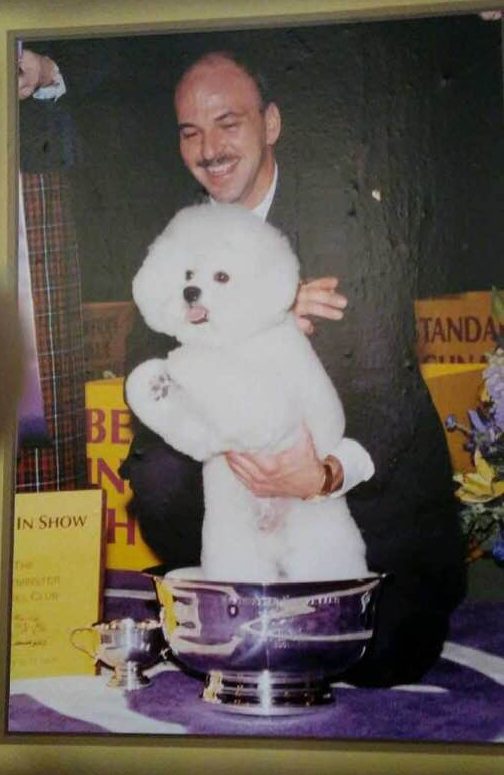
Scott Sommer: Work Hard and Never Stop Trying
Scott Sommer, one of only a handful of people to show multiple dogs to Best in Show at Westminster Kennel Club, offers his best advice for success.
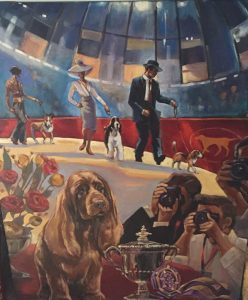 Both JR, the Bichon Frise and Stump, the Sussex Spaniel were surprise, dark horse winners at the Garden in their respective years. JR won under Dorothy MacDonald, defeating Mick, the incomparable Kerry Blue Terrier, handled by Bill McFadden, in a match up of Titans in the dog world. Stump was the oldest dog to win the coveted award. He came out of retirement to celebrate surviving a nearly tragic illness, winning under Sari Tietjen, the roar of the Madison Square Garden crowd ringing in Sommer’s ears.
Sommer’s family bred smooth fox terriers. In fact, his mother sold legendary dog man Bobby Fisher his first show dog. Sommer showed his first dog at five years old and was hooked.
He later apprenticed for Bob and Jane Forsyth. On his 16th birthday, Sommer moved to Houston and went to work for Michael Kemp.
Best advice
His best advice? “Work hard and never stop trying. This is not something you can learn overnight. Work for it and you will get rewarded.”
“I think the initial steps are taking care of the dogs, cleaning them, feeding them, from there go forward,” Sommer said.
Top dogs
JR was the Number One ranked dog in country in 2001. But Sommer said he’d never shown the dog to MacDonald before that Best in Show lineup.
“How she decided between JR & Mick I’ll never know,” Sommer said. “I fully expected the Kerry to win. When she said ‘Bichon,’ I just ran…
“JR was a great show dog. He just never let down. It could be hot, cold, wet, it didn’t matter. He was so dependable. When you show a dog at that level that is so important,” Sommer added.
Both JR and Stump lived out their lives with Sommer. They were inseparable best friends and died a week apart.
Run!
Sommer’s best recommendations for the Garden include making sure large breed dogs have boots so the salt on the streets doesn’t hurt their feet.
“Go in with all the confidence in the world, hope and pray, and do the best job you can,” Sommer said. “If (the judge) points at you, RUN!
351 – Attitude of Gratitude at the Holidays

Attitude of Gratitude at the Holidays
Merry Christmas, Happy Hanukkah, blessed holy days, praise the universe for Winter Solstice and a joyous new year to one and all. As we celebrate the fourth Pure Dog Talk Christmas, I am focused on an Attitude of gratitude.
Number one
Gratitude to my listeners who encourage me, share the love, provide GREAT ideas and support the show financially through our Patrons program. I am so grateful that you all take the time to listen in to the incredible conversations I am so lucky to have. We surpassed a half million downloads on Thanksgiving day this year, on the three year anniversary of our debut episode. And our audience and listernership is growing by leaps and bounds every day. Please, continue to share the show, bring people to the table who might enjoy our “talks.” And, absolutely, give me your ideas. I can’t swear I’ll get to every single one immediately, but they are ALL on a LOOOOOONG list of great topics for upcoming shows.
Number two
Gratitude to my guests. I am not kidding when I say I am the luckiest girl alive. I get to talk to ALL of the coolest people in dogs. And, after 40 years of grooming, training, handling, now judging, I literally learn something from EVERY single episode. My guests give freely of their time, their experience, their accumulated DECADES of wisdom and offer YOU the listener an unbelievable platform on which to gather knowledge.
Number three
Gratitude to my sponsors. These corporations have made a conscious decision to reach out to the purebred dog community, to support us, our education, our goals, ambitions and dreams. Trupanion and, for the first time, (drumrollllll) announcing our brand new sponsor Embark, have committed not just money but dedication to the purebred dog fancier that is admirable, and entirely worthy of your business. I am a firm believer that we support those companies who support us. Without these amazing companies, Pure Dog Talk would not exist. And that’s a fact. Check out Trupanion’s Breeder Support program and breeding rider. Investigate Embark’s DNA genetic testing. I cannot say enough about Trupanion and Embark and their willingness to invest in YOUR future.
I MUST also shoutout to the Dog Show Superintendent’s Association which was the very FIRST supporter that stepped up and said “YES, Pure Dog Talk is exactly the type of education and mentorship program our sport needs. Here, let us help you.” ALWAYS remember to stop by the superintendent’s desk and give them a shout out for their support of Pure Dog Talk. Our advertisers and partners, from Show Dog Prep School to Leading Edge Dog Show Academy to local clubs, are also due my unending gratitude for their confidence in our platform.
Number four
Moving on, I am and we ALL should be offering our undying gratitude to the Breeders who came before us. We are, without exception, building on the shoulders of those who came before. In my own case, Ray and Lyn Calkins, Cascade Wirehairs, Mildred Revell, Weidenhugel Wirehairs, Bernee Brawn, Justa GWP, Silke Alberts Cadenberg GWP, and the additional mentors who took the time to help me like GWPCA founding member Genevieve Capstaff, Pat Laurans, Joy Brewster, Judy Cheshire, Laura Myles, Doug Ljungren and many more. If you haven’t done it already, make that same list. Send them a little note this Christmas and say thank you. Thank you for the help, the guidance, the information, the direction, the encouragement, the criticism and the hard work YOU have done to bring the breed to the place it is today.
We NEED Dog Breeders
So, now my stump speech…. When my family & I got involved in purebred dogs 40+ years ago, the dog show was chock a block with, you guessed it, dog breeders. Today, dog breeders at the dog show are phantoms, rarely seen. Today, we have exhibitors. And Exhibitors, dog owners, are HUGELY important. BUT, and yes, there is a BUT. We NEED dog Breeders!!!! The Sport desperately needs good breeders of good dogs in order for it to continue to thrive. Please contemplate that instead of adding a platinum grand champion to your bitch, instead you visit with a breeder or mentor in your breed and consider breeding a litter of healthy, well adjusted, beautiful companions for the world to see, of creating a future family of dogs that will bring love and joy to their families for decades to come.
Spirit of Christmas
Meanwhile, I encourage everyone out there in listener land, of any religion or lack thereof, to Carry the Christmas spirit into the new decade … giving, gratitude, welcoming, joy, peace and goodwill to all
Giving
Encourage a new person. Sell them a good dog. Encourage them to breed it with your mentoring. Remember, when we give with a full heart, we expect nothing in return. So when that stunning show puppy from that incredibly special litter is spay against your contract, stop eating your heart out. You sold that puppy, but you gave the gift of love for a lifetime. Be glad you were able to do that.
Gratitude
To the new person, be *grateful* for the hard work and dedication of years and generations that went before. RESPECT…. Try really hard to decide you don’t know everything in the first five minutes. Understand that the judge, the other exhibitors, professional and amateur, know more than you do. And maybe, just maybe, this isn’t an exercise in political bs as your best friend keeps trying to tell you. Maybe you do just need a better dog, or a better grooming, conditioning or handling protocol. Maybe, JUST maybe, it’s better to be QUIET and watch, listen and learn before proclaiming the madness of it all.
Welcoming
Every year at the holidays, we welcome friends and family to our home to celebrate. Try not to emulate the mean girls clique in high school. Ditch the resting bitch face. This is not world peace or finding a cure for cancer. It’s a freaking dog show. We ask for an opinion, we receive said opinion. The rest is on you. Build a network, grow outside your breed, invite the new kid to sit at the cool kids’ table. Handler friends, if you see a new person struggling, help them. If you see a young handler taking on too much weight before they’re ready, offer to mentor them… what’s the worst that can happen? They say no?? you have lost nothing. And perhaps planted a seed. I count myself amongst the worst offender in this. I worked hard to get where I was and had grand opinions that everyone else should do the same… While I was quick to help a new person in my breed or an OH in another breed, I was far too judgy about new folks coming up in the handler ranks who weren’t “raised right” as apprentices. Just like new breeders, they need help, not to be ostracized…. All that accomplishes, is to send them off to folks who won’t teach them well. The good lord knows, there have been efforts that were shunned. So be it. At least we tried.
Joy
Remember the joy you had with your very first ribbon. Share that joy. Help other people find that joy. Growing our sport is a job for every single one of us. If you want to have a job or a fun thing to do, get over your happy selves and just freaking be nice. Not everyone is as experienced, in tune or clever as you are. Railing at them for some imagined slight is a sure bet to send them packing and that’s one less potential dog breeder to grow this arena. I’m looking at a WHOLE lot of you folks. Handlers and owners alike.
Peace and Goodwill to All
Whether they are your competition, your judge, your club members or the show officials. Give the officiousness and turf battles a rest. For the love of DOG, people, please! If the new person in your club suggests reinventing the wheel for the 9 millionth time in your experience… OK! Maybe this person has a great new idea! OR, maybe they don’t. Either way, give them some room to run and you might be surprised. While I always recommend having a backup plan in case someone finds out there is work involved, not just glory, how are you worse off? Go to plan B and forge ahead. We get ourselves so worked into knots, and I speak as someone who has done just such a thing, that we lose sight of the bigger picture.
Finally, let’s all strive to be not just breeders of champions, but champions of breeders.
And this means ALL breeders. Including ones who don’t do it *exactly* to your specifications… <insert eyeroll here>…. While I am the last to encourage subpar breeders, I recognize that you and me and Bobby McGee over there aren’t going to provide all 9 million replacement dogs sought by the public each year. So, again, get over your happy azz and help improve the results of commercial breeders. Educate BYB folks. Encourage them (preferably NOT from the top of your ivory tower) to at least health test their dogs. The next time some rando calls and asks for stud service you surely won’t provide, instead of ignoring it or being a snitty jerk, engage them. Ask questions. Provide education and information about what’s important in your breed. Yes. It takes time. Yes, it can feel as if you’re having a root canal w/o sedation. But guess what. You signed up for it the first day your dog won a ribbon and you became hooked.
SHARE that joy and ENCOURAGE new breeders. There’s no saying that newbie you are choking on talking to won’t get the idea, move forward and become a top breeder. FGS, YOU didn’t all start at the top. Every one of us started *somewhere*…. Be that starting point for someone else. It is the very BEST holiday gift you can give, to yourself, to that new person and to purebred dogs.
And so, as Tiny Tim said, “A Merry Christmas to us all; God bless us, every one!”
350 — Guy Hull: Australian Cattle Dogs and the History of Australia
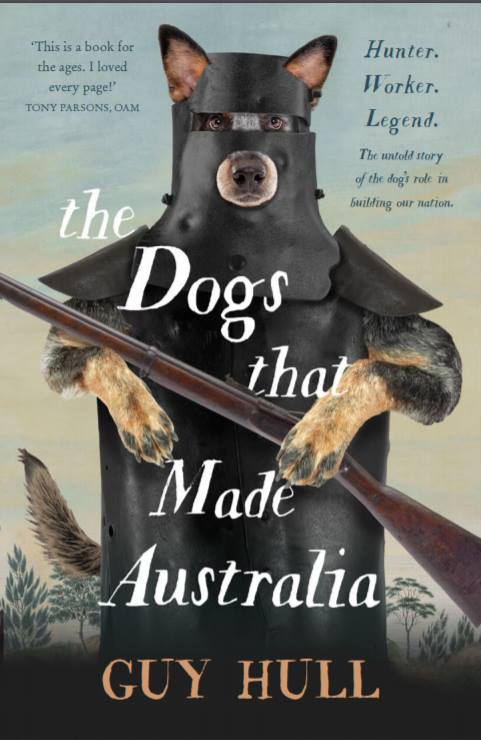
Australian Cattle Dogs and the History of Australia
Author, researcher and purebred dog enthusiast Guy Hull shares the fascinating history of the development of Australian Cattle Dogs and how they helped build a fledgling nation.
Today’s episode is brought to you in cooperation with Canine Construction and Conformation Facebook group.
Hull is the author of The Dogs That Made Australia: The Story of the Dogs That Brought About Australia’s Transformation from Starving Colony to Pastoral Powerhouse.
Australian Cattle Dogs, Hull said, are the only breed resulting from the successful hybridization of dogs and dingoes.
“Australia, more than any other country, was so dependent on dogs,” Hull said. “Especially native bred dogs that could cope with all of the hardships of the land.”
The progenitors of the breed were created by the Hall family. These early Australian settlers owned 700+ square miles outside of Sydney. They needed a dog that could deal with wild cattle imported from South Africa. Sheep didn’t survive well in the hostile environment of the new country. Beef cattle could survive, but they needed tough dogs to help manage them.
The Hall family crossed an English dog known as the “droving cur,” tailless, square in profile, speckled blue, with dingoes. Dingoes, as a species, are classified as wolves.
Hall’s Heelers
Dingo genes are so strong they dominate domestic genes, Hull said. It took multiple generations of back crossing to the domestic dogs to create the dog we know today. By 1832 the Halls had two types, including the Australian Cattle Dog progenitor.
These dogs, known as Hall’s Heelers, were privately held from 1830-70. Managers of 200 Hall properties carried forward the breeding program.
When the family sold all of their holdings after 1870, the dogs became available to the general public.
Around this same time, long distance droving dogs became redundant with the advent of wire fencing and railroads.
Hall’s dogs were designed to work wild cattle. When cattle became quieter and easier to manage, with the import of new cattle breeds, fences and transportation, the dogs were too “hard” for the domestic cattle.
Border collies, kelpies and other “collie” type breeds became popular to work the more domesticated stock.
The show fraternity preserved the Australian Cattle Dog after its job was no longer needed.
“They are a dog that has re-invented itself as all around Australian guard dog and companion,” Hull said. “They are supposed to have a suspicious glint in their eyes.”
349 – Azawakh: The Camp Guardians of the Tuareg People
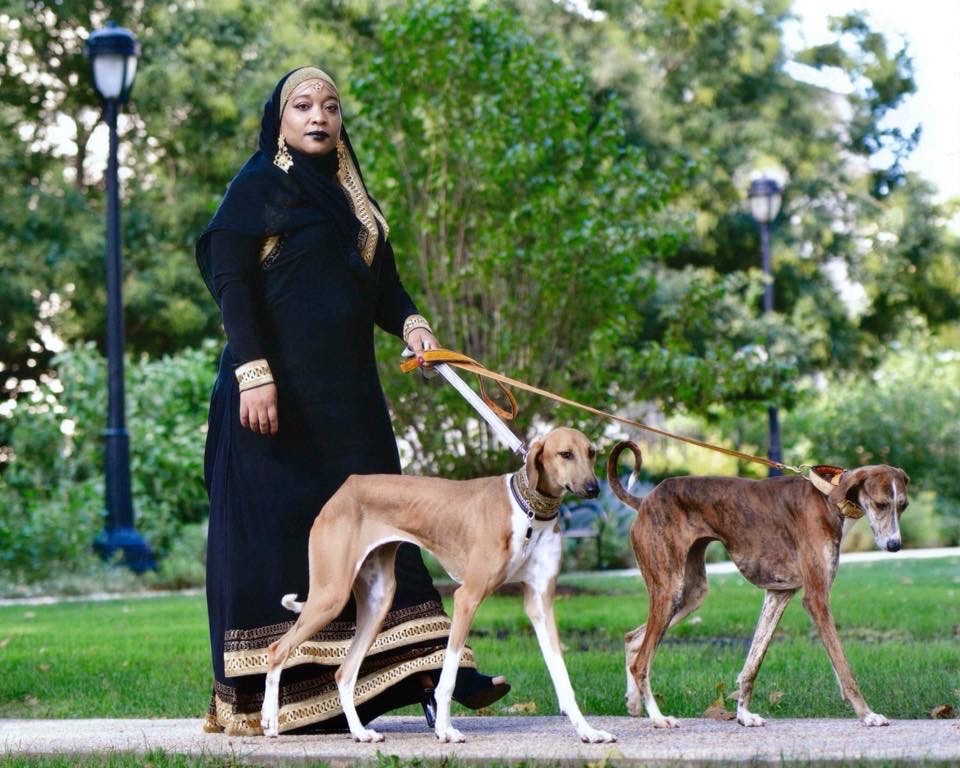
Azawakh: The Camp Guardians of the Tuareg People
“Nothing Fragile About This Breed at All”
The Azawakh is one of AKC’s newest recognized breeds. The long-legged, aloof hounds have been in the US since 1988, but were only approved for the hound group in January 2019. With only an estimated 150 dogs in the States and less than 3,000 worldwide, Azawakh fall in to the category of “threatened” breed populations.
Aliya Taylor, a retired Philadelphia Police Officer, acquired her first Azawakh in 2012. She grew up in dogs with her family and eventually showed dogs around her police work. Like everyone else in dogs, she scheduled her vacations around dog shows and hoped for no emergencies.
A desert dog, the Azawakh is taller than it is long. They hail from West Africa where they were known as the camp guardians of the nomadic Tuareg people in Mali, Burkina Faso and Niger.
“These guys are basically guard dogs,” Taylor said. Despite appearing emaciated to the untrained eye, “there is nothing fragile about this breed at all. They will guard you and your property.”
“Everything in that part of the world is long on leg, tall off the ground,” Taylor noted. “Azawakh are an evolutionary development. Man had nothing to do with how the Azawakh looks. They are not mixed with any other type of hound and developed independently in an isolated area.
“If you’re fat in the desert, you don’t survive very long,” Taylor added wryly. While she hears a lot of well-intentioned cooing about her “sick or rescued” dog, Taylor said, “They’re supposed to look like this! These dogs eat more than I do. They are physically unable to carry much body fat.”
Taylor encourages judges to approach the breed appropriately.
“You should never approach head on. Approach on an angle, on the side. Keep a calm body demeanor. Put a hand on the dog’s shoulder. Don’t challenge with direct eye contact. Dogs are still primitive & semi feral. Approach cautiously but without fear. Calm, confident, not rushing, no fast hand movements,” Taylor said.
Azawakhs are not the best choice for a first-time dog owner or someone who hasn’t owned a primitive breed.
“They are not Golden Retrievers. They will not be friendly to strangers. They may not be friendly to every person in your home,” Taylor said.
Nonetheless, “These guys are highly trainable. You can teach them to do anything, but you have to get their trust. You have to treat them as an equal. They’re not like other dogs in the sense that you give them a command,” Taylor opined.
348 — Juan Miranda: Survivor, Judge, Influencer
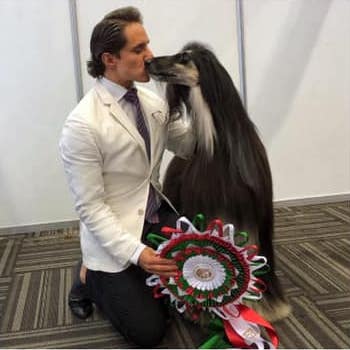
Juan Miranda: Survivor, Judge, Influencer
Juan Miranda, FCI’s youngest all-breeds judge, survived a car-jacking attack and returned to purebred dogs.
Miranda was just leaving his office in Mexico City five years ago, on his way to Westminster Kennel Club, when an armed assailant entered his new truck. Miranda struggled with the attacker, who shot him through the neck and face, missing his spinal cord by just three millimeters.
A year’s journey of healing saw Miranda in a “halo” device, relearning how to walk and all of the motor skills of life.
The only child of Afghan Hound breeders outside Mexico City, Miranda, won his first all-breed best in show with an Afghan at eight years old.
“I love Afghan Hounds. Their temperament is perfect for us. But we have had other breeds, including a Belgian Malinois who thinks she’s an Afghan,” Miranda said.
Miranda judged Afghans last year at the AKC National Championship sponsored by Royal Canin. This year he’ll participate in his favorite show in Orlando, as an exhibitor showing his own dog.
A popular “influencer” on Instagram, Miranda uses his position to promote the predictability and purpose of purebred dogs.
“The people from all over than world can learn, about us, dogs have a purpose to make life more easy,” Miranda said.
347 — Tracy Szaras: “Pretty Good, but it’s Not Perfect Yet”

Tracy Szaras: “It Looks Pretty Good, but it’s Not Perfect Yet”
Professional handler Tracy Szaras, whose Hungarian heritage leads her mother to describe her as a “real Gypsy,” says the pursuit of perfect is her secret to success.
Szaras showed her first dogs in grade school, because her mom showed dogs. Her mom was a great trainer, Szaras said, who helped her process questions. Mom taught her proper conditioning and basic animal husbandry.
Szaras’ first breed is Lakeland Terriers, so her mom took her to Montgomery County Kennel Club for the first time almost 30 years ago.
Montgomery County started it all
“I saw all these dogs looking awesome, everybody dressed to the nines. I really got into it that weekend. That next year I went to work for Greg Strong. I thought I knew how to pull hair until I went there. He showed me how to do flatwork, to do it correctly. I became driven. Greg taught me more, about trimming, skittish dogs, etc. I learned a lot in a short time.
“Then I went to Bergit Coady and learned about low-legged terriers. On my days off I went to Gabriel Rangel‘s kennel to learn more.
“I was a sponge. I didn’t even date. All I wanted to do was learn and know everything about terriers.
“I learned detail work from Gabriel. Learned by watching. I learned to trim, especially heads, from Gabriel.
“I thought I was going out on my own. Next came Maripi Wooldridge. When she was considering quitting, she wanted me to take over her clients.
“I was amazed. I thought I’d learned all I could. There’s always something to learn. Now, I’m always looking. It looks pretty good, but it’s not perfect yet. I want to be the best. I don’t want to shortcut anything, thanks to Maripi.
346 – Safely Incorporating Our Dogs in Holiday Festivities

Safely Incorporating Our Dogs in Holiday Festivities
Dr. Marty Greer, DVM and Host Laura Reeves riff on safely incorporating our pets in the holiday festivities, from electricity to plants to food to weather.
Greer’s recommendations include:
- Electric cord safety – wrap thin cords with metal safety coil
- Jingle bells on low branches for warning that the dog is in trouble
- Unwrapped candy canes that aren’t dangerous on low branches
- Keep the canned spinach on hand
- Secure tree to ceiling or wall
- Crate the dog during dinner with a stuffed kong or chew bone to entertain them.
- Beware of alcohol consumption. Guests don’t always take the dog into consideration when setting down a glass.
- Make your dog part of the meal with snacks of raw carrots, small bits of meat instead of fats
- Save broth cooked with bones, carrots, celery for food dressing
- No more than 10% of meal should be additive. Commercial kibble is precisely formatted to meet the dogs needs. Substantially altering the contents of the meal can cause problems.
- Mistletoe and Easter Lilly and Yew plants are highly toxic. Poinsettia actually isn’t. Macadamia nuts and raisins are food items less known to be toxic.
- Boots are good for dogs in extreme cold or wet snow. Greer recommends the musher boots used in the Iditarod.
- Pet safe deicer and antifreeze — both products are excellent. If dogs walk on salt or deicer that isn’t suited to pets, rinse their feet thoroughly as soon as you can.
- Dressing up our dogs entertains us, but not all dogs find it funny. Let your pet make the choice on outfits.
- Slushy snow is bad as it can freeze in the feet and undercarriage.
For more information about preventing and dealing with potential intestinal blockages, listen here.
345 – Ideas to Grow Our Sport: Amateur CH, Critiques, Welcome
Ideas to Grow Our Sport: Amateur Champion, Critiques, Welcome
Join a conversation between judges and exhibitors brainstorming ideas to grow the sport of purebred dogs. Lesley Hiltz, Karen Ericson and Sid Marx join moderator Laura Reeves along with exhibitors at the Whidbey Island Kennel Club.
This is part two of the Pure Dog Talk Saturday Symposium posted last week. The Q&A discussion examined various perspectives on ideas to help increase conformation numbers and enthusiasm.
Building on a suggestion from Marx in part one, audience questions focused on the idea of creating an actual amateur championship, akin to the same title in field trials, for the sport of conformation.
“I’ve always thought there should be an amateur division and an open division everyone can enter,” Ericson said, similar to horse shows.
“In Australia, every kennel club is only allowed one Championship show a year and are required to hold an open show, where no points are awarded,” Hiltz added.
Marx spoke to the idea of a “breed level show” judged by provisional judges and “group shows” judged by regular status judges. Provisional judges can learn at the “breed level” where they can take more time.
Critiques redux
A common theme in our exhibitor conversations is the ongoing desire for critiques.
Our judge panelists, who judge internationally, spoke to the practice in other systems.
Hiltz noted that in Denmark, for example, judges receive extensive training in the skills required to offer useful critiques. She also noted that technology is such that the judges words are uploaded almost instantaneously.
One exhibitor comment referenced the common practice in livestock/4-H judging whereby judges give reasons for each placement
“We give critiques to the rep after we judge when we have provisional breeds. If we can do that, we should be able to give them for exhibitors as well,” Marx observed.
Ericson noted that all judges have a learning curve. “It’s easy to pick out faults. There’s a real training process to pick out virtues and achieve positive judging.”
On those same lines, Marx made a point about the process that judges go through and that while adult learners do best when they use their knowledge right away, the process in place functionally means judges receive provisional approval and it might be a year before they have a chance to judge.
Ericson reminded the participants that dog shows can be intimidating for new folks. “We just have to be a lot more welcoming.”
344 – Inspiring True Story: From First Show to Best in Show
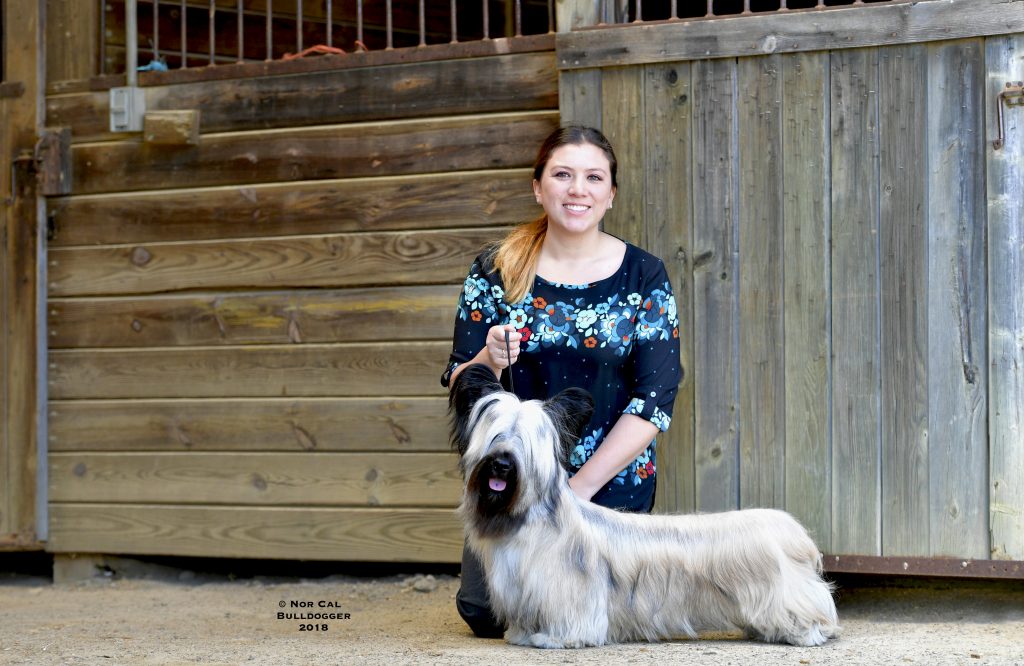
Inspiring True Story: From First Show to Best in Show
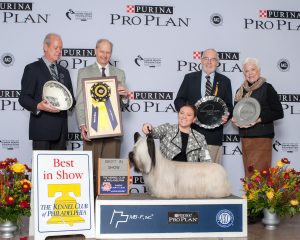
Antoinelle Vulpis and “Archer” winning BIS Sunday at The Kennel Club of Philadelphia.
Antoinelle Vulpis chose a Skye Terrier as her first show dog. Two years after their first show, Vulpis and Archer won Best in Show at The Kennel Club of Philadelphia’s National Dog Show.
Vulpis offers another inspiring “newbie” story as she shares her journey, the importance of her breeders/mentors and the support of the dog show community.
“I grew up like any kid watching Westminster on TV. We had Golden Retrievers as family dogs, but I always kind of wanted something a little different. I was a total dog geek,” Vulpis said.
After college, Vulpis got a job at AKC that required her to attend dog shows.
“I decided I wanted to try this myself. Then I saw Larry Cornelius and Charlie the Skye Terrier. THAT was the dog for me,” Vulpis said.
Parent Clubs and Handlers
Vulpis made contact with Michael Pesare through the Skye Terrier Club of America. She then waited a year for the right dog from the right litter.
Her puppy arrived exactly two years before her first best in show.
“My mentors drove three hours one way without a dog entered just to cheer me on at my first dog show,” Vulpis said. Her breeders helped her learn how to groom the rare breed and supported her at every step, she added.
“My handler friends are so willing to help me and share. They’re the people who inspire me. I try to learn from them,” Vulpis said. “Asking someone more experienced than you will really pay off.”
Vulpis counts professional handlers from Greg Strong to Ernesto Lara in her list of people who have helped her along the way.
Listen to the input
“I asked all kinds of people for advice,” Vulpis said.
Vulpis’ favorite grooming product is #1 All Systems Invisible Hold “It’s the holy grail for keeping the part to stay in place.”
“I don’t brush him every day because it takes hair out. Only once or twice a week to keep mats under control. I keep him clean, and bathe him weekly,” Vulpis noted.
“Now that I’m realizing I can make a difference in how he’s presented and how he looks. I get to the dog show early and spend time bathing his under-carriage and blow dry him. The extra time and care really has paid off,” Vulpis said.
For more stories from new people to the sport, listen here and here.
343 — Saturday Symposium – Preservation Breeding With Experts
Saturday Symposium – Preservation Breeding With Experts
Host and Moderator Laura Reeves is joined by breeders/judges Lesley Hiltz, Sid Marx and Karen Ericson at the Whidbey Island Kennel Club with a robust conversation about preservation breeding. This is part one. Part two, including audience participation, conversation and more idea generation will be posted next Monday.
Preservation of our breeds to save their place in history

Lesley Hiltz
“When you judge in Europe,” Hiltz noted, “the average exhibitor age is mid 30s. There are lots of families, often three generations together. It’s a family sport. But they also only have one show a month. If we had fewer shows we could see more support for the ones remaining.”
Marx observed that too often exhibitors haven’t even read the standard for their breed.
“People become captive to what’s winning. Breeding to what’s winning rather than what’s correct. We want to get as many new young exhibitors involved in the sport as we can. But they need to make an effort to find mentors and learn the history of their breed,” Marx said.

Sid Marx
Ericson encouraged folks to “Get our dogs out among the public.” Clubs need to do things besides dog shows, she added.
“To get a dog from a breeder, you might as well apply to be a CEO of a fortune 500 company,” Erickson said. “Trust people with your best, not your worst. Tell them you are trusting them with a piece of my heart and legacy.”
“Dog shows in Australia are less stressful and more fun,” Marx said. “Certainly more wine is drunk. It’s a party at their shows. It’s an event.”
Proactive policies
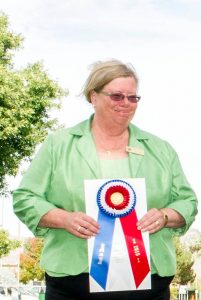
Karen Ericson
Some ideas from the panelists:
- Encourage altered dog competition
- Encourage anyone who shows a spark to come to the dog show. Stop what you’re doing and share with public. Share excitement about the show.
- Bring back dog shows that stop at the breed level. Rankings are hurting us. The average person isn’t at the dog show to fight for Group 1.
- Follow Austalia’s lead: “class in group awards.” So if your 6-9 puppy wins his class, he competes in 6-9 competition in group. People stay for group, talk to other people in other breeds. Gives a whole lot of other people the chance to win something in group.
To hear previous discussions on this topic, click here and here