
SPECIAL LEGISLATIVE ALERT: Speak Up in Dallas, TX

SPECIAL LEGISLATIVE ALERT
Wednesday, 6/27 at 9 a.m., the Dallas City Council will consider a proposal that ALL dogs impounded in the city be altered before being returned to the owner. The current law has exceptions for show and performance dogs. This proposal is seeking to do away with that exception.
Show Up and Speak Up in Dallas, TX
“With the recent incident of a stolen van with show dogs, imagine if those dogs were required to be sterilized before being returned to owners,” said Sheila Goffe, AKC Vice President of Government Relations. “These dogs are the future of our blood lines, the future of our breeds. These are not the dogs that are creating what are legitimate problems in the city.”
AKC Government relations has detailed information available here with location, contact names, numbers and emails, talking points and more.
Goffe noted that responsible dog owners want to be part of the community to help the city with the dog issues it has. “Responsible dog owners aren’t the problem. Going after them isn’t the solution. This is a solution in search of a problem.”
Tips and recommendations from Goffe, most of which are applicable in any similar legislative circumstance:
- You are a resident or you travel through Dallas. You are very concerned about the potential of a dog becoming loose by accident or mishap that you will not be able to have returned intact.
- In 2017, 1100 AKC events were held in the state of Texas.
- 150,000 dogs participated in AKC events in Texas just last year.
- Large dog show weekends bring $1.7 million to community.
- People who have breeding licenses, showing dogs aren’t the problem.
- Spaying/neutering a dog owned by another person can be considered taking property. These dogs are valuable property, we appreciate them being treated as such.
- One size doesn’t fit all.
- First offense. Not an appropriate response.
- Boston and Houston have both considered and decided against this type of proposal.
- Physical bodies are what count. Call instead of email.
- Show up! It makes more of an impact. They need to see, visually, that there are a lot of people out there who care. In an election year, especially, that drives home the point.
- Stand or sit together. Wear clothing or color that makes identifiable as a group. Sign in on a topic. Make it known why you are there.
- Speaking on behalf of xyz kennel club and the x number of members.
- Several bullet points, each person focus on one point – 1-3 minutes to speak. Share a story about how this can impact you personally.
- Be respectful.
- Show reasoned argument why proposal isn’t good for the community.
- Suggest alternative. “We’d like to help you, we have services to offer, invite to dog show. Develop a relationship. We’re the dog experts.”
“Our opponents always have representation at these meetings. It is crucial for us to show up and show the strength of our convictions,” Goffe said. “Many people who are involved in shelters and rescue, their hearts are in a good place. They are under-resourced, understaffed and frustrated. We support the good work of shelters. We just want to explain the difference, the nuance between responsible owners and irresponsible ones.”
195 – “Brace Yourself” for a Peek at the Masters
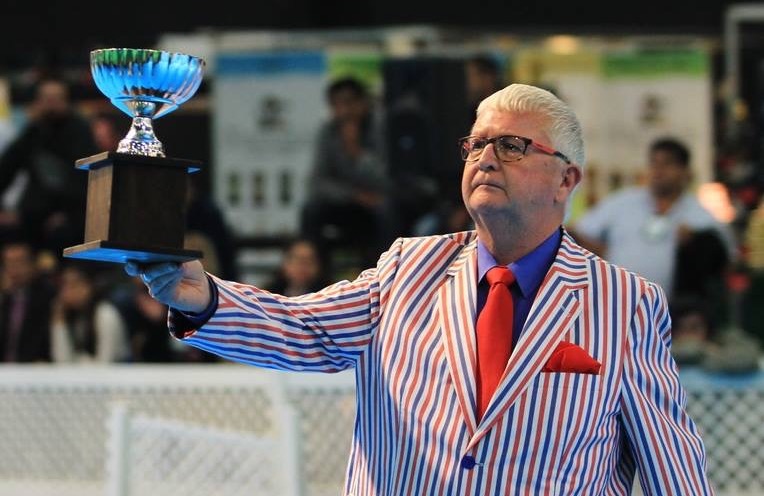
Behind the Scenes Peek at the Masters

Brace (center) moderating a panel with Michael Canalizo, Mary Dukes, Peter Green and a young handler from Europe.
In the second installment of my interview with international dogman Andrew Brace, he shares his personal memories of masters in the sport. His observations and interactions with Anne Rogers Clark, Pat Trotter, Jason Lynn, Frank Sabella, Michael Canalizo, Mary Dukes and more are legend unto themselves.
Brace wrote for top dog magazines from an early age. He had a weekly column in the UK’s Dog World for more than 30 years and later a column in DogNews. He was co-author with Clark of the International Encyclopedia of Dogs, authored several books on his own, hosted television programs and has interviewed world-renowned legends in the sport.
Anne Rogers Clark with one of her many, many “finds”…. 6 month old Cruiser, who would become BIS/BISS DC/AFC JetSet’s RagTop Day at Scotia, JH, CD… handled by Laura Reeves. Bred by Jane (Reeves) Bonaccorso. Owned by Tom & Jodi Quesnell.
Memories of legends
He offers a particularly intimate portrait of his work with Mrs. Clark, interviewing her and writing the Enclyopedia.
“She was extremely frank about all her doubts and fears,” Brace said. “She explained that it was her husband Jim who really created the image everyone got to see. Jim built her up to be a much more self-confident woman who stood tall and proud and eventually got to the stage that everyone wanted to be Annie’s gang. Annie was without doubt the most complex person I’ve ever met. A total one-off.”
In his many media gigs, Brace interviewed top members of the sport, including Mrs. Trotter.
“Pat is such a charismatic lady with infinite knowledge,” Brace said. “One of those people who can just articulate her thoughts so perfectly. Pearls of wisdom just drop from her lips one after the other.”

Brace leading the Master Class with Jason Lynn and Frank Sabella
He also moderated a series of Master Classes, including one with Mr. Lynn and Mr. Sabella.
“Jason was always kind of the quiet guy in the background,” Brace noted. “I was totally amazed. People were just spellbound.”
“When I was a teenager, my friends had posters of pop stars or footballers on their bedroom walls,” Brace recalled. “I, of course, had the famous photo of Frank (Sabella) in a tight white vest on Malibu Beach with Command Performance the white standard poodle in midair. At that time, little did I think I would ever meet this legend, much less become one of his closest friends.”

Brace with his early idol and later friend, Frank Sabella.
Currently on a hiatus from judging while taking care of his aging mother, Brace said he misses the chance to “find” a great dog, often as a youngster. He partially makes up for it with the occasional litter evaluation.
“I just adore looking at puppies. I like to see them at 8 weeks as they tend to be in proportion. I want to see them just stroll around yard. In this way, you can see overall shape, how the puppy carries itself, where it puts its feet down. You can see how it interacts with its littermates. So really those qualities we look for in a show dog are there from the start. Every once a while you see something strutting around the yard that just has that extra something, you think yeah…. And then you watch it blossom. That is the future.”
Join us Thursday for our final installment in this wonderful series. I’ve included links to a few of Brace’s books below. You can also check out the YouTube video teaser for the DVD of the Master Class series with Jason Lynn and Frank Sabella. And don’t forget to listen to my interview with Jason here on PureDogTalk if you haven’t already!
Be sure to listen to the end of the show for Allison Foley’s Tip of the Week from the Leading Edge Dog Show Academy about “making your own brand with your trimming.”
194 — Andrew Brace “Totally Obsessed with Dogs”

“Totally Obsessed with Dogs” and Finding Quality
Born to a long tradition of dogmen from Wales, Andrew Brace acquired his first Boxer in 1963 and began judging in the UK while still a young man. A strong voice in the international purebred dog community today, Brace is a long-time breeder, Best in Show judge and author.
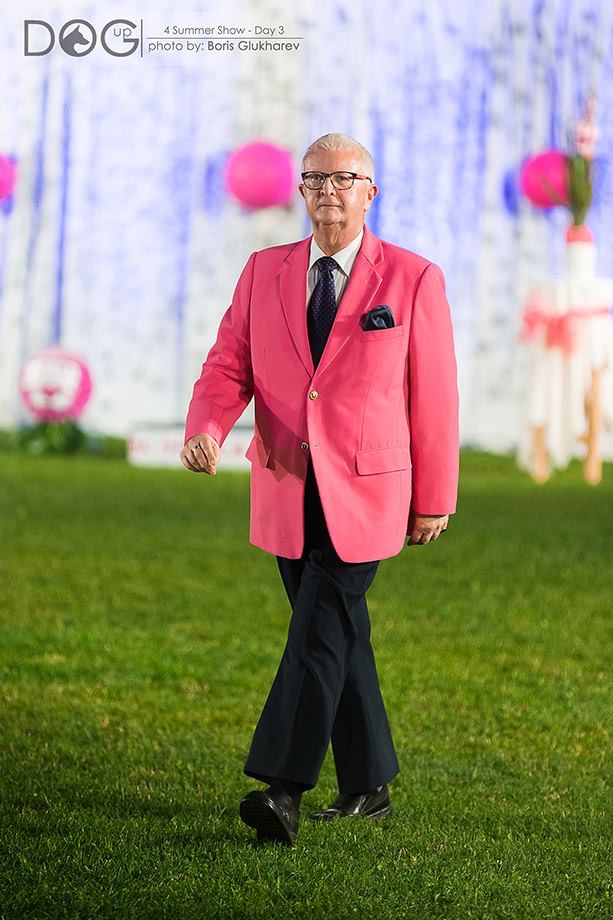
Andrew Brace about to judge the European Semi-Final of the Eukanuba World Challenge at the Split Summer Night Shows in Croatia
“I was totally obsessed with dogs ever since I can remember,” Brace said.
As a child he was immersed in the purebred dog scene, stewarding, traveling, reading dog books and joining dog clubs. One of his favorite early memories, after learning his beloved Bruce the Boxer was monorchid and couldn’t be shown, is being given the job of “Honorary Veterinary Steward” — holding the towel for the veterinarian who was checking dogs in for the ring.
Match shows create community
The UK today, Brace said, has 27 all-breeds championship shows, with only five have championship points available for every recognized breed. Many more matches and open shows, where championship points are not awarded, are available. Brace noted that these shows offer a “social exercise” for the exhibitors where they can enjoy a day out and meet up with their friends.
Mentors offer a step up
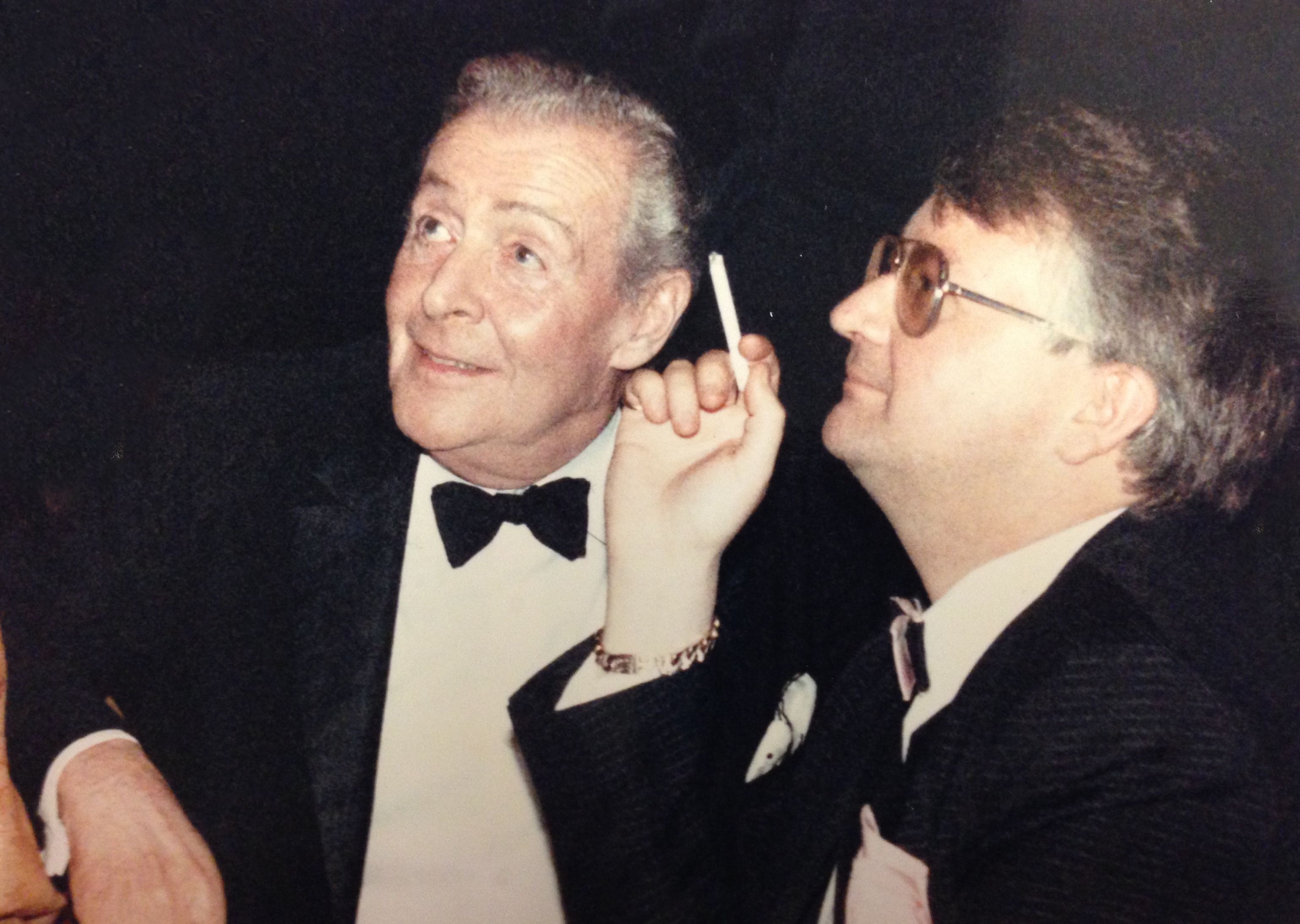
Andrew Brace with his “idol and mentor”,
Nigel Aubrey Jones, pictured at the dinner
that followed one the Kennel Review
Tournaments of Champions, held at the
Pontchartrain Hotel in Detroit.
“If people are honest,” Brace said, “they all will admit they had help, from their elders and betters. People who gave them a step up. I’m very conscious to try and help young people I see who have a spart, as other people helped me.”
Brace counts fellow Welshman and famed Pekingese breeder Nigel Aubrey Jones as the guiding influence in his life.
“Nigel was a genius. He was my idol and my mentor,” Brace said. “I learned so much from him. He was my biggest critic and greatest supporter. He and Bill Taylor were remarkable gentlemen. Their quest for perfection in breeding Pekingese changed the breed worldwide. To be honest there isn’t a day goes by I don’t miss Nigel.”
An eye for a dog
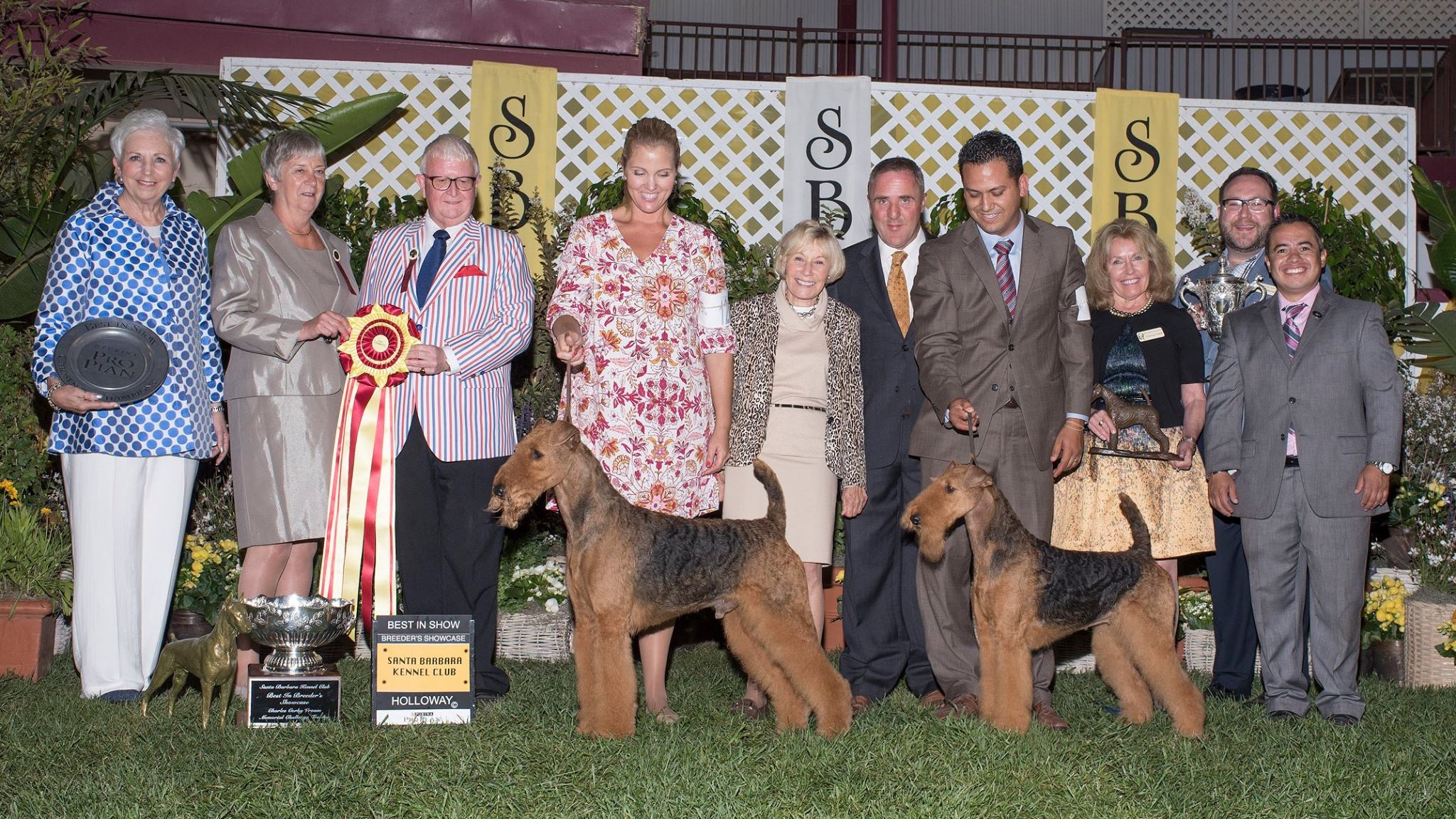
Andrew Brace judging Best in Breeders Sweepstakes at Santa Barbara Kennel Club.
Things were not very scientific in becoming a judge, Brace noted. “It was very much about being identified as having an eye for a dog and then refining it through careful study and experience,” Brace said.
The UK had many large kennels in those days, Brace added. “I would ask breeders if I could visit to learn about breed. People were always welcoming and keen to share their knowledge, being ruthlessly honest about (the dogs’) faults and virtues.”
“Quality is the difference between pottery and porcelain”
“Nigel drummed in to me the need to have quality in the dogs we reward,” Brace said. “You won’t find the word quality in any breed standard, but it is the one vital ingredient that we all need in our top winning dogs.”
Brace’s judging advice:
- Always look at the overall picture when assessing a dog, rather than dissecting and evaluating individual details.
- The secret is to find virtues.
- Always stand back from a lineup of dogs and study silhouettes.
Join us next week when Mr. Brace shares his knowledge on successful dog breeding.
193 – Barnhunt Founder Nuttall Created Fast Growing Sport
One Person Making a Difference
In just five years of existence, the sport of Barnhunt has taken off like wildfire. Founder Robin Nuttall, the archetype of “one person can make a difference,” said she created the sport to test the natural instincts of her new Miniature Pinscher.
A Doberman Pinscher fancier for many years, Nuttall was accustomed to working her dogs in various sports after they finished their championships. When she acquired her first MinPin to have a smaller agility dog, she discovered they weren’t allowed to compete in AKC’s Earthdog testing.
Prove Working Ability
As she researched the breed more, she discovered they are an old breed, older than Dobermans, and their original job was to rid homes and properties of vermin like rats and mice.
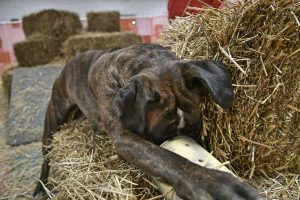
Find the rat!
“I wanted to prove he had the ability to do the job he was bred to do,” Nuttall said. “His aptitude (training with friends who did Earthdog) was amazing.”
“The important thing people need to understand about Barnhunt,” Nuttall said, “is that every decision was based on instinct testing for vermin dogs. We welcome all dogs, but at the core of the sport and why it was created, it is a working instinct test.”
Ironically, the year after Nuttall created the first Barnhunt tests, AKC approved MinPins for Earthdog competition.
“If MinPins had been an approved Earthdog breed, Barnhunt would not exist,” Nuttall said.
Independent Organization
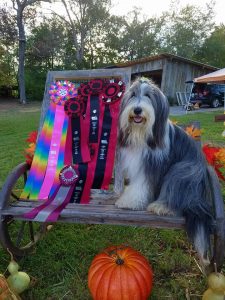
Barnhunt ribbons for Bearded Collie
The Barnhunt Association is an independent organization. While Barnhunt is not an AKC sport, competitors can earn titles recognized by AKC, UKC and CKC, Nuttall noted.
“I have to say, AKC has been amazing and has helped contribute to our success through their support and endorsement,” Nuttall said.
Like most competitive dog sports, Barnhunt features progressive levels of difficulty.
“One of the basic tenets of the sport,” Nuttall said, “is that the rats we use are not harmed. We have a lot of protection for the rats. They are kept safe in heavy duty aerated tubes. Our rats are pets first, but they like small dark spaces.”
Barnhunt seeks to recreate real vermin hunting experiences in which the dogs have to go in small dark spaces. The dogs have to go in to 18-inch wide tunnels that are only as tall as a bale of hay. They have to climb on the straw bales and indicate where the rats are hidden.
“This is a gateway sport,” Nuttall said. “We have a lot of folks who started in barnhunt, who had never done anything with their dogs, who move on to other sports… how we treat people (at our events) has a huge impact on whether these people stay involved.”
Learn more at https://www.barnhunt.com/ … And listen to our podcast to hear Robin Nuttall’s passion, joy and advocacy for this fun new event.
Stay tuned next week when Allison Foley will be back with more of her Tip of the Week from the Leading Edge Dog Show Academy.
Barnhunt Association
We are not a purebred dog registry, so whatever the owner says the dog is, that’s what goes down. We accept purebred breeds registered with the AKC/AKC FSS, UKC, FCI, KC, and Canadian KC. If it is not registerable with any of those organizations, then it is registered as a mixed/cross breed. For that reason, our stats show more mixes than any other breed type. But as of today, here are our top 20 in registrations.
| Mixed/Cross Breed | 3759 |
| Border Collie | 1239 |
| Australian Shepherd | 1214 |
| Doberman Pinscher | 892 |
| German Shepherd Dog | 881 |
| Jack Russell Terrier | 863 |
| Border Terrier | 862 |
| Golden Retriever | 829 |
| Labrador Retriever | 771 |
| Rottweiler | 564 |
| Miniature Schnauzer | 531 |
| West Highland White Terrier | 525 |
| Poodle, Standard | 496 |
| Dachshund, Miniature | 492 |
| Standard Schnauzer | 473 |
| Cairn Terrier | 451 |
| Whippet | 438 |
| Rat Terrier | 430 |
| Parson Russell Terrier | 416 |
| Pembroke Welsh Corgi | 399 |
Total number registrations as of May: 33,125. We average between 16 and 18 registrations per day. We have 265 clubs and 226 judges. We are still in growth mode; there are a number of places in the country that are hotbeds (the Pacific Northwest, Wisconsin, etc.) and others that have a few or no clubs. Only one club in Mississippi. Only one club in Kansas.
Barnhunt Events
We have 360 approved events on the calendar that have not yet taken place. We had 550 trial events in 2017 (that number does not include fun tests or clinics; titling events only). If you look at the website event calendar you can get an idea of the scope of the number of events. Trials must be applied for 60 days in advance, so numbers will drop off after July until a bit later.
States with more than 1000 dog registrations per state:
| California | 3302 |
| Florida | 1745 |
| Washington | 1639 |
| Texas | 1460 |
| Pennsylvania | 1368 |
| Ohio | 1268 |
| Illinois | 1247 |
| Michigan | 1205 |
| Wisconsin | 1171 |
| New York | 1149 |
| Virginia | 1112 |
192 – AKC President Dennis Sprung on Public Outreach
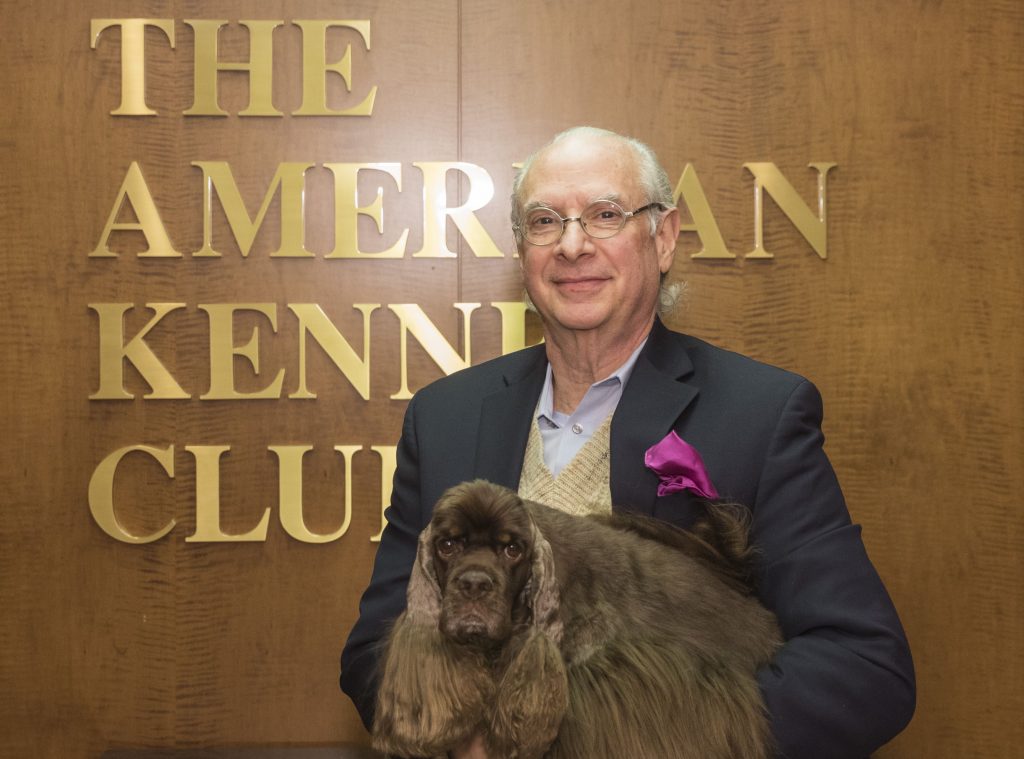
AKC President Dennis Sprung on Public Outreach
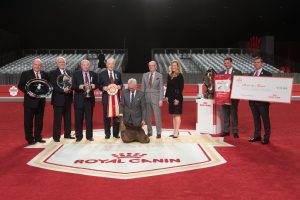
AKC President & CEO Dennis Sprung joins the presentation of BIS at the 2017 AKCNC in Orland, Fla.
President and Chief Operating Officer of the American Kennel Club since 2003, Dennis Sprung has ardently pursued projects designed to share the message of the human-canine bond.
Starting in dogs with the Afghan Hounds of Grandeur in the late 1960s, Sprung was mentored by the legendary Sunny Shay. Shay laid the foundation for his education in dogs, Sprung said. At a time when the famous Long Island kennel housed over 100 dogs, he routinely interacted with everything from puppies to veterans.
Inspiring Dreams for Everyone
“She was one of a kind,” Sprung said. “A true character in the sport. Sunny was unique, in many ways, but particularly in that she was a Breeder Owner Handler. Shirkhan’s first BIS in 1957 was at Westminster Kennel Club.” (For more history and stories about Sunny Shay and the Grandeur Afghans, listen to Michael Canalizo at https://puredogtalk.com/canalizo-ghosts-of-the-past-and-breeding-for-the-future-pure-dog-talk/)
Sharing the Human-Canine Bond
Shortly after Sprung started working for AKC as an Executive Field Rep in 1989, he proposed to the Board of Directors the program that became the AKC Humane Fund. His vision was to create an additional vehicle to serve as outreach to the public, sharing the message of the human-canine bond. The AKC Humane Fund has now grown to include grant making for parent club breed rescue, scholarships, funding for domestic violence shelters that allow pets and assistance in cases of natural disaster. (https://www.akchumanefund.org/)
Art as Outreach
Sprung is involved with the AKC Museum of Dog as a member of original planning committee and former board member. He is actively working with AKC staff to help the museum move back to NYC from its location near St. Louis, Missouri for the last 31 years. “The museum is one of the finest collections of sporting art in the world. It pays respect to our breeds and our traditions in the sport. With a location one block from Grand Central terminal, where they have 22 million visitors annually, the opportunity to grow purebred dogs is endless.” (https://www.akc.org/museum-of-the-dog/)
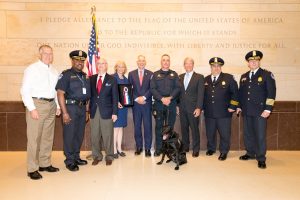
Sprung joins a presentation for working K9s.
On the night following the 9/11 attacks, Sprung had a brain storm.
“AKC was able to donate a portable x-ray machine and a large quantity of supplies,” Sprung said. “These were delivered by me to Ground Zero, on that very corner with smoke still rising… I’ll never forget that.”
He resolved to create a public art exhibition and fundraising opportunity. From this was born DOGNY. Honoring the search & rescue dog and handler teams, 112 dog statues were placed around New York City. In all, more than $3.5 million was raised for Search & Rescue groups nationwide. (https://www.akc.org/dogny/)
“I have to tell you. Credit goes to our entire fancy,” Sprung said. “Springfield Kennel Club was the first donor. Corporate America came through and worked with us, but our fancy was with us every step of the way.”
Building from that concept, AKC Reunite was developed, spearheaded by Delegate Pat Laurans.
“The AKC family is providing what’s needed to save dogs throughout the country,” Sprung said. The fundraising effort has placed 67 trailers across the nation. (http://www.akcreunite.org/)
“I think one of the most important things we can do is to not only look inward, but also look outward,” Sprung said. “We need to focus on our core constituency, on our mission of registration and events. But we also have to communicate with the public. We have to educate them. Be consistent in our messaging. Be transparent and continue to do the right thing. …There’s many societal changes that are affecting all of us. We’ve lost a lot of sites (for dog shows). This is no longer rural America. We have to address the fact that there are a number of territories that no longer offer point shows. We have to continue to work together.”
191 — Love the Breeds: German Shorthaired Pointer Roundtable
German Engineered for Versatility
German Shorthaired Pointers are “energetic and athletic,” “full of vim and vigor” and “need a little room to burn off energy *every* day,” according to the experts.
PureDogTalk caught up with three long-time GSP breeders at their national specialty show in Boise, Idaho in May. Char Rutar, AKC Conformation judge, Bob Straight, AKC Field Trial judge and David Nauer, AKC Agility judge, whose wife, Karen, judged the national specialty.
Living with German Shorthaired Pointers
You’re not buying a maniac, the breeders said, but the breed is built to work for a long time with tremendous endurance. They are high drive and high energy. Biddability, the dog’s willingness to work for its owner, is a key quality for which breeders strive.
“People need to be aware of how they will enjoy life with this breed,” Straight said. Nauer added that owners can choose a variety of venues to vent the breed’s energy. Jogs, hiking, hunting, agility, dock diving, scent work, and tracking are all games these dogs like to play.
All three of our experts agreed that a dog’s structure is the key for its longevity in active sports. “Your pick conformation dog is my pick agility dog also,” Nauer said.
“They are extremely people-oriented,” Rutar noted. “While there are differences in bloodlines, they aren’t as needy as some hunting breeds.”
Hunting with GSP
“If I had half the energy these dogs have in the field, I’d control the world,” Straight said. “Talk to the breeder,” Rutar added. “Find out what makes the breeder tick and you will find out what is important to them in their dogs.” Straight, agreed, noting that buyers should ask the right questions of the breeder to get the right match with the type of hunting dog they want.
From “All Age” field trial dogs, those that show the maximum independence when the handler is on horseback, to “meat dogs” that work close to a walking handler, Shorthairs offer a working style for every hunter.
Healthy dogs
“It’s important to deal with a breeder who will guarantee the health of dog,” Straight noted. “The breeder should warrant that the dogs have met the (GSPCA) health testing requirements.”
The national club recommends that breeders test for health hips, hearts, eyes, elbows, and a genetic disease called CD.
“Shorthairs are relatively healthy,” Rutar said. “We’ve seen some epilepsy. Some cancers pop up. A few heart problems. These are all there at a pretty manageable level. Breeders have religiously been screening hips for at least 30 years.”
A note from your host: The human race is the least inbred mammalian species in the world. WE have all these diseases. Breeders can mitigate the incidence with ethics and responsibility.
The BEST thing about GSP?
- Enthusiasm at whatever they do.
- Versatile hunter, versatile companion.
- They exude joy.
Parent Club Website:
Notable moments in GSP Conformation history:
https://www.si.com/vault/1974/02/25/617716/he-pointed-the-way-at-westminster
Allison Foley’s Leading Edge Dog Show Academy Tip of the Week
Grooming the dog so it’s comfortable for you, might make the dog uncomfortable. Allison gives us her tips on how to avoid battles on the grooming table.
190 – Leptospirosis symptoms, treatments and prevention

Dr. Marty Greer
Leptospirosis symptoms, treatments and prevention
Dr. Marty Greer, DVM, JD joins us again for our monthly Veterinary Voice. Our topic this month is the potentially deadly zoonotic disease, leptospirosis.
Resurgent disease
Aka Lepto, this bacterial infection is found primarily in areas of standing water and within about 18 months of major flooding. Desert and dry regions see very little of the disease. Greer said the veterinary community is seeing a resurgence in this dangerous infection.
A spirochete bacteria, Lepto looks like a corkscrew under a microscope. The actual physical shape of the bug is instrumental in how it impacts the host. These little creatures burrow into tissue, primarily in the liver and kidney. They can frequently live *undetected* in the host for years. The germs are shed in the urine of affected animals.
Lepto bacteria are transmitted through mucus membranes. Livestock and wildlife are the primary points of exposure for our dogs. Pets who trot out to do their business and investigate overnight visitors in the yard are at risk just as much as hunting dogs.
Symptoms
This is a zoonotic disease (communicable to humans as well as animals) which may cause any and or all of the following symptoms in our pets:
- Drink more,
- urinate more,
- vomiting,
- diarrhea,
- maybe even a cough….
- High liver enzymes and high kidney values on same blood panel…
- fever,
- lethargic,
- jaundice (yellow),
- lower appetite,
- stiff/painful…
“The problem is, these symptoms are common to other diseases,” Greer said. “The dogs can be asymptomatic to critically ill.”
Prevention
Greer advocates for a three-year vaccine protocol for viral diseases like distemper and parvo. But she strongly encourages her clients to incorporate a one-year plan for the bacterial diseases such as leptospirosis and bordatella.
“We see (lepto) primarily in the spring and fall,” Greer said. “But you have to test specifically for it to know for sure what’s going on. The vaccines we have available today are safer and far more effective than they were 10-15 years ago,” making them far less likely to cause a vaccine reaction and more likely to prevent all of the strains of the disease.
Diagnosis
Lepto can be diagnosed specifically only with a DNA test drawn from urine when the dog is acutely sick. This test seeks to identify the actual DNA of the bacteria. A blood test also can determine titers for lepto. What this titer seeks is to look for the actual disease instead of *immunity* to the disease through vaccination.
Treatment
Greer said an ultrasound to determine kidney/liver involvement can be needed. And antibiotics, either doxycycline and/or amoxicillin, may be prescribed.
Since lepto can be asymptomatic and can spread quickly to remaining dogs (and children or adults) in a kennel/household, proper diagnosis, prevention or treatment are imperative.
Greer recommends this vaccination guideline (link below) to help determine what a dog may or may not need for the specific lifestyle it pursues.
https://www.aaha.org/pet_owner/aaha_guidelines/aahas_canine_vaccination_guidelines.aspx
189 – Ins and Outs of RV Parking at Dog Events

RV Parking Crews Not “Parking Nazis”
Bert and Bruce Rettick, dog show RV parking mavens in Northern California, share their knowledge and advice about safe parking of rigs at events.
“We take the responsibility off of club members,” Bert said. “If you take two or three club members and put them out in an RV parking lot, it’s taking away from doing other things. Club membership is diminishing. There’s just not the bodies to do the work.”
The couple have been dog show exhibitors for more than 30 years. Bruce started helping out parking crews while Bert was showing their Boxers and Boston Terriers. Eventually, clubs began asking him to take on the responsibilities of managing parking.
In their years of working this particular niche of the dog show world, the Retticks have developed important checklist items.
Safety First
“This is a village out here,” Bert said. “We look out for one another. Safety. RVs all placed in the same direction if you have to evacuate. Aisles wide enough for a fire truck or ambulance to get in. Generators are in the same direction. Exhaust pipes are required on generators. Driving cars in and out of the RV parking lot during show hours is a safety issue. Parking two rigs awning to awning can leave water heaters butted against each other on the other sides, which can cause explosions from propane. We need to be proactive not reactive.”
Parking Location Doesn’t Determine Results
Bert noted that while she hears complaints about favoritism in parking, business is business.
“You are just as important with your one dog as people are with 20 dogs,” Bert said. “But from a business decision, 20 dogs three spaces closer makes their job easier also. My bottom line, you can win a BIS no matter where you’re parked. The judge doesn’t ask if you’re in 1A or the day of show lot before pointing.”
Kennel clubs, according to AKC rules, do not have to offer RV parking, Bert said. It’s up to each club. Handicapped parking doesn’t necessarily mean close to ring, she added. “We try to make sure they have a flat surface to get to the ring. Handicapped parking means we will accommodate exhibitors to get to the ring as safely as possible.”
“We do the best we can with what we have to work with. I hope people take time to think about the bigger picture,” Bruce said. “Without the exhibitors, the dog show doesn’t happen. You gotta be kind to your people.”
Just Be Nice!
On the other hand, a little niceness to the parking people goes a long way.
“We can control a lot of things, but Mother Nature is not one of them. A little more patience, a little more understanding. There are reasons, sometimes, that exhibitors may not be aware of that can hold up parking,” Bruce said.
Tip of the Week
Remember to listen to the end for Allison Foley’s Tip of the Week from Leading Edge Dog Show Academy! Allison is talking about SPACE and how to use it wisely in the show ring.
188 – Bruce Schultz’s Secret – Be Happy for the Other Guy
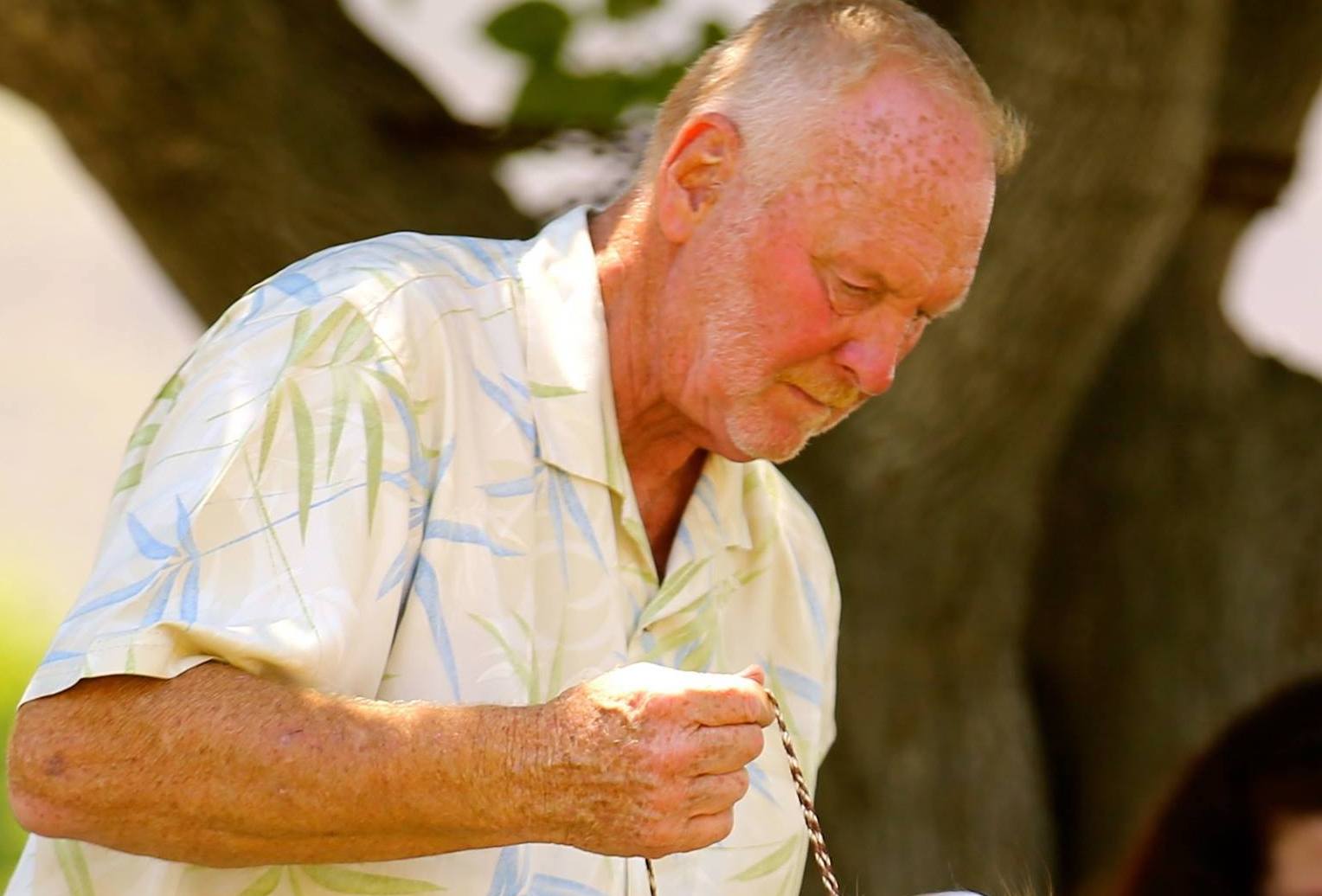
Bruce Schultz’s Secret to Success and Longevity – Be Happy for the Other Guy
Bruce Schultz is a living legend in the world of professional handlers. Still actively showing dogs, Schultz said the secret to his longevity is being happy for the winner.
“You’ve gotta be happy for the other person,” Schultz said. “I think that’s why I’ve lasted so long. I know there’s good dogs out there besides my dogs. I’m happy for the people who win, like they should be happy for me.”
Dreams of a Young Man
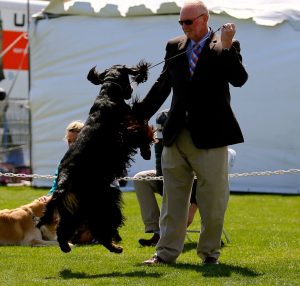
Professional handler Bruce Schultz with Gordon Setter. Photo credit Sharon Carvalho.
As a kid, Schultz loved hunting. His first really good hunting dog was a German Shorthaired Pointer he bought for $50 from the breeder after it was returned by the original owner. “He was so dedicated and so smart. I shot many a pheasant over that dog.”
But his dream was to own an Irish Setter. He bought his first from a breeder in Phoenix. “We found a litter in the newspaper,” Schultz said. In those days, advertising dogs in the local newspaper was standard practice. The breeder was an obedience competitor, so Schultz worked his new puppy in obedience, earning a CD on him at nine months old.
As he traveled to shows in Arizona and Southern California for obedience competition, Schultz watched the conformation classes also.
Conformation Looks Easy!
“My first impression of conformation was ‘These guys don’t have to do anything but run around the ring, pose their dogs and somebody points at them,’” Schultz said. “‘Obedience we have to work at it. We have a judge that scores you and if you make a mistake you’re outta there!’”
He eventually bought a couple Irish Setter bitches and began showing them in conformation. Over time, people started asking him to show their dogs. This was at the time handlers had to be licensed by the American Kennel Club in order to charge a handling fee. “I got really hooked on it, started showing more dogs and here I am.”
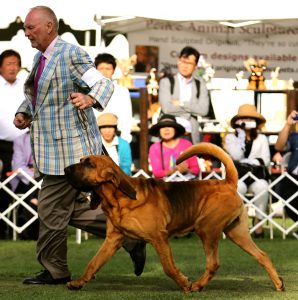
Bruce Schultz with Bloodhound owned by Susan Hamil. Photo credit Sharon Carvalho
Schultz became a licensed professional handler in the late ‘70s, right before AKC ended the practice.
Record Setting Career
“I’ve been very, very lucky with the dogs I’ve shown,” Schultz said. Amongst his records is piloting the top-winning GSP in the history of the breed. Brittania, BIS/BISS/NSC Can Ch DC NMK’s Brittania V. Sibelstein HOF won 50 BIS and 150 Group 1 awards in two years in the 1980s. His next top special, the English setter bitch, Ch Goodtime’s Silk Teddy, had the same record and won three national specialties, also in just over two years.
The ideal “specials” campaign, Schultz said, is usually 2 ½ years.
“It depends on the dog. There are dogs that love it. Every dog is totally different,” Schultz said. “You not only have to think of the owners, you want to do it, the dog wanting to do it. Those two dogs could have gone further but I figured ‘hey, I did enough with ‘em in the time period.’”
Running for number one, Schultz said, is time-consuming and mentally and physically draining. Keeping the dog mentally capable of doing it is the biggest challenge.
Friends AND Competitors
But the importance of maintaining friendships and friendly competition, even at the highest stakes level, is one of Schultz’ critical observations. He reminisces about his Border Collie going second in the group at Westminster Kennel Club behind his friend Jimmy Moses’ German Shepherd Dogs for years.
“Never beat him at the Garden,” Schultz laughed. “I beat him one time in the group. I still remember the show! It was Snake River, Idaho. But we’ve remained friends over the years. Business is business.”
Chris Terrell, breeder, owner, handler of the WKC BIS winning Afghan Hound Pepsi, Ch. Kabik’s The Challenger (https://www.nytimes.com/1983/02/16/sports/afghan-westminster-best-in-show.html), was another of Schultz’ friends. Terrell, an amateur owner handler, and Schultz frequently socialized after competing head to head in the best in show ring.
“Pepsi is one of my favorite dogs of all time,” Schultz said. “Chris and I traveled together. Whoever won, won.”
Schultz noted that he has concerns with a lot of the newer handlers because they “expect to win every show, no matter what they bring in the ring. They think everything has to be fixed for them. Why don’t you just show the dogs. We used to have fish fries, steak fries, people mingled.”
Learn From the Past
Looking to the past, Schultz observed, is imperative to learning for newer exhibitors.
“They have got to look into the past. Who did what, what were the great dogs,” Schultz noted. “They don’t study pedigrees, they just go out and breed. They don’t have clue of who the grandparents are. Grandparents are a huge influence on the get.
“…Good breeders of the past studied pedigrees. They knew the backgrounds of the dogs. They studied their breeds. The good dogs in different breeds, those breeders are still on top of their pedigrees.”
Listen to the podcast to hear Schultz’ Tips for Winning When the Chips are Down and his fascinating Dream Best in Show Lineup! This list of dogs from the ‘50s through present day is delicious. Sneak peak, can you name this dog?
Learn about one of Schultz’ long-time clients, Susan Hamil, and her Bloodhounds in PureDogTalk episode 64: https://puredogtalk.com/64-bloodhound-mantrailing-and-canine-health-foundation-tick-program-with-susan-hamil-2/
187 – Reznik Pt. 2: Ad Design Success, Reading & Dreaming
Ad Design Success, Reading & Dreaming
Magazine editor and writer Allan Reznik is back with part two of his fun and helpful interview. His advertising “best practices” tips are outstanding suggestions about when to advertise and how to design a successful ad. His Reading List recommendations are insightful and his Dream BIS lineup is a fascinating stroll through dog show history.
The best uses for advertising, Reznik said, are:
-
Promote a newly recognized or rare breed.
-
Catch judges’ attention.
-
Break through at the group level.
-
Introduce a new dog to the fancy.
-
Launch a dog’s career.
“Judges sometimes need to “give themselves permission” to recognize or acknowledge a dog,” Reznik said. “If that ceiling is broken, other judges will follow suit. … Advertising is going to be, for better or for worse, a successful way to get the dog noticed.”
Reznik added that, when it comes to ad design, “I think some ads are more successful than others. I’m always a believer that less is more.”
Many ad designers, Reznik noted, are young. They forget the age of average judge, which isn’t. “This isn’t Vanity Fair. This isn’t Vogue. The ads can be chic or glamorous, but if you can’t find the name of dog or breeder you’re doing yourself a disservice.”
A candid photo that captures the spirit of the dog and the relationship between dog and handler is always a great idea, Reznik said. “That’s just advertising gold.”
On the other hand, Reznik noted that an ad that quotes the standard alongside the dog is “terribly pretentious. It belittles a judge.”
He also advocated for National Breed clubs to create ads, particularly for new or rare breeds.
“Parent clubs can run a series of ads in which they zero in each month on a detail of a dog,” Reznik said. “I don’t think a single exhibitor should be the one entrusted to educate judges.”
Reznik’s Top Three Favorite Dog Books:
Reznik’s caveat: EVERYONE should own Pat Trotter’s “Born to Win” and Ric Beauchamp’s “Solving the Mysteries of Breed Type.”
Humor – “Dog Eat Dog, A Very Human Book About Dogs and Dog Shows” by Jane and Michael Stern https://www.amazon.com/Dog-Eat-Human-About-Shows/dp/0684838923
Glossy – “The Dog Show” by William F. Stifle. https://www.amazon.com/Dog-Show-125-Years-Westminster/dp/1592282636
Dream BIS lineup
This is a MUST listen to lineup! Reznik puts a lot of thought into the dogs, the owners, and the handlers on this incredible list. Hint: Here are a few pictures. Can you identify the dogs?
And check out Allison Foley’s Tip of the Week from the Leading Edge Dog Show Academy. Whiskers on show dogs: yes or no?