

Posts by Laura Reeves
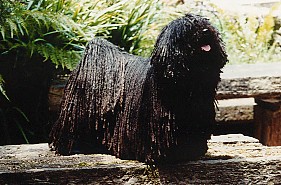
148 – Sue Huebner on Breeding Basics|Cordmaker Pulik
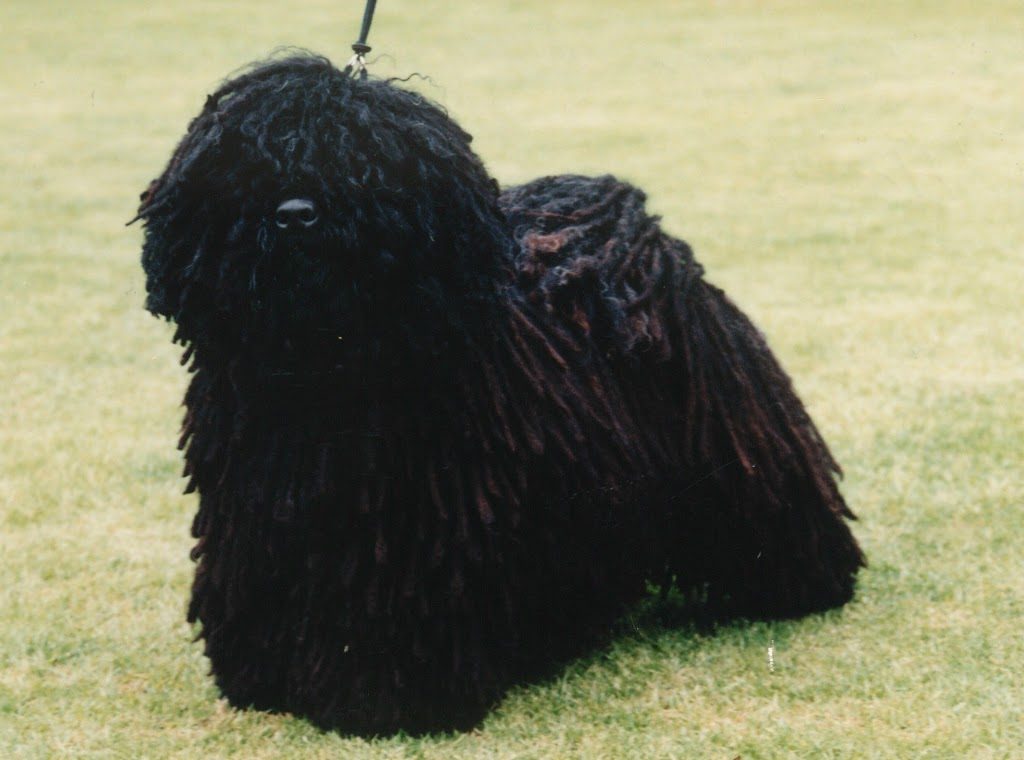
Sue Huebner and Cordmaker Pulik
Sue Huebner is the legendary breeder of Cordmaker Pulik, including Preston, the winner of the 2016 AKC National Championship.
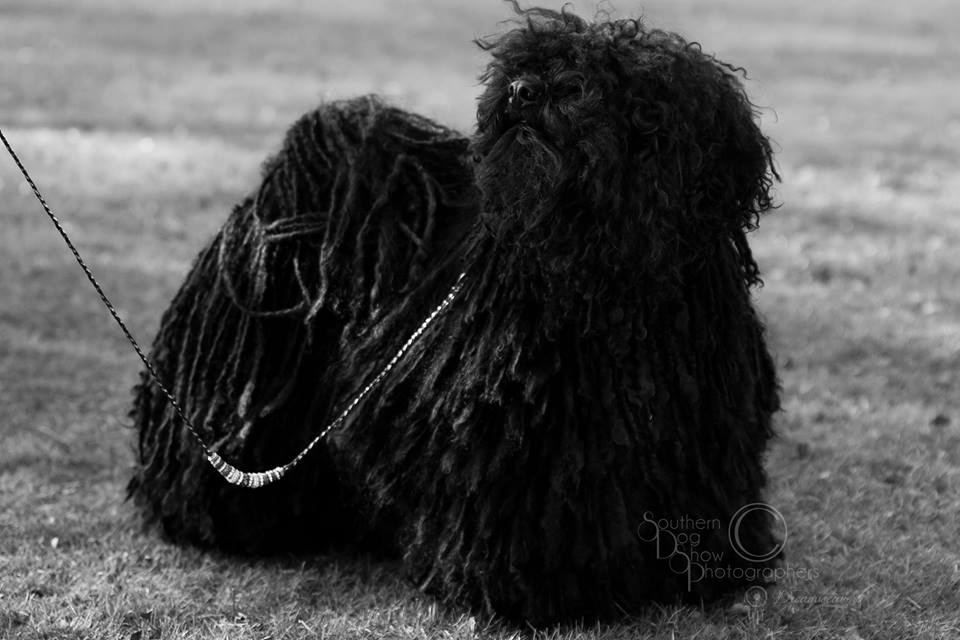
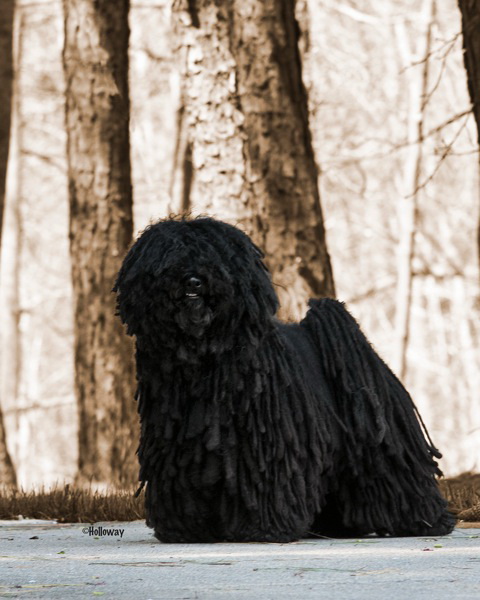
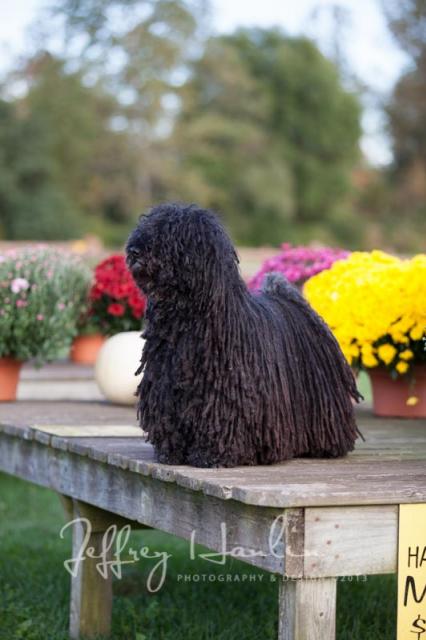
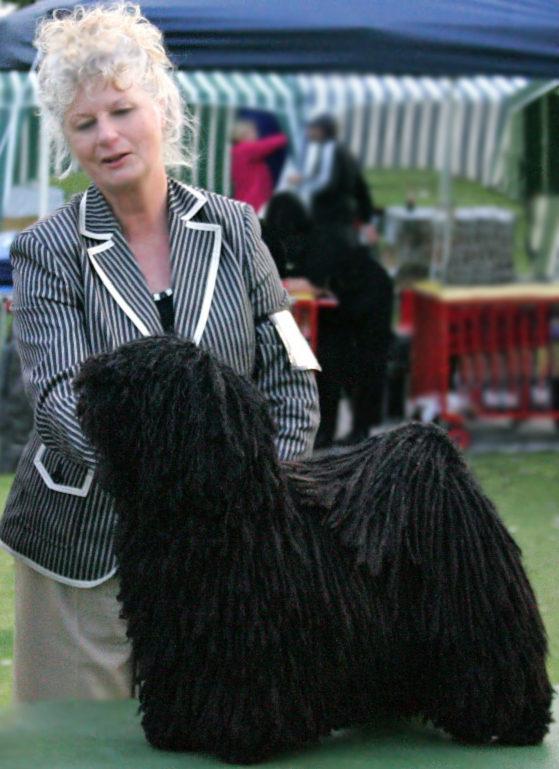
In 1978, Sue Huebner and her husband were looking for a family dog. They researched carefully and chose the Puli, acquiring their first dog from a litter near their home in Melbourne, Australia. Little did the Huebners know that they had never seen a fully coated Puli until after they acquired their new puppy.
Huebner laughs about that now, noting all of the ways people have to research their new dog these days.
“There is no excuse for ignorance (today),” Huebner observed. “Accessing information, pictures, videos of dogs working is easy. I’m still growing in understanding the breed standard 40 years later. I love the research.”
The surprise of a corded dog coated to the ground notwithstanding, the Huebners stuck with the breed, attending obedience classes and competition. Her first conformation competition was sparked when an acquaintance told her that first dog would not be “good enough” to show.
“He wasn’t a great show dog,” Huebner said. “But he finished his championship. He was a good learning dog for me.”
Shortly thereafter, she bought two more Pulik, keeping the better of the two after “running them on” in order to make a decision after they had matured. That dog “didn’t have what I consider a good temperament. Because he was difficult, I had to learn. I didn’t breed from him. It’s why temperament became paramount for me,” Huebner said.
Temperament is Job #1
She strongly believes a dog’s temperament is the result of both nature and nurture.
“As a breeder you need to keep certain key things in your mind. It may not be the most beautiful dog you have. But if you have a very clear goal, temperament must always come first. Then as time goes on, I believe, you are now genetically breeding temperament.”
Huebner also encourages new breeders to understand that family homes are a critical part of a breeding program. “Not because they are necessarily going to breed those animals. You need companion homes. If you produce five puppies in a litter and only one suits the goal you set at the time, there are four others there (who need homes).”
Preservation breeding is a primary focus for Huebner. She calls it a “focus we desperately need to have.”
But she describes a “tension” between preserving the “historically correct temperament” which in some breeds is going to be very different than the societal pressure to have dogs which are all “like Golden Retrievers.”
“Does preservation breeding include temperament when temperament seriously impacted on the purpose of a breed. Or do we have to take account of the fact that our dogs go into family homes (that may not be suited to that temperament),” Huebner asked rhetorically.
Huebner’s advice for breeders whose breed’s historically correct temperament may or may not fit into today’s society?
“I do think the first step is awareness (of the breed’s correct temperament),” Huebner said. “Understand it. Experience it. We have a strategy in place, particularly with dogs going into companion homes. The amount of time we spend educating them before they get the dog is significant. We try to help them understand they’ve bought his temperament, because that’s what you have to live with. And we have life long involvement with our companion families.”
Successful assessment and selection of puppies, in terms of which dogs go to which homes, Huebner suggested, should be a clear process of really watching them as they develop.
“I want you to sit and I want you to watch,” Huebner said. “I want you to do what we ask judges to do. Develop an eye. So that when you’re looking at those puppies and your eye keeps going to one puppy,” one understands it is a combination of temperament and structure that makes the picture.
“All of those puppies are perfect for something,” Huebner noted. “It’s only the purpose that makes them imperfect. Our purpose is to breed a dog with the genetics we want to produce a beautiful dog that will enhance or further the breed. Every one of those little puppies is perfect for something.”
Developing an “Eye”
Creating an identifiable family of dogs goes back to developing an eye, Hubner observed.
“You need to research and intimately understand the breed,” she said. “It’s not just the simplistic understanding of a breed standard.”
Getting started with her breeding program after owning a couple “starter” dogs, Huebner said, “I basically looked at dogs that I loved. I did a lot of research and came up with specific kennels in various countries. I was lucky enough to get to visit them. The most influential kennel behind Cordmaker is Wallbanger. I loved the breeding program behind the dogs. I wanted a pedigree that looked like this for my first outcross.”
Breeding Programs and Dog Shows
Dog shows, Huebner noted, will test a breeding program, but one can’t depend on that exclusively. New folks, she added, will rely on the results of the dog show because it’s the only information they have.
“The danger (of dog shows) is, it’s not about the winning dog,” Huebner said. “That’s not the way the breeding program works. It’s not about that you’ve done well. In the end, the champion part doesn’t matter. The number one all breed doesn’t matter. It’s the capacity of having dogs that can carry the gene pool through and continue to produce the type that you have in your mind’s eye that’s come from research and understanding the breed.
“If you want to be called a preservation breeder, you have to earn the title. The title will be about how you breed.”
Breeding Basics Part 1 and Pedigrees Part 2
Listen to Sue and Laura talk breeding basics today and tune in on Monday when they continue the discussion of building great pedigrees.

147 – Lori Wells and Piglet – Catahoula Leopard Dog|Search and Rescue
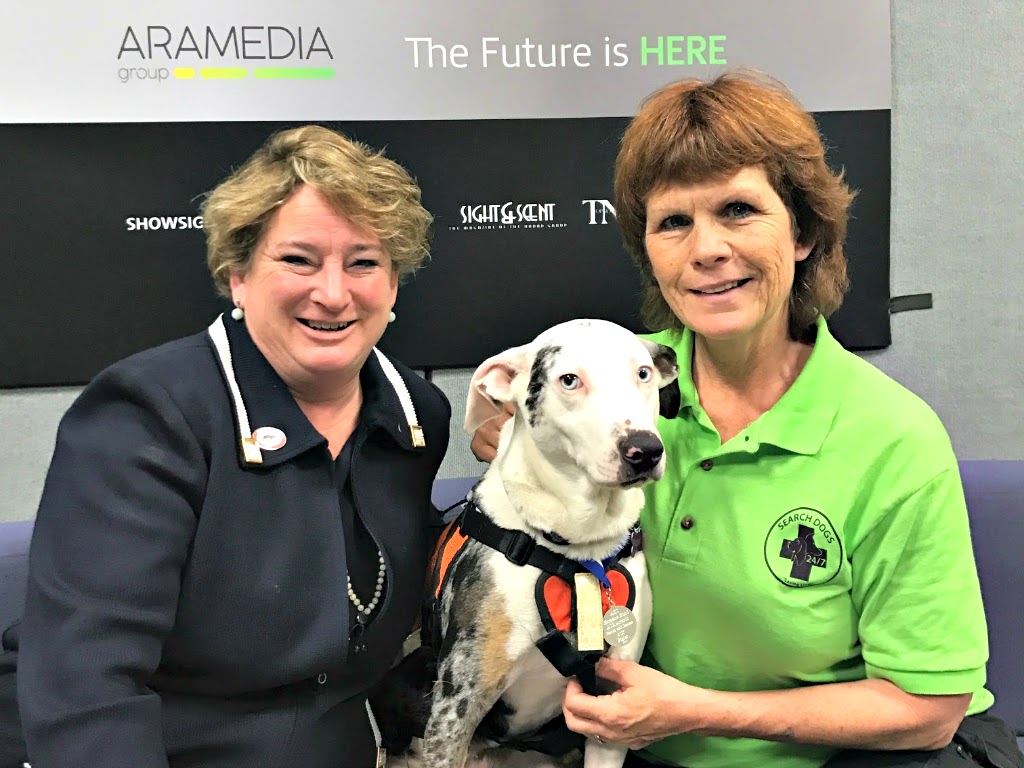
Lori Wells and Piglet – Heroes in Tragedy
Lori Wells and Piglet were winners of the AKC Humane Fund Award for Canine Excellence in the Search and Rescue category. They were honored at the AKC National Championship in Orlando, Fla. last month.
Volunteer and Rare Breed Dog Provide Families Closure in Tragedies
Piglet is a 7 year old Catahoula Leopard Dog trained and certified to discover human remains, one of fewer than a half-dozen of her breed working in Search and Rescue.
Wells said that the dogs feel the intensity of a search that ends with sorrow.
“Absolutely. They know. They’re very intuitive,” Wells observed, while Piglet cuddled closer to her handler, responding to Wells’ emotion. “There’s such a relationship and bond you make and build with these guys through the training. You’re in tune with each other. These are our companions. Our family.”
Family Bonds in Search and Rescue
Wells and her husband met doing Search and Rescue. They work with an entirely volunteer organization that will deploy wherever their help is needed. Working to locate human remains is a very hard and emotional aspect of the Search and Rescue job, but “it’s a fabulous answer for a family that’s grieving,” Wells said.
“When they told me we won (the ACE award), I was overwhelmed,” Wells said. “It’s such a huge honor to be recognized.”
Piglet the Catahoula Leopard Dog
Catahoula Leopard Dogs may not be common in Search and Rescue work, but Wells said their hunt drive makes them well suited to the task.
“(Catahoulas) are the state dog of Louisiana,” Wells noted. “They were bred to herd and hunt. American Indians developed the breed in the early 1800s. Their heritage includes Beauceron, a little bit of hound dog, Spanish mastiff. And red wolf.
“Any good search dog has to have phenomenal hunt drive. Piglet comes from cow dog lines. There are cow dogs or hog dogs. Cow dogs are more settled, sensible minded.”
Wells added that the breed’s stamina helps them succeed in Search and Rescue where multiple, grueling three to four hour shifts are normal.
Lori Wells and Piglet’s Success as a Team
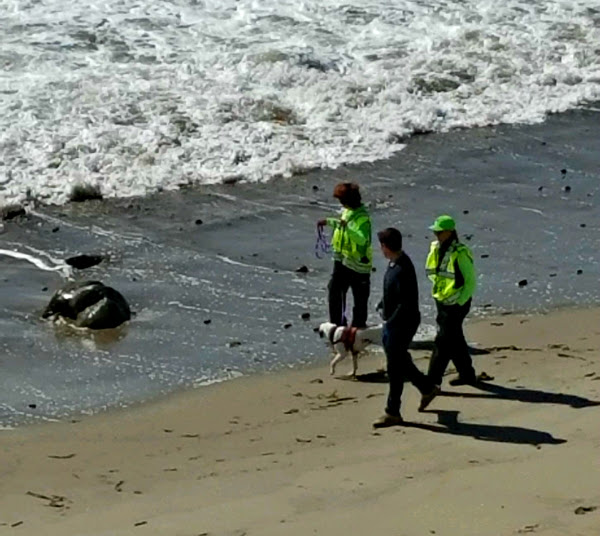
Piglet has successfully located the deceased victims of air crashes and drownings. In one case finding a victim in California underwater after eight days of searching by rescue and law enforcement personnel.
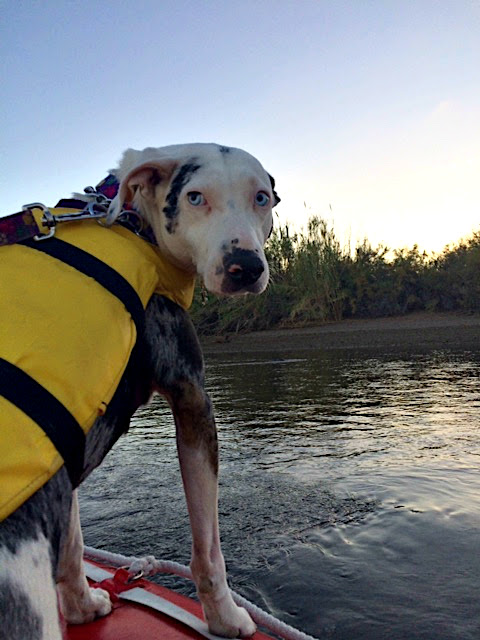
“It takes a lot of blood sweat and tears (to train the dogs for the work),” Wells said. “A lot of hard work. A lot of time. It’s expensive with the mileage driven. But it’s a bond with your dog. There are a lot of books you can read (to learn how to train), but there’s nothing like doing it.”
Training a Search and Rescue Dog
Just like anything our dogs do for us, search and rescue dogs work for a reward. For some dogs it is toy drive, so they want to play tug or ball.
“For mine,” Wells said, “I always trained them to want mommy’s love. They are so happy they’ve made me happy, so just a whole bunch of love. Because I always have that. Handlers forget treats. I’ve always got love. That’s how i do it.”
Wells has trained five trailing dogs for Search and Rescue, but Piglet is the first she’s trained for locating human remains.
Lori Wells and Bloodhounds
Lori also trains Bloodhounds for Search and Rescue.
“When (Bloodhounds) are on scent, they’re on scent,” Wells noted wryly. “They go. You better just keep up. Just that go forward. It can get them in trouble because they don’t know their limitations. They don’t know to stop and take a break. We have to make sure they do that, give them some water and chill out. And then go back. They go right back. There’s no harm to stopping them along that trail. They don’t forget.”
Wells trains her Bloodhounds on trails that are 7 to 10 days old. This is compared, for example, to tracking tests where the track is aged for a few hours. “Our training is all ages of trails, all surfaces, all weather conditions,” Wells said. “So we have a gauge to know how a dog will respond in all scenarios. We need to know how they work those scenarios and know what they’re telling us.”
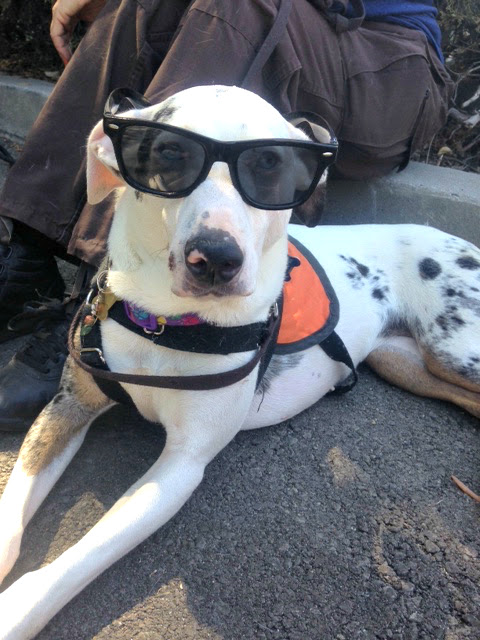
Donate or Learn More at Search Dogs 24/7
FACTS ABOUT SEARCH AND RESCUE FROM SEARCH 24/7
Search Dogs 24/7 Search and Rescue Dog Teams
Wilderness – Urban – Cadaver – Water – Disaster
Search dogs 27/7 has a group of volunteers with specially trained dogs dedicated to assisting in the search for missing persons. Dog Teams are available 24 hours a day, 365 days a year to respond to local, state, and federal law enforcement as well as other public service agency requests.
Search Dogs 24/7 Dog Teams are a volunteer resource. Members incur all costs including mileage, equipment, calling service, and dog expenses. K-9 Team members take time off work to participate in searches and training, drive thousands of miles a year, and spend 50 to 100 hours per month for training and searches.
Search Dogs 24/7 K-9’s and the California Office of Emergency Service (CalOES)
Search Dogs 24/7 K-9 Teams are not a direct resource to CalOES, however, each team is certified to meet or exceed CalOES Standards by one of several outside agencies. We do NOT self-certify.
Relationship with local Search and Rescue units
Some Search Dogs 24/7 dog teams are also volunteer members of other search and rescue groups for local, Statewide, and Federal responses.
When search dogs can be helpful
- An overdue hiker or hunter in a wilderness area
- An Alzheimer’s patient who has wandered away
- A missing child
- A drowning victim in a lake
- An area where there may be human remains buried
- A victim buried in rubble or an avalanche
- A missing person where suicide is suspected
- Persons suspected of being in a collapsed structure
- To confirm that an article was worn by a subject
- To confirm that a subject was in a specific vehicle
- To locate human remains after a fire
What Search Dogs 24/7 dog teams can do
All Search Dog 24/7 handlers initially train a dog in one of the two disciplines: trailing or area search.
Trailing dogs are trained to follow the path that a lost person has taken. Similar to traditional “tracking” dogs, these dogs require a properly preserved scent guide (i.e., a scent article like a sock or glove) and are not distracted by other people in the area. These dogs work on long leashes. Trailing dogs most frequently work trails that are several days old.
Area Search dogs are trained to find any human scent in the area. Although not required, scent guides can be of assistance to area search dogs. Area search dogs work most frequently off-leash and can cover large areas.
After certifying in one of these disciplines, teams may certify in any combination of the following specialties:
Cadaver dogs are trained in the location of human decomposition: tissue, blood, bones etc.
Water search dogs trained to locate human decomposition which emanates from under the water. These dogs work along the shore and in boats to locate the scent as it rises through the water.
Disaster dogs are trained to locate victims of many natural disasters that may be buried in rubble from a collapsed buildings. This type of dog is most often used after earthquakes.
Search Dogs 24/7 handler training
Search Dog 24/7 dog handlers represent a variety of backgrounds. All Search Dog 24/7 dog handlers have a common dedication to helping people and expertise in the use of search dogs.
All Search Dog 24/7 Mission Ready Handlers have been involved with Search & Rescue a minimum of two to three years; many have ten or more years of search and rescue experience.
Dog handlers are continually updating their skills and knowledge and most participate in 50 to 100 hours or more of training and missions per month. The minimum training requirements for all Search Dog 24/7 handlers include:
- Advanced First Aid
- CPR
- Map and Compass navigation
- Survival
- Radio communications
- Helicopter operations
- Crime Scene Preservation
- Mantracking
- Fitness
Most handlers have additional training in areas such as canine first aid, technical rescue, and amateur radio.
Search Dogs 24/7 dog training
Search Dog 24/7 dogs are extremely socialized animals and are very different than most patrol K-9s. Our dogs represent a wide variety of purebred and mixed breeds. Search Dogs 24/7 dogs consistently train in various weather conditions, day or night, busy urban and rugged terrain, so they can effectively search in almost any environment they are placed in. Minimum dog training requirements include socialization, obedience, and helicopter orientation. As a team, the dog and handler must pass a series of search tests to become “mission-ready”. On average, it takes two to three years to achieve this. Teams must participate in ongoing training throughout the year as well as re-certifications.
146 – Megan Leavey, K9 Rex and Bringing Home K9 Heroes
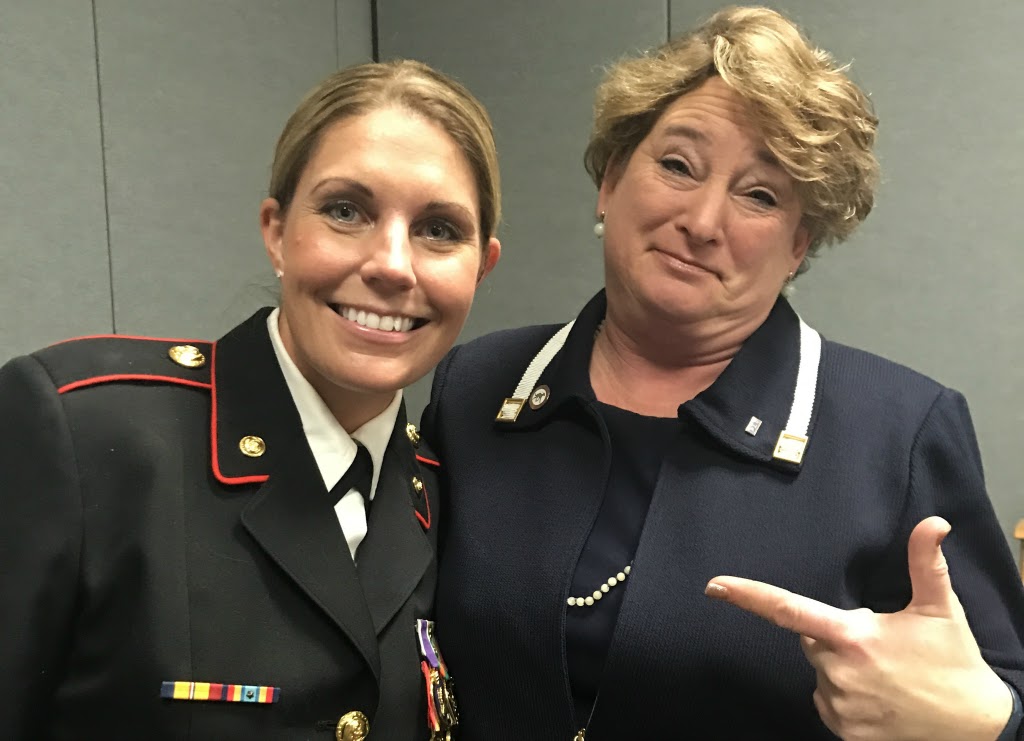
Megan Leavey and Marine K9 Rex
Megan Leavey was a Marine K9 handler whose life and battle to have her working dog, Rex, retire with her were the topic of a movie, Megan Leavey, released in 2017.
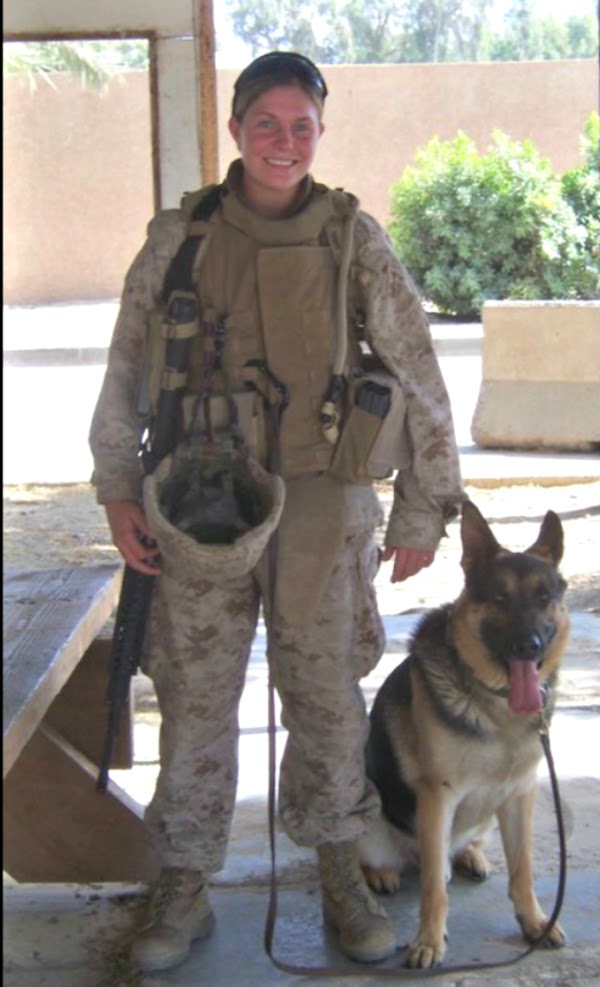
Megan and Rex
Leavey made a special and powerful connection with the military working dog who saved her own and thousands of other lives in Iraq. While respecting that the K9 is a warrior in his own right, Leavey knew her dog, Rex, wouldn’t understand why she left without him.
She grew up with dogs, a total animal lover. “I had no idea there even was a K9 program until I was in military police school,” Leavey said. “I had to finish at the top of my class and be selected to go to K9 school.”
“I was new marine when I got handed this dog. Rex had an attitude. When we are first assigned a dog, we spend two weeks just rapport training. You are the only one feeding the dog, brushing him. You go for walks and play. You work up to getting to know mannerisms. When they see you, they associate that with a positive. The basic training is already done, becoming a team is what’s important.”
Leavey and Rex Survive an IED
Leavey and Rex were shipped to Iraq twice. On the last deployment, they survived an IED explosion on the dusty roads of Ramadi and spent their recuperation and physical therapy recovery together.
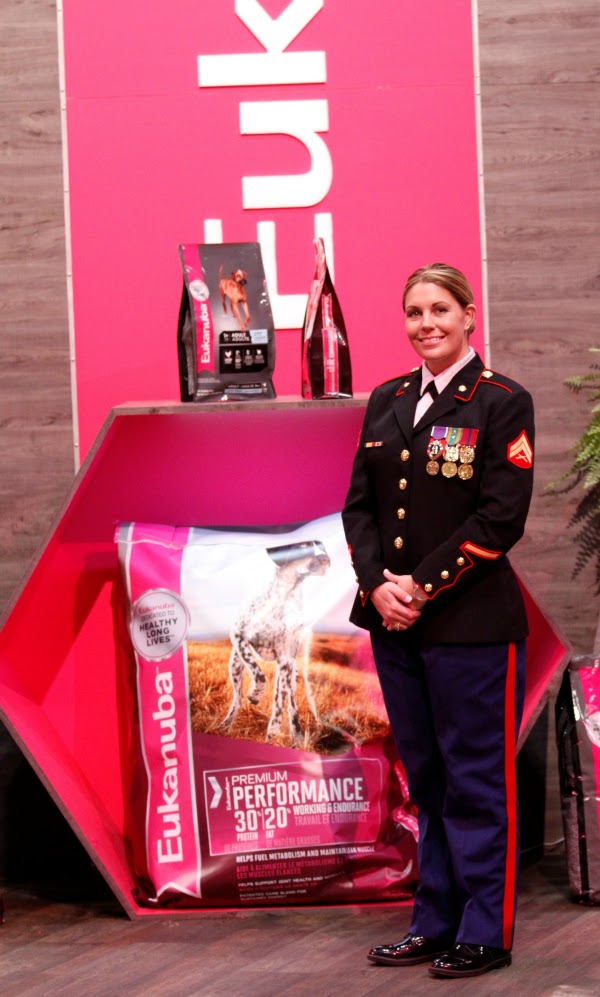
Megan Leavey @ Eukanuba
“Rex was a one person dog,” Leavey said. “Nobody else could have done that (physical therapy) work.”
A dual purpose dog in military parlance, Rex was both a patrol and explosives detection dog. “Rex was super aggressive,” Leavey said. “Right in his vet record it said in giant letters not adoptable… There’s a process to adopt military working dogs and I understood that.”
Parting Ways with Rex
While Leavey’s military contract was up after her recovery, Rex’s wasn’t. He continued working stateside after she returned home to New York state.
“He went through 12 different handlers after me,” Leavey said. “I had such guilt leaving him behind. You can’t explain to a dog that these are the rules. It haunted me every day.”
Leavey kept in touch with her friends in the K9 unit for years. “They weren’t his biggest fans,” she noted wryly. “Nobody bonded with him like I did. I kept hoping every day they’d change his classification.”
The Battle to Save Rex
“I finally got a call from a marine at the K9 section. Rex, now 11 years old, was going to be retired. My friend told me, ‘If you’re going to try and adopt him, get on it.’ Any day Rex could be put down. He was old and sick.”
Leavey went straight to her Veteran’s representative, who took her story to New York Senator Chuck Schumer. The Senator released her plea to the press. The publicity greased the wheels of government and helped Leavey cut through the red tape to have Rex retired with her.
“When he arrived, I just wanted to spend time with him,” Leavey said. “Getting him back really helped me close wounds, work on myself, be at peace with a lot of things.”
For a tough, working K9, Rex settled right in to civilian life with Leavey.
“From the moment I brought him home, he jumped right on the couch. He left the cats alone after getting swatted on the nose. He got along with my other working dog. He got to swim in a pool. See snow. Sleep on a bed and have all the toys and treats he wanted. I had a great eight months with him. I was so grateful that the process was expedited. If I waited any longer, we wouldn’t have had that time.”
Listen Today on Pure Dog Talk
Listen to more of Laura and Megan, including Megan’s observations about her first dog show, on today’s podcast.
145 – Pat Laurans: NOHS Best in Show|AKC National Championship
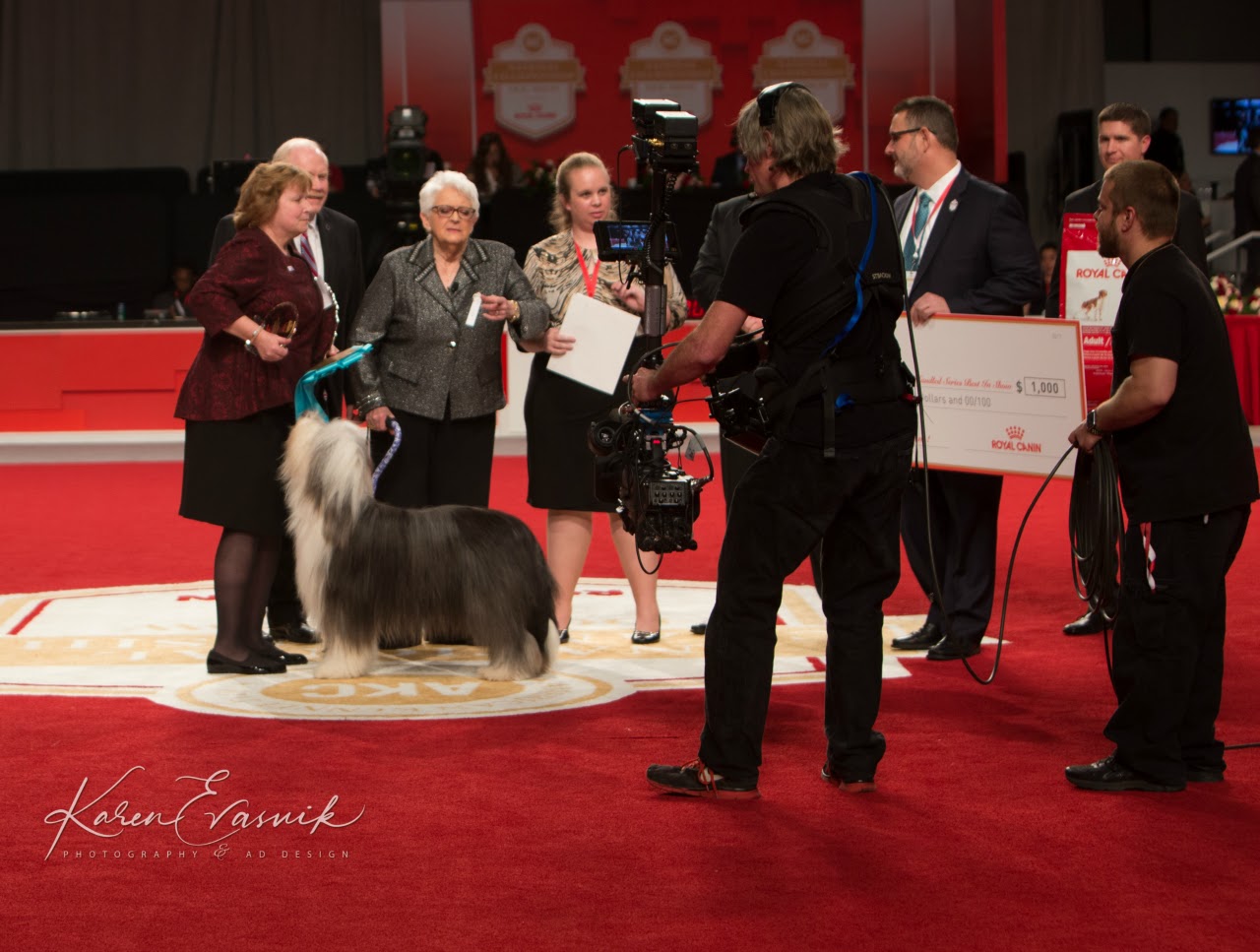
Pat Laurans: On Judging NOHS Best in Show
Pat Laurans, AKC delegate from the German Wirehaired Pointer Club of America, was selected to judge Best in Show for the AKC National Championship National Owner-Handled Series in Orlando, Fla. Dec. 15, 2017.
For Pat Laurans, the dogs always come first. “Love of the dogs comes first,” Laurans said. “The people in the sport become our family due to our shared love of dogs.”
“It’s important to understand that 80 percent of dogs exhibited in AKC shows are shown by the owner,” Laurans noted. “AKC started (NOHS) to celebrate the dedication of Owner-Handled exhibits throughout the country. The top 10 in each breed is invited the national championship show.”
705 NOHS Competitors
Laurans made a point of defining the eligibility of the NOHS and noted that the year’s final competition in Orlando started with 705 competitors from 191 breeds/varieties.
“This shows the enthusiasm of owner handled competitors,” Laurans said. “The bond between dog and handler is something you can see. You realize the devotion, love and caring and the work they’ve done to reach this level.”
The Seven Group Winners Critiqued
Laurans graciously shared her articulate, detailed critique of all seven group winners in her Best in Show lineup with us at Pure Dog Talk.
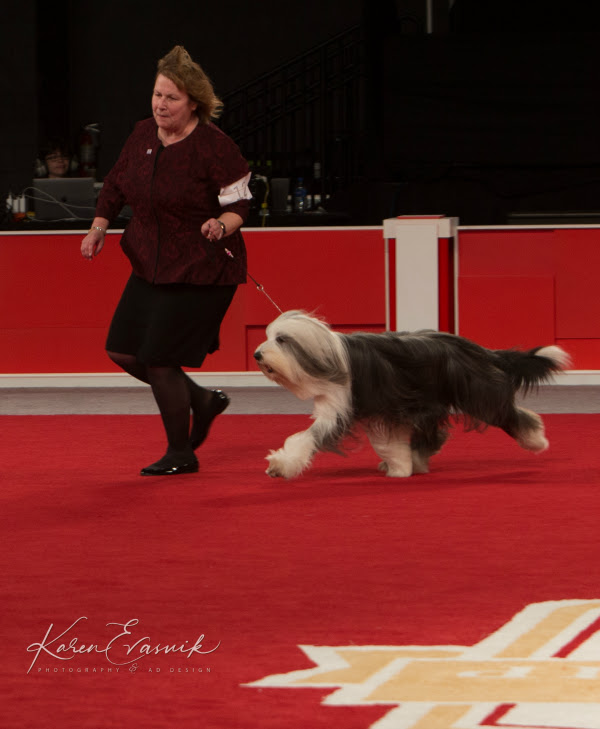
The Winner – Bearded Collie
“The winner (Bearded Collie) was an example, to me, of a dog that could do the work the breed was meant to do,” Laurans said. “That would be able to work all day because of the correct outline, angulation and balance. And that moved around the ring effortlessly. … We aren’t judging handlers. We’re judging the dogs. This Beardie was, to me, of such outstanding quality that she was very deserving of NOHS BIS.”
Take a minute to listen to Pat and Laura talk about the Bred By Exhibitor competition at the AKCNC and the importance of a mentorship that spans more than 20 years.
And if you missed it, go back and pick up Pat’s interview about the critical role of the AKC Delegate body and what, exactly, these important members of the fancy do for you.
Huge thanks to Pure Dog Talk supporter Karen Evasuik for sharing her gorgeous photos of this important event. Check out all of her beautiful candids from the entire week in Orlando here.
Meanwhile, remember to tune in to Animal Planet tonight for all of the great coverage from the AKC National Championship presented by Royal Canin.
Allison Foley’s Tip of the Week – International Shows
Allison and Laura talk about International Shows, qualifying for competitions, and differences between AKC and CKC.
144 – Stars in Orlando|Jason Taylor and Jerry O’Connell
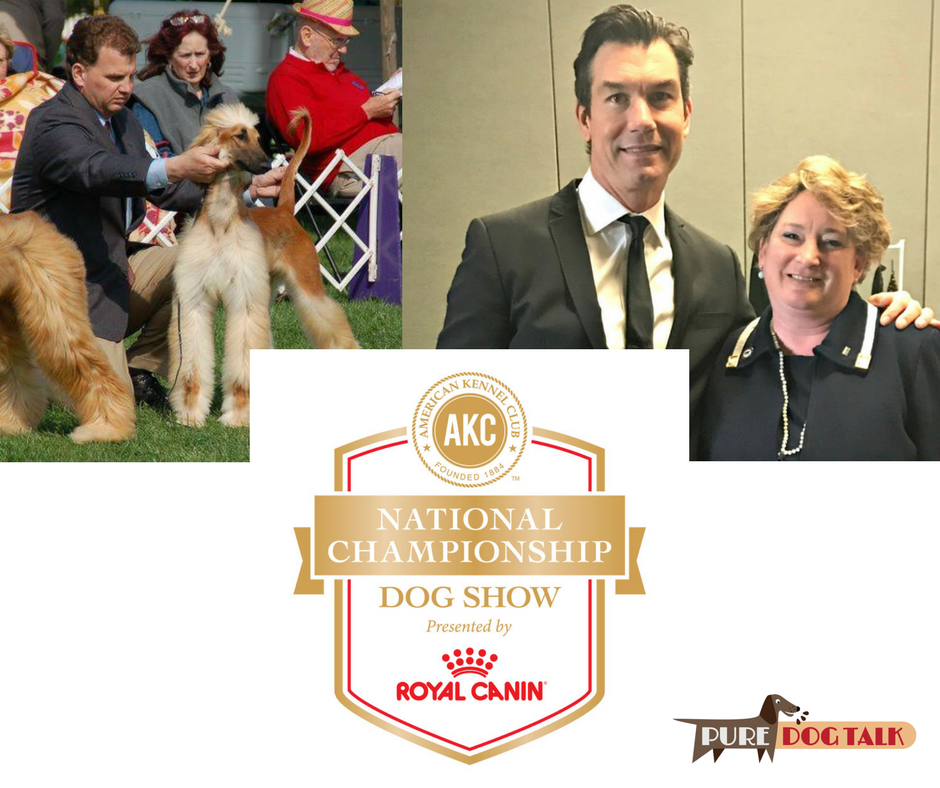
Jason Taylor and Jerry O’Connell – Stars in Orlando
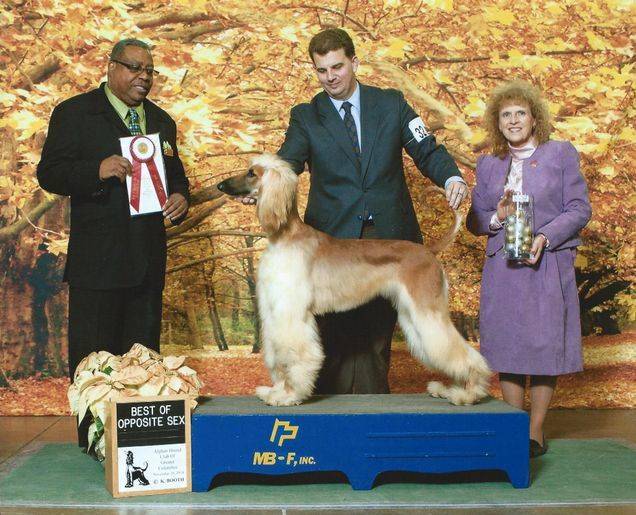
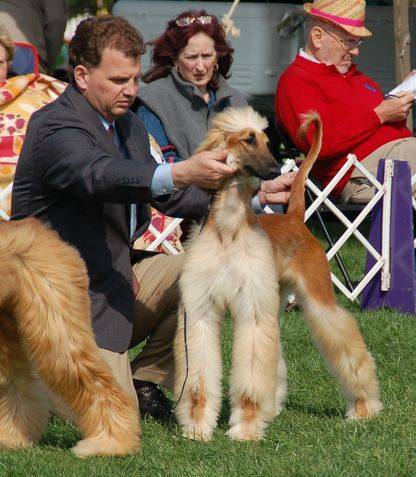
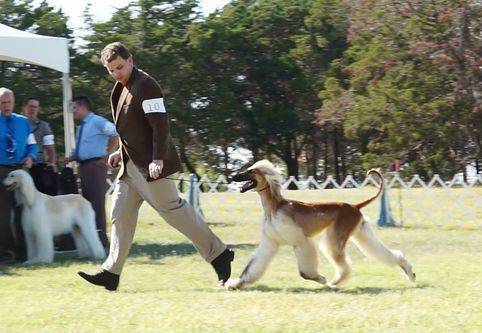
Jason Taylor is the face you rarely see behind the scenes of the AKC National Championship presented by Royal Canin. Taylor, an Afghan Hound breeder who worked for Eukanuba before the show even existed, is a constant through the year’s 18 year history.
“I think the thing we got right early on,” Taylor said, “was the focus on celebrating breeds and breeders. It’s why we have the Bred By Exhibitor competition that continues to today. The other thing is, there are no tiny rings at the AKC National Championship. We believe you need to be able to see dogs move. At least for this show, this is the way it’s gonna be.”
Assistant Show Chairman – Jason Taylor
Taylor’s official title is Assistant Show Chairman and National PRO Sales Director for Royal Canin. He also is the force behind this year’s hugely successful roll out of the puppy/junior sweepstakes event on the Friday of the National Championship events weekend.
“We liked the idea of introducing a moment celebrating the future stars,” Taylor said. “When I sat down and drafted the event, working with Gina DiNardo, we thought if we could get 500 puppies it would be a success. It was beyond any dream that we got 1200 entries!”
Taylor admits the team had concerns, with a focus on dogs first, that the “big, busy week” would overwhelm the young dogs. But he notes that exhibitors were mindful of the puppies’ needs and careful with them.
The wild schedule of that Friday in the weekend is one Taylor also went into aware of the potential issues. “But we think of these as good problems to have,” Taylor said, observing the record-breaking entry for the event. Friday features the National Owner-Handled Series, 30 specialties, including several nationals and two group shows. Adding the Puppy/Junior event was additional pressure on the schedule.
“On paper it looked like conflicts,” Taylor said. He even joked about the building-wide “brown out” that effectively juggled the schedule enough to squeak through with fewer head to head conflicts than expected. “We learned a lot,” Taylor said. “There are some tweaks we can make to relieve the schedule.”
Taylor’s Wisdom for Show-Giving Clubs
And, just for Pure Dog Talk listeners, Taylor offered the benefit of his wisdom as applicable to all show-giving clubs.
“The AKC National Championship is unique,” Taylor observed. “But the principles are the same. You have to concentrate on revenue, but it can’t solely be from entries. Clubs have to get creative and think outside the box.
“And they need to be absolutely maniacal about expenses. Make sure the money you spend is in the right places. That it’s going to show up.
“Clubs need to generate awareness. Too many clubs don’t know how. There are newspapers, blogs, podcasts. There are individuals in every market who are into dog things. Facebook pages are critical. Clubs need to reach out to the community. Even if folks are not dog show people, they’ll come out for dog stuff. The more people who attend a show, the happier the vendors are and so on.
“Dog shows are hard (for the general public). Most of the activity is at 8 a.m. and slows down through the day. For most families, their day happens in the opposite way. Having things for people to do, to get involved with, is vital.”
Jerry O’Connell Co-Host’s on Animal Planet
After our talk with Taylor, Laura had a few minutes to catch up with the show’s newest co-host, Jerry O’Connell, known for his work on the film Stand By Me and Crossing Jordan.
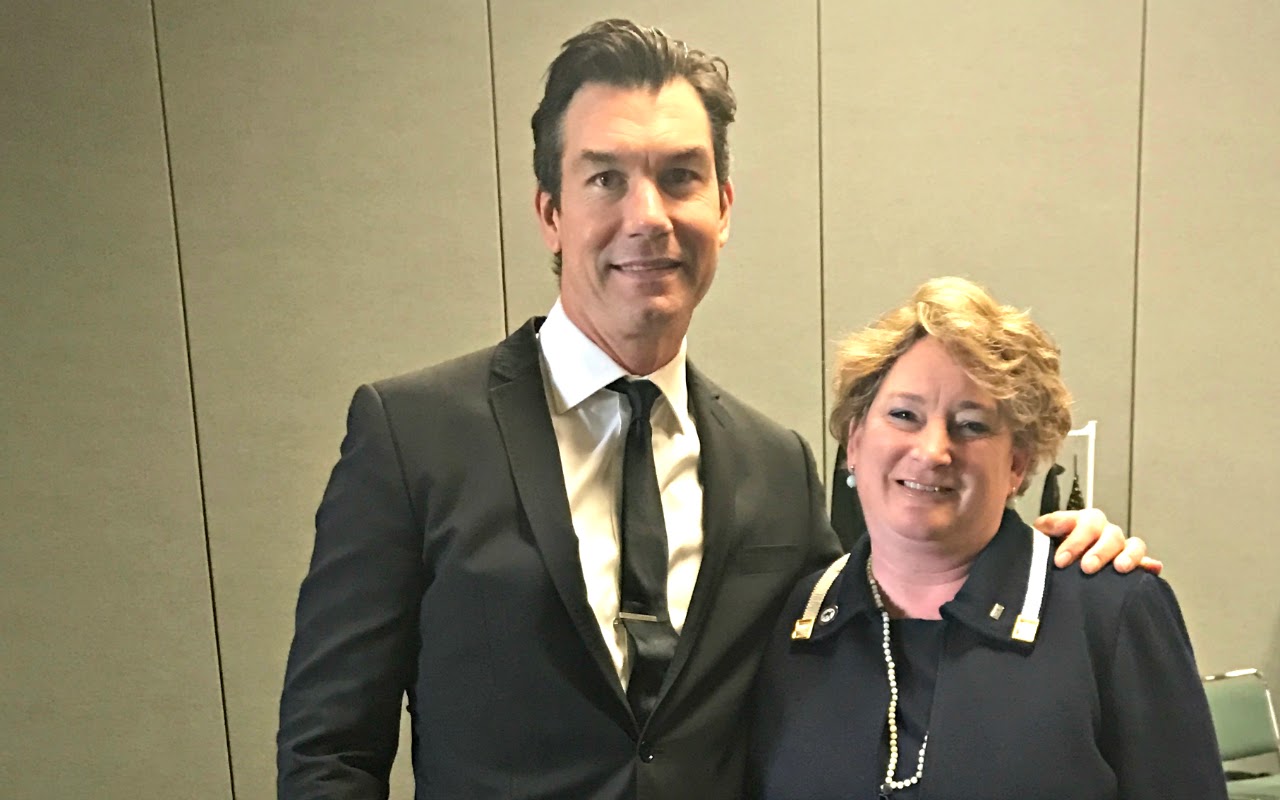
Jerry O’Connell and Laura Reeves
Listen in to our up close and personal visit with O’Connell. Hear his exclamations that the dogs are adorable and well-behaved, his experience with being groomed at the dog show, his commentary on where women store their bait and more.
“I’m the guy they bring in to ask the questions the people at home want to ask,” O’Connell noted. “It’s impossible not to smile walking across that floor.”
143 – Laura Reeves Sings 12 Puppies of Christmas

Laura Reeves Sings!
The last two weeks of the year are normally a quiet, restorative, hibernating time of year for folks. Even with celebrations, friends, family and feasting, the tempo gradually slows down as we take time to review the year past and contemplate the one ahead.
So Merry Christmas crew! As we each celebrate the holiday season in the fashion we choose, I just wanted to take a few minutes to say THANK YOU.
I mean, wow! The first Pure Dog Talk episode debuted Nov. 21, 2016… thirteen months later, we have created more than 140 episodes released on iTunes and just about every other available podcast delivery system. We built a huge, resource-rich website. And we’ve enabled well over 160,000 FREE downloads of knowledge and insight directly from the best in the sport to anyone who wants to listen and learn.
What an amazing gift you have given Mary and I. All of you…. Our listeners, our fans, and so many legends who generously shared your time, your memories and your wisdom. We literally would not be here without you.
Orlando 2016 to 2017
Last year at the AKC National Championship in Orlando, I walked a couple marathons worth of concrete floors, spreading the word about our brand spanking new venture.
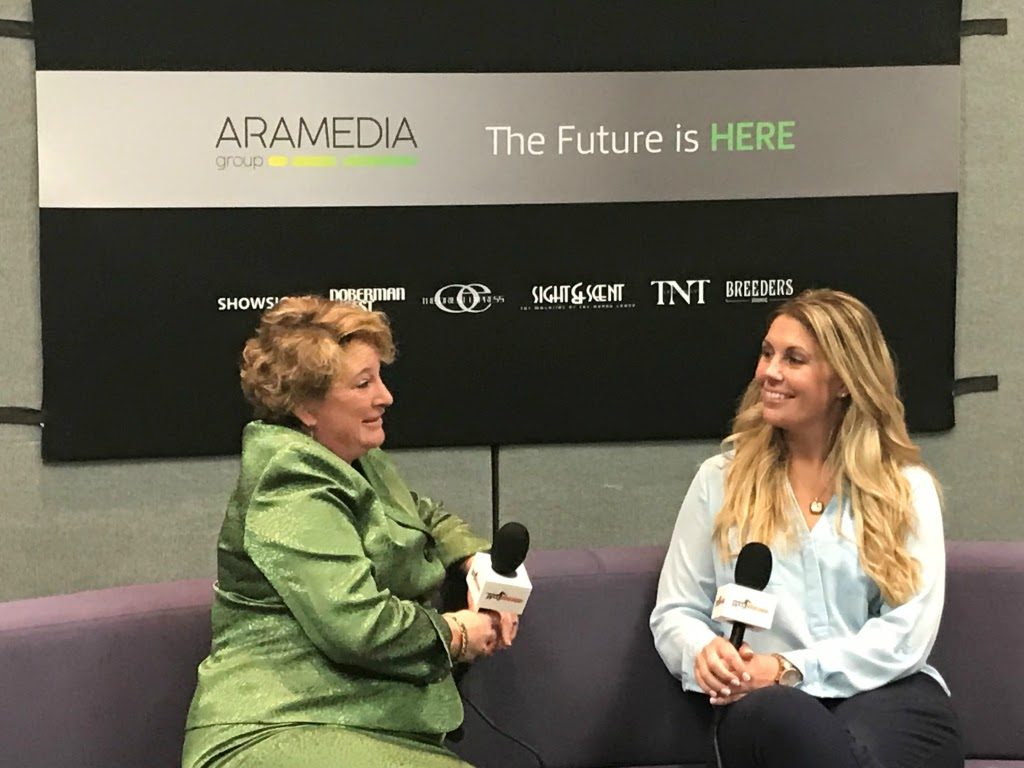
This year we were thrilled to announce we’ve joined forces with Aramedia Group, publishers of ShowSight Magazine, to enable the show to reach an even larger audience. Mary and I are no longer a two-girl band!
With AJ Arapovic and his outstanding team behind the show, we have some really exciting plans on the horizon. Each one of which is designed to continue serving our thriving community of avid knowledge seekers in bigger and better ways.
Sign Up and Join Us
We hope you’ve already signed up to join us. If not, just stop by the PureDogTalk.com or the Facebook page and click the “Don’t Miss an Episode” button. Your name and email address is all we need to keep you in the loop.
Puppies, Puppies, Puppies
Let’s continue Celebrating the History of our sport and Creating a bold vision of our future!
Meanwhile, as we all know, I can’t miss out on a teaching moment so here goes.
Puppies make everything better. Gramma always swore it was a hot bath that cured everything from the common cold to a broken heart
Newsflash gramma, it’s puppies. Sweet puppy breath, fat puppy paws, silly puppy antics, gumby puppies sleeping, noisy puppies eating. Puppies encapsulate all that is good and pure in the world.
Of course, there’s also puppy poopie and peepee; puppy gruel; six loads of laundry a day; sleep deprivation; random and limited opportunities to bathe, eat or socialize; no time for Christmas decorating; and, the attendant brain fog descending due to all of the above.
Puppies embody that spirit of renewal and cleansing that make the New Year such a joyous celebration.
As we bid farewell (and for many, good riddance) to a turbulent and divisive year past, let’s raise a glass to the hope, the joy, the pureness of purpose represented in our puppies.
These little ones, if we choose them as our guides, harbor hate for no one. Their affection is not restricted based on race, gender, sexual orientation, creed or national origin. They are equal opportunity employers of beseeching looks, demanding caterwauls at feeding time and sock destruction.
In an uncertain world, we can find comfort, courage, kindness and focus in the unquestioning trust of a puppy’s steady gaze.
Laura Reeves Sings 12 Puppies of Christmas – OMG!
And, because I believe we all need a laugh, especially at what can be a challenging time of year, please join me in a sing along of the “12 puppies of Christmas”…. (A Laura Reeves original production!)
On the first day of Christmas, my true love gave to me, a puppy in a sherpa bag…
(Caveat, never give a puppy for a Christmas present!)
On the second day of Christmas, my true love gave to me, two towel rolls for my puppy in a sherpa bag…
On the third day of Christmas, my true love gave to me, three air fresh’ners, two towel rolls for my puppy in a sherpa bag…
On the fourth day of Christmas, my true love gave to me four show collars, three air fresh’ners, two towel rolls for my puppy in a sherpa bag…
On the fifth day of Christmas, my true love gave to me, five cooooover ads… four show collars, three air fresh’ners, two towel rolls for my puppy in a sherpa bag…
On the sixth day of Christmas, my true love gave to me, six Sprinter tires, five cooooover ads… four show collars, three air fresh’ners, two towel rolls for my puppy in a sherpa bag…
On the seventh day of Christmas, my true love gave to me, seven shiny suits, six Sprinter tires, five cooooover ads… four show collars, three air fresh’ners, two towel rolls for my puppy in a sherpa bag…
On the eighth day of Christmas, my true love gave to me, eight sensible shoes, seven shiny suits, six Sprinter tires, five cooooover ads… four show collars, three air fresh’ners, two towel rolls for my puppy in a sherpa bag…
On the ninth day of Christmas, my true love gave to me, nine doggies dancing, eight sensible shoes, seven shiny suits, six Sprinter tires, five cooooover ads… four show collars, three air fresh’ners, two towel rolls for my puppy in a sherpa bag…
On the tenth day of Christmas, my true love gave to me, ten tongues a wagging, nine doggies dancing, eight sensible shoes, seven shiny suits, six Sprinter tires, five cooooover ads… four show collars, three air fresh’ners, two towel rolls for my puppy in a sherpa bag…
On the eleventh day of Christmas, my true love gave to me, eleven puppies squalling, ten tongues a wagging, nine doggies dancing, eight sensible shoes, seven shiny suits, six Sprinter tires, five cooooover ads… four show collars, three air fresh’ners, two towel rolls for my puppy in a sherpa bag…
And, on the twelfth day of Christmas, my true love gave to me, twelve friendly judges, eleven puppies squalling, ten tongues a wagging, nine doggies dancing, eight sensible shoes, seven shiny suits, six Sprinter tires, five cooooover ads… four show collars, three air fresh’ners, two towel rolls for my puppy in a sherpa bag…
Peace on earth, good will to mankind from all of us here at Pure Dog Talk.
Merry Christmas to all and to all a good night…
142 – Lorrie Carlton|Bichon Frise Breeder of Flynn

Lorrie Carlton and Bichon Frise: Pure Dog Talk Breeder’s Voice
Lorrie Carlton, breeder of Flynn, GCH Belle Creek’s All I Care About Is Love, came to her Bichon Frise breeding program with a background in sporting, hound and working breeds. Her firmly ingrained focus on structure and movement has continued through more than 40 years.
Carlton’s family raised Weimaraners and owned a boarding kennel and grooming shop. She grew up with bird dogs and showed her first dog at 11 years old. The family moved in to handling show dogs and added Old English Sheepdogs to their pack. Carlton worked in the kennel and groom shop after school and learned grooming by watching starting at 14.
Following in her dad’s footsteps, Carlton became a licensed professional handler. Her favorite win? Group 1 with the Borzoi at Westminster Kennel Club in 1993 under Robert Forsyth. She retired the following year to assist her new husband, Larry Letsche, at his veterinary clinic in Michigan.
In 1976, just three years after the breed was recognized by AKC, Carlton piloted a Bichon named Sam to Best in Show in place of her father, who had been hurt. Sam made her fall in love with the breed. Just five years later, she won the national with her first Bichon of her own.
Correct Structure Before a Pretty Face
“I’ve got to have the structure,” Carlton said. “You can fine tune the little things, but you can’t fine tune the whole dog, especially the front. (My first) dogs didn’t have the classical pretty head. I figured I’d breed to the head at some time, but they have to have the structure first.”
Rebuilding her program after a devastating bout with juvenile cataracts in her line, Carlton continued to focus on structure, temperament and health.
“I breed my dogs for myself,” Carlton said. “I want a dog that is sound, that can come, that can go. Yeah, I want a pretty face, just like everybody else does. But I want proper coat, I want proper attitude and I want the health. I don’t want health issues. I can’t say I haven’t had some, but I don’t know anyone breeding dogs for any length of time that hasn’t had some.”
Nicks and Flukes in Breeding Program
Carlton shares her stories about dogs that make a good “nick” with her lines and the “flukes” she won’t use in a breeding program. Her horror stories of breeding the “best to the best” and her preference to breed to the sire of a dog she likes.
“Successful breeders are honest with themselves,” Carlton said. “They are honest with what they have. They are not willing to compromise. They have a standard that they have set for themselves.”
Raising Bichon Frise Puppies
Carlton’s puppies are born in her kitchen, go to work at the vet clinic with Lorrie and Larry. She said they watch the puppies grow, making their selections around 10 weeks. She’s looking for that great puppy that has attitude, a certain look, a pretty face, pretty body.
“We put them on the ground and watch them walk,” Carlton said. “The ones we like, we hang on to. I separate the puppies at 7-8 weeks so they are sleeping the night through in their crates when they go home with new owners. We walk them on a leash. Teach yes and no. For sure, put a little extra into the dogs who have the potential.”
Carlton says she wants watch how the puppies react as they go through training, that she wants them to go through the uglies. “I don’t want them to stay beautiful all the way through (growing up),” she added.
Share the Bichon Frise Love through Mentoring
Love Bichon’s and want to learn more? Lorrie wants to encourage newcomers and offers mentoring to anyone who is interested.
“We need new people,” Carlton noted. “Especially in our coated breeds.”
Bill McFadden and Flynn
Watching Flynn and professional handler Bill McFadden this year has been a treat for Carlton, who normally specials her own dogs.
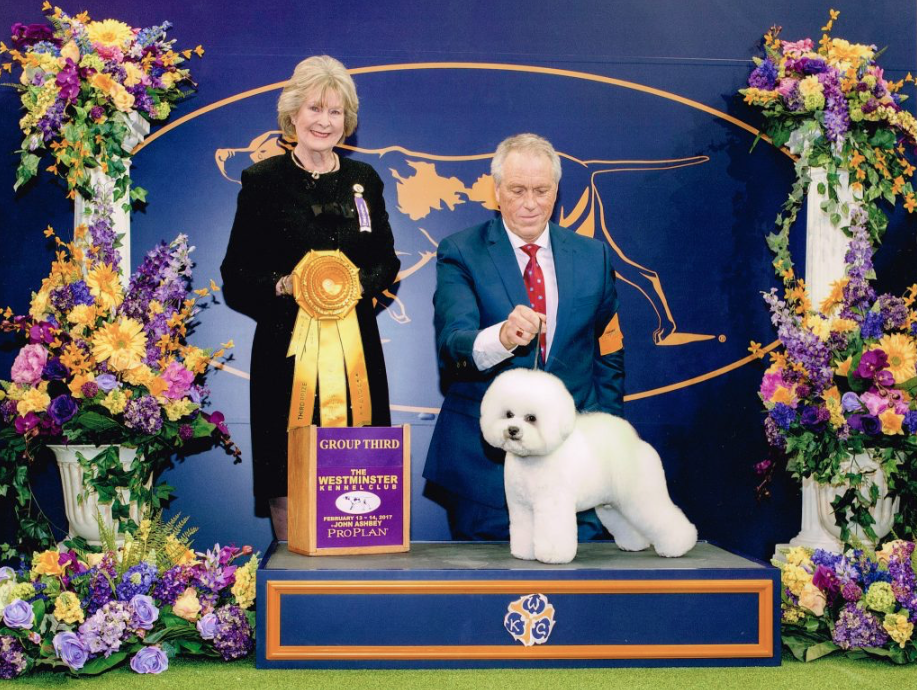
Bichon Frise Flynn with Bill McFadden
“It’s nice to be able to see your own dog out there,” Carlton said. “It’s like, wow, this is what 40 years of breeding brought me.”
(…and you know Pure Dog Talk LOVES Mr. Bill)
141 – How to Rise to the Top|Katie Bernardin and Giant Schnauzer Ty

Rise to the Top: Katie Shepherd Bernardin and Giant Schnauzer “Ty”
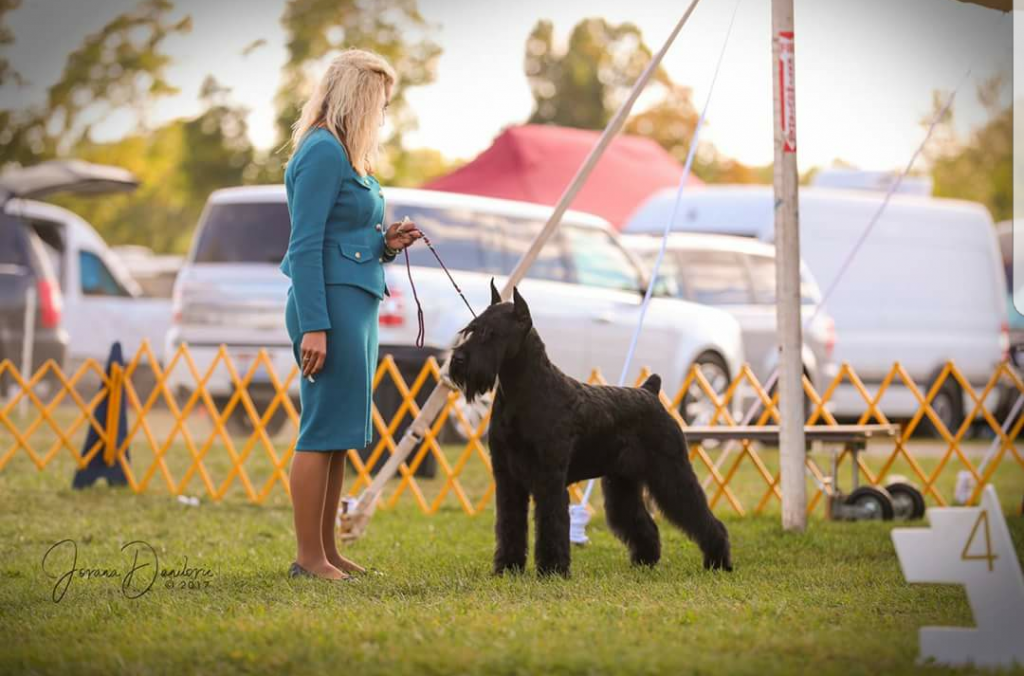
Katie Shepherd Bernardin is the handler of Ty, the Giant Schnauzer in a ridiculously tight competition for number one dog of all breeds.
At the tender age of 31, Katie stands as one of the youngest handlers to run this grueling race.
And, in the midst of this hectic, busy, insane year, Katie married Adam Bernardin in September. Just in case she wasn’t crazy enough…
Living and loving on the way to number one…
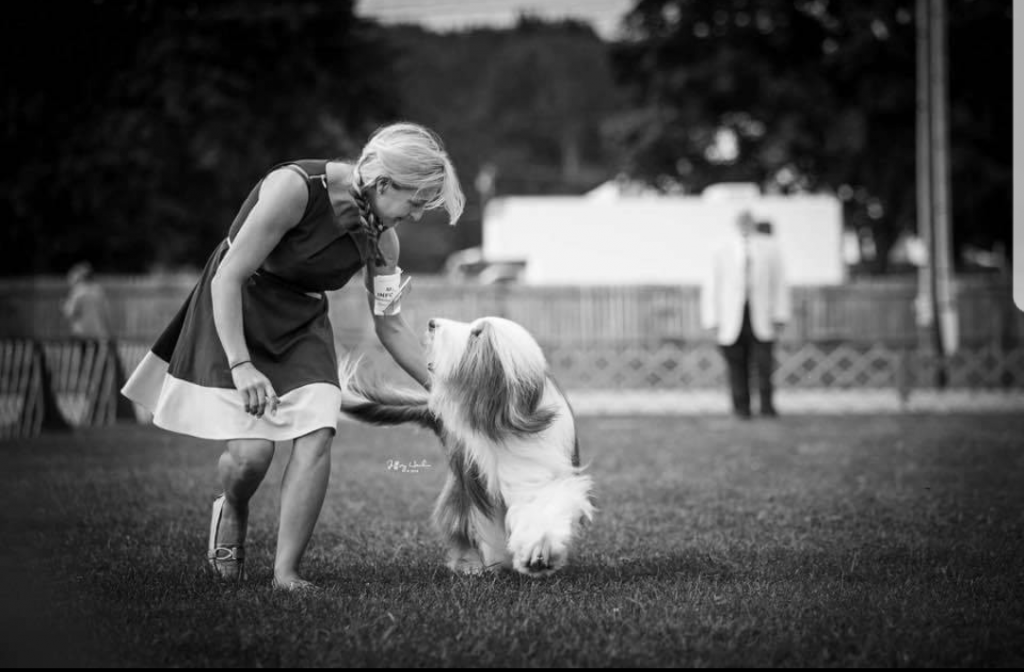
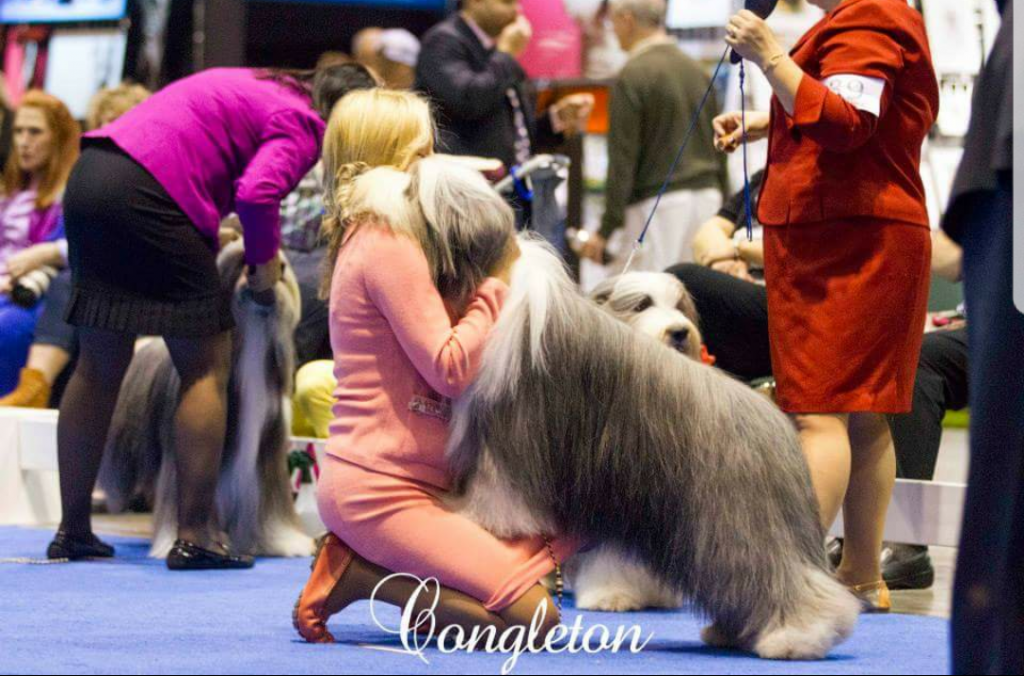
Katie is the poster child for raised in the sport. She started attending shows with her grandmother (while still in a stroller!). Her gramma bred miniature schnauzers and Katie remembers standing on a stool to help dry and chalk the dogs for the ring. She showed her first dog at age seven and hasn’t looked back.
After years spent working for professional handlers, including Lori Wilson-Paust and Andrew Doyle, Katie says showing a working dog (versus sporting dogs and sighthounds) has been a significant challenge.
But, always learning is her mantra.
“You can’t stop learning,” Katie said. “I learn something every day. From Adam, from Lori, from Angie Lloyd. I can always call and ask a question.”
To Be Number One, Seek Mentorship
Katie’s strongest recommendation to young people coming up in the sport is to seek mentorship.
“You have to love your job,” Katie said. “You have to do it with a passion. You sacrifice your own life to make sure the dogs always come first. You take care of the dogs. But you have to *learn* to take care of dogs.”
Katie’s best recommendation for anyone in the sport, “Go watch a different breed. Watch how the handlers put their hands on dogs. You need to build a bond with a dog. Go work for a handler. It’s a very hard life. You need to learn that it’s a whole lot more than showing up at the dog show with your dog.”
Know Your Breed and Be Prepared
She adds that she has dealt for years with the potential for bloat. “You need to know the breed you’re carrying. The more you know, the more you prepare yourself, the more confident, the more you won’t panic in a situation. Be confident and know what you’re doing. Knowledge gives you confidence and confidence kills panic.”
Ty the Giant Schnauzer
In a complete switch from most top dogs, Ty goes home between dog shows . Katie said he needs downtime. “He’s a thieving monster,” Katie said. “He steals steaks off the counter. He’s the ultimate “dog is a dog”.”
Katie’s positive suggestions for continuing to move toward the never stop learning motto include: That we have intelligent conversations. That we be involved. That we work hard. That you never stop trying your best.
Katie Bernardin”s Best Tip
Her best tip? “Think of someone you really admire in the sport, and imagine they’re always looking over your shoulder. Act like they are always watching.”
Allison Foley’s Tip of the Week
Don’t miss Allison’s Tip of the Week after Katie Bernardin today!
Check out Poodle University, Juniors 101, and many more grooming and handling courses at Leading Edge Dog Show Academy.
140 – Show Dog of the Year Awards|Corey Benedict

Show Dog of the Year!
It’s the Awards time of year in the purebred dog fancy. The AKC National Championship show presented by Royal Canin this weekend will feature the announcement of a number of huge awards from the AKC, including their nominees for Breeder of the Year and the ACE award winners for heroic dogs.
But voting is also underway for awards influenced by the purebred dog fancy at large.
Show Dog of the Year Awards
Corey Benedict, Northeast Area Manager for the Breeders Enthusiast Group at Purina ProPlan, oversees the Show Dog of the Year Awards presented by Purina and Dog News Magazine in February during the Westminster Kennel Club weekend in New York City.
Benedict, who worked for Walt Disney World as a show director for nearly 30 years, is also a breeder of Grand Basset Griffon Vendeen and president of the GBGV Club of America.

63rd Year of the Awards
He noted that the Show Dog of the Year awards are now in their 63rd year, having originally been sponsored by Ken-L Ration. He credits ProPlan’s Anne Viklund with continuing the tradition, previously known as the Winkies, after the last co-sponsor, Dogs in Review magazine, went out of business.
Our Favorite Bill McFadden to MC
The black tie, by-invitation-only event held at the elegant Gotham Hall on Saturday, Feb. 10, will be MC’d by Bill McFadden and “BestMinster” with a few surprises thrown in.
The glamorous evening celebrates the winners of the Show Dog of the Year based on Dog News points calculations, the Champions Cup based on the most points earned at Purina-sponsored shows, the AKC Achievement awards for Juniors, Obedience and Agility, the Anne Rogers Clark award for outstanding achievement in the sport and, finally, the Pro Plan Awards.
Don’t Forget to Vote
This final category is where you, our listeners, come in. Everyone in the purebred dog fancy is encouraged to vote for their favorites of three nominees, selected by committee, in each of the five categories.
Breeder of the Year
NOMINATING COMMITTEE FOR BREEDER OF THE YEAR
Armando Angelbello, Eileen Hackett, and Doug Johnson
The Best Breeder recipient should show a record of consistent quality over time, a high percentage of outstanding dogs, dog-friendly responsible kennel facilities and showing success at national and important specialty shows.
Nominees for Breeder of the Year:
Karen Fitzpatrick — Meadowlake Border Terriers
Lisa & Harry Miller — Kiarry American Foxhounds
Bill Shelton & Steve Leyerly & Becky Williams DVM — Coventry Pembroke Welsh Corgis
Professional Handler of the Year
NOMINATING COMMITTEE FOR PROFESSIONAL HANDLER OF THE YEAR
Kellie Fitzgerald, Bergit Kabel, and Valerie Nunes- Atkinson
Professional handlers are undoubtedly among the most visible participants in our shows; therefore courtesy, civility and a spirit of true professionalism must be hallmarks of nominees in this category. These qualities should be extended to clients, judges, fellow exhibitors and handlers, and attending public. Criteria should include handling ability, care of animals in their charge, long-standing achievement in the sport of purebred dogs, and consideration for success over the previous 12 months.
Nominees for Professional Handler of the Year:
Angela Lloyd
Tiffany Skinner
Mike Stone
Judge of the Year
NOMINATING COMMITTEE FOR JUDGE OF THE YEAR
Barbara Dempsey Alderman, Frank Sabella, and Bill Shelton
Voting criteria for best judge is relatively simple. The recipient should have shown good judgement, courage of conviction, knowledge of and adherence to demands of breed standards, origin and purpose, courtesy, shown efforts to assist novice exhibitors, and any other factors which during the previous 12 months might be considered especially noteworthy.
Nominees for Judge of the Year:
Peggy Beisel McIlwaine
Dana Cline
Doug Johnson
Owner/Handler of the Year
NOMINATING COMMITTEE FOR OWNER/HANDLER OF THE YEAR
David Fitzpatrick, Jean Hetherington, and Patricia Trotter
Nominees in this category are individuals who show their own dogs, dogs owned by members of their immediate family or those they actually co-own with another person or persons. Charging fees to show dogs for others would effectively eliminate an individual from consideration in this category. Sharing expenses with other owners would not be construed as charging a fee. Criteria should include quality of the dogs bred and exhibited, handling ability of the individual, condition and care of animals exhibited, spirit of sportsmanship and observance of proper ring etiquette, and long-standing achievement in the sport of purebred dogs. Consideration may also be given for success over the previous 12 months.
Nominees for Owner/Handler of the Year
Georgette Franzoni
Julie Mueller
Cody Sickle
Show of the Year
NOMINATING COMMITTEE FOR SHOW OF THE YEAR
John Ashbey, Kim Booth, and Vicki Holloway
Limited to all-breed and Variety Group Shows that excel with appropriateness of judging panel, efficiency and smoothness of operation, hospitality of club membership, Venue (quality and supervision of showgrounds, parking areas, personal accommodations, general cleanliness), and convenience of rings for handlers and exhibitors. Criteria should also consider communications systems, efforts made by show-giving club to create spectator interest and understanding of the event and effort expended by show-giving club to make the show a memorable and enjoyable experience for the exhibitor. In addition, consider attempts made by show committee to attract entries that reflect the state of the show’s respective breeds and the effectiveness of the club’s most recent show(s) should bear particular significance. Show must have been held within the past calendar year
Nominees for Show of the Year:
Ann Arbor Kennel Club
Greeley Kennel Club
Kennel Club of Philadelphia
VOTE before December 31
Learn more about the nominees and VOTE before Dec. 31, 2017 at:
139 – Dog Show Mentor with Laura Reeves
Laura Reeves on Dog Show Mentor – Safe Travels
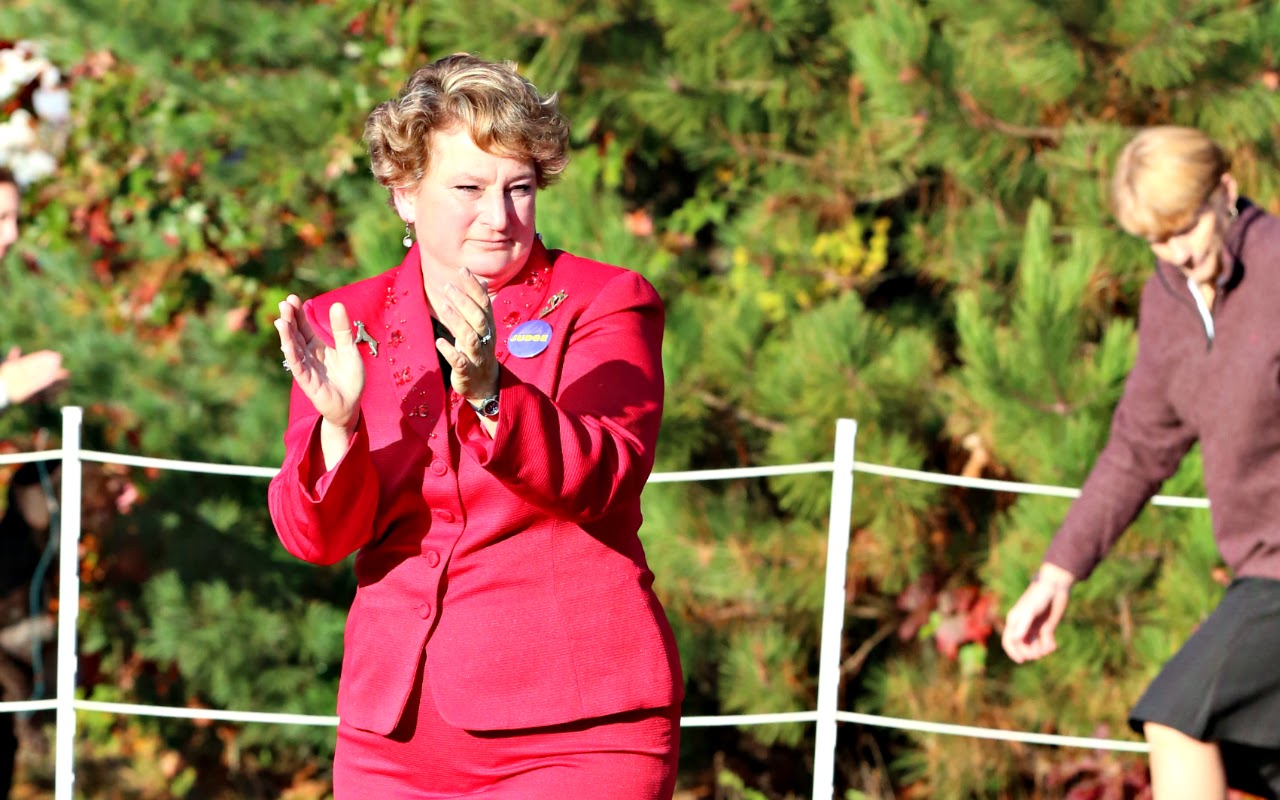
At Pure Dog Talk we are proud to support all of our friends providing educational resources to the purebred dog fancy. Lee Whittier, the Dog Show Mentor, recently invited Laura Reeves to talk with her members about travel and safety tips while attending dog events. Lee was gracious enough to return the favor and share the interview with our listeners!
Tips from Laura Reeves
Whether traveling by car, RV or airplane, long distance or short, we have tips and recommendations to help ease the trip.
- PICK UP after your dog!!
- DO NOT wash dogs in the hotel bath tub!!
- Carry a leash and a gallon of water for every dog in the vehicle.
- Pack for safe ingress/egress.
- Carry shade cloth in summer and chains in winter.
- Always be prepared.
- Install a temperature monitor.
- Nothing is more important than your animal’s safety and well-being.
- The best guarantee of your animal’s safety is direct supervision.
- RV maintenance — tires, generators, etc
- Electricity — know what it can and cannot do.
- Long-distance, cross country driving — get dogs out every 4 hours. Get food, fuel, potty dogs and people all in one stop. Plan ahead for shorter drives to accommodate this schedule.
- Keep a light weight pen on top of the stack to set up for young dogs to contain.
- Avoid feeding before driving to avoid car sickness
- Air travel — Not all airlines are created equal — Alaska is amazing.
- Know airline and their requirements.
- Be prepared to provide a bigger crate if needed.
- Fly your own wheels.
- Freeze water buckets to hang in crate.
- Put a small scissor or sharp object in an easily accessible pocket of checked baggage to cute zip ties on crates.
- Easier to travel with a friend.
Personal Safety
As a final topic, Laura offers the Dog Show Mentor some awareness topics for personal safety while on the road.
Input from retired Law Enforcement Officers
- Stay alert and aware.
- Pay attention to your surroundings.
- Body posture, head up, shoulders back.
- Stay in well-lighted areas.
- Situational awareness.
- Avoiding conflict is vastly better than fighting.
- Keep keys and cell phone with you.
- Bad guys don’t want to be the center of attention. Make a racket.
- If you have to fight, cheat. Your goal is to win, stay alive.
- Stay in touch with a friend or family member as regards expected travel.
- Make use of non-lethal deterrents… Pepper spray etc
- Dogs help deter, but don’t assume it will always work.
Allison Foley’s Tip of the Week: Dogs that Chew
Listen in to Allison’s best suggestion for dogs that chew their hair or beds… today on PureDogTalk.com