

Posts by Laura Reeves
118 – Thyroid Epidemic in Dogs: Dr. Jean Dodds #3
Thyroid Epidemic in Dogs: What it is and Why it’s Important
My breed, the German Wirehaired Pointer, is currently ranked number 10 of all breeds for prevalence of this autoimmune disorder. And that’s progress! Ten to 15 years ago, it was ranked second. I learned about all of this the hard way at the beginning of awareness regarding OFA testing for autoimmune thyroiditis in the late ‘90s. My foundation bitch, originally tested clear in an in-house test of t3/t4 only, came back equivocal in the OFA test. In other words her thyroid hormone levels were out of whack, although fortunately she was negative for the TGAA (Thyrogobulin Auto Antibody) that would indicate that her body was attacking itself.
I have had to work twice as hard in my breeding program to weed out this disease occurrence than I would have, had I known then what I know now. A number of beautiful animals were washed out of the breeding program when they failed to come back clear for thyroid. I am so grateful to Dr. Dodds for her work in this area. It has enabled me to not “throw out the baby with the bath water” in my breeding goals.
But my early personal experience taught me the value of what Dr. Jean Dodds has to share in this podcast. Please, take 30 minutes out of your life and do your breed a favor. Listen to what Dr. Dodds has to say here.
The primary points of Dr. Dodds’ interview are as follows.
The thyroid gland is a “master gland.” It is regulated by the pituitary gland. Eighty percent of processing of thyroid hormone occurs in liver. Individual animals might have primary hypothyroidism in which the thyroid gland itself is not functioning properly or secondary hypothyroidism, in which the organs which process the hormone are not working.
We get a primer course in the basics of autoimmune disease. Essentially, the body attacks itself. This is a genetically inherited trait which frequently has environmental triggers.
In people and in dogs, what is heritable is the *propensity* for the body to attack itself, not the specific autoimmune disease. In other words, just because low thyroid is cheap to medicate and not “life threatening” in and of itself is NOT an acceptable reason to continue using those dogs in a breeding program. Other, more serious and often fatal, autoimmune diseases frequently occur in future generations. Dr. Dodds describes breeding affected hypothyroid dogs as a “ticking time bomb.”
Dr. Dodds describes hypothyroidism as consisting of four interlocking circles — inheritance… vaccines as triggers… stress… sex hormonal change … The triggers can cause disease to express itself that is hidden otherwise. Nutrition is at the center of that circle. Common thyroid disease has many indications.
What are indications of thyroid disease in dogs?
Some early signs of thyroid disease are: “easy keeper,” changes in cognition/“growly owly,” changes in hair texture, chronic ear/skin infections, chewing the feet, leaky gut. Only when 70 percent of thyroid function is destroyed do we see classic symptoms of obesity, aggression, patterned hair loss, cold intolerance and more.
Dr. Dodds recommends establishing a baseline for our dogs in the breeding program at the onset of puberty. For bitches 12-16 weeks following the onset of the first heat cycle. For dogs between 10 and 14 months of age depending on the breed. Dogs, particularly from breeds with a family history of the disease, should be re-checked every year until six years of age.
She also suggests maintaining a minimal vaccine protocol, avoiding heartworm/fleas/ticks preventatives if possible and good nutrition. (For more information on nutrition, listen to the second installment of this series. Next week Dr. Dodds will discuss vaccine protocols.)
Finally, for dogs affected by hypothyroidism, Dr. Dodds indicates the most effective treatment is to divide the dose and give it twice daily. And urges owners to not give the medication with any food containing calcium or soy, as this makes the medicine ineffective.
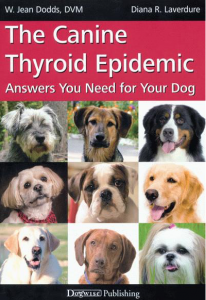
Summary: Weight gain, hair loss, and behavior changes are symptoms of thyroid problems. Learn how to recognize and get treatment for this underdiagnosed and misunderstood malady. Easy-to-read text with color photos and case studies to help you help your dog!
Author of the Week: Pat Miller
Pat Miller has been a dog trainer for over thirty years. She is the founder of Peaceable Paws Dog & Puppy Training Center and is on the Board of Directors of the Association of Pet Dog Trainers. She is a leading proponent of positive dog training techniques, and her columns on training are read by thousands in publications such as Whole Dog Journal. She is the author of Play With Your Dog; The Power of Positive Dog Training; Positive Perspectives, Love Your Dog, Train Your Dog; and Positive Perspectives 2, Know Your Dog, Train Your Dog.
117 – Desi Murphy: AKC Judge, Breeder Showcase and Grooming Tip of the Week with Allison Foley
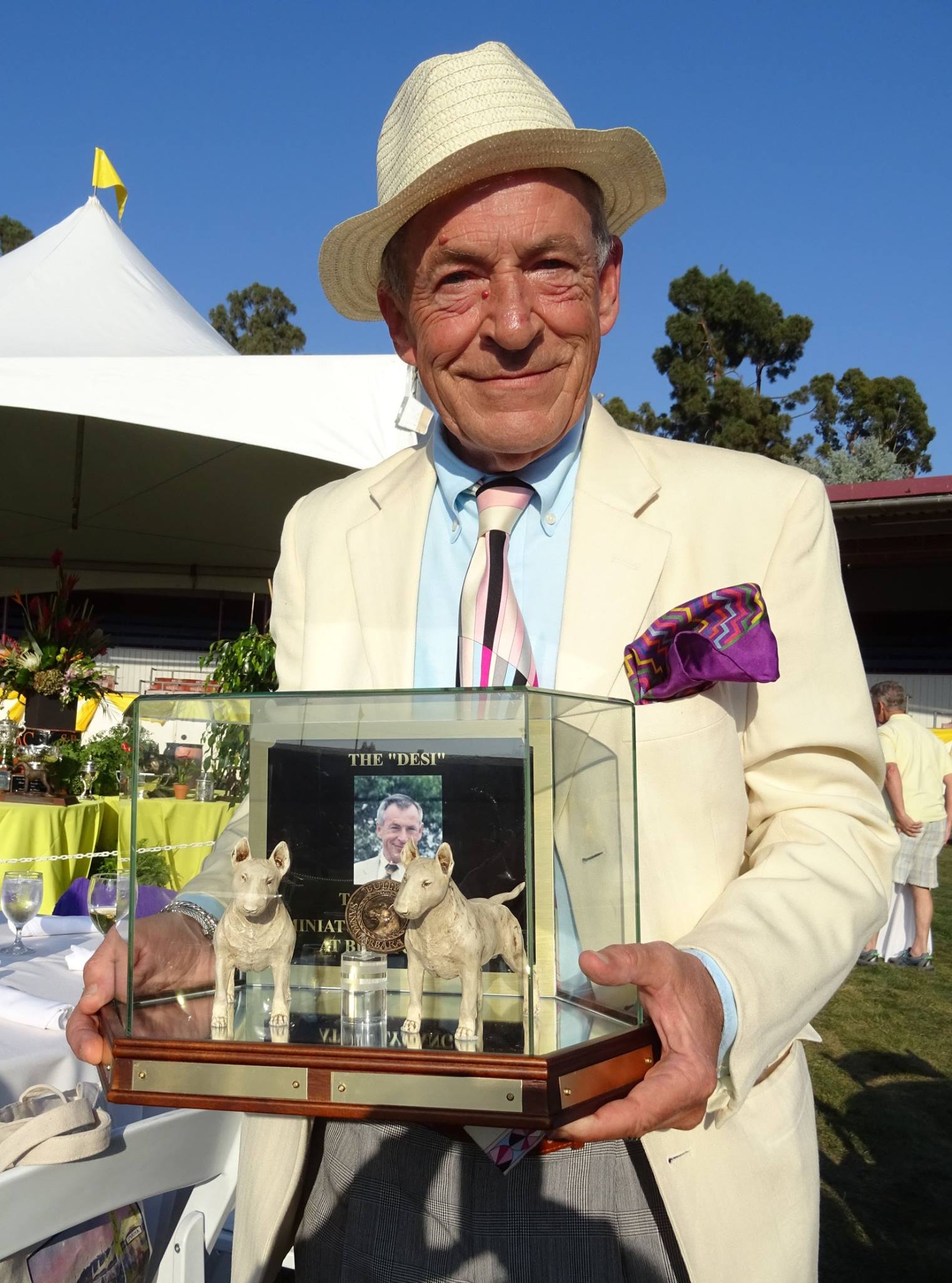
AKC Judge Desi Murphy – 3rd Generation in Dogs
Desi Murphy was born into the sport of dogs. His grandfather managed kennels in Scotland, his father managed a whippet and greyhound kennel in the U.S.
While surrounded in his youth with 125 sighthounds, Desi’s found a love of terriers, bully breeds and Chows.
Bullies are different…
Desi, now a legend in the sport, is licensed to judge the sporting, terrier, and toy groups.
Santa Barbara Breeder Showcase
Desi Murphy is co-chair for Breeder Showcase at Santa Barbara Kennel Club, and event in it’s ninth year.
Now an in-demand event, the Breeder Showcase is extremely competitive. Dogs are often brought out of retirement for the competition or young dogs held out just for their debut.
A perk for the exhibitors is dinner and wine at the event.
Desmond Murphy – The AKC Judge
Laura Reeves asks Desi what he first looks for in the breed ring.
Evaluate breeding stock…What was the dog bred to do?
For example, the three setters work in different terrains, so their structure must meet their function. In bicycles, you have a mountain bike, road bike and beach cruiser – each are built to work in different terrains.
Some breeds are getting carried away, and showiest is not always the best. Basset Hounds in Mexico, for example, are getting too big. Remember, if a Basset Hound meets a fence on the trail, the hunter has to pick him up and place him on the other side of the fence. You can’t lift an 80 lb basset.
Condition is second…
Dogs need to be fit and in good health and condition.
Movement is a test of structure
The structure standing should be seen and confirmed in a dog moving.
Advice to Exhibitors
Have the best dog. Often exhibitors ask what they can do to win with a dog… have the best dog. Ask other breeders and professionals to evaluate your dog against the breed standard. Know your standard.
Future of the Dog Sport?
As an international judge, Desi see younger exhibitors, and younger breeders in other countries than the U.S.
Russia is strong in most breeds, and Korea and China are close behind
Some handlers started showing at eight years of age, and have bred multiple litters by the time they are 21. We need youth willing to be breeders.
AKC Biography of Desmond Murphy
Desmond Murphy, of Monroe, New York, is a third-generation dog man¿his grandfather, father, and two uncles all having been handlers. Born in Scotland, he was reared among Greyhounds, Whippets, and terriers at his family’s Mardormere Kennels in upstate New York.
He began handling in 1958, working under his uncle John Murphy, a distinguished handler and judge. Mr. Murphy, known as Desi, points to his handling of seven different Best in Show Chow Chows as his proudest achievement.
Mr. Murphy has been an AKC judge since 1976 and is approved to judge 93 breeds. He last judged at the AKC/Eukanuba National Championship in 2003.
Mr. Murphy is a member of the Tuxedo Park Kennel Club, the Santa Barbara Kennel Club, and the Saw Mill River Kennel Club, and is treasurer of the Non-Sporting Group Club of the Garden State. He considers “learning the value of preserving breed type” to be the most valuable lesson he has learned in dogs.
Allison Foley’s Tip of the Week:
How to Use Bath Products Properly
Shampoos and Conditioners need to be used properly to achieve results. The best scissors, training and handling can’t compensate for poor cleanliness or coat condition.
Listen to Episode # 107 How To Properly Bathe Your Dog for more on how to bathe properly.
- Use your shampoo according to the directions. It’s formulated for a reason so measure it out!
- Leave the product on the dog long enough to work. 5 minutes for shampoo and 7-10 minutes for color or deep conditioner.
Allison’s Conditioner Trick
Conditioners don’t mix well with water. Use a cheap immersion blender to mix thoroughly and smooth out all the globs.
More tips and courses are available at Leading Edge Dog Show Academy.
116 – Wholistic Medicine with Dr. Jean Dodds – Part 2

In Part 2 of Pure Dog Talk’s Dr. Jean Dodds series, Jean discusses Wholistic Medicine, food as medicine, and how to test your dog for food sensitivities.
Wholistic Medicine – How traditional medicine works with conventional medicine
Dr. Dodds quotes Hippocrates:
Let food be thy medicine and medicine be thy food – Hippocrates
Food As Medicine
Food should be dense, have variety, be readily available and safe.
Every animal’s genomic structure is unique. Historically, dog’s were carnivorous. As dogs followed man, they ate scraps and cereal or grain was added to their diet. The dog genome changed from the original wolf genome. But basically dogs are still carnivorous and require whole meats – bones, organ, tripe, flesh, and muscle.
Diet Preferences: In order
- Raw is the first choice – either fresh, freeze dried, or frozen.
- Homemade Balanced Diet – Grain and Gluten-free, no wheat, corn or soy.
- Grain-free Premium Dry with Grain-free Premium canned food added.
Food Intolerances – Nutriscan Test
Dr. Jean Dodds created Nutriscan, to test for food intolerance and sensitivities for dogs and cats. Based on unique results, appropriate diets can be recommended.

Nutriscan – Dr. Jean Dodds
Food Sensitivities – How Do I Know?
Dr. Jean says that if your dog is itching, excessively biting or chewing on himself, or rubbing his face that food sensitivities should be tested.
Another sign is gas. Listen to your dog’s belly to hear if there is excessive gurgling. We have all had an upset stomach so listen to your gut instinct.
Don’t Miss Next Week! Thyroid with Dr. Jean Dodds
Here is a teaser from Dr. Jean on her Dogwise Book – The Canine Thyroid Epidemic – Answers You Need for Your Dog.
115 – Commercial Kennels and Show Dog Breeders: On the Same Side with Craig Curry
A Personal Note from Your Host: Laura Reeves
Commercial Kennels are a good thing? What the, what??
The awareness process that resulted in today’s podcast has been a challenging one for me. Like most of you, I was raised in the heyday of PETA/HSUS/ALF “documentaries” on the horrors of “puppy mills.” Starving, beaten, neglected, bred to death animals. These images have informed my view of commercial kennels for well over two decades.
Mr. Bill Shelton
Imagine my surprise when, from the mouth of one of my idols, Mr. Bill Shelton, comes the notion that the purebred dog fancy *needs* commercial kennels… I almost choked on my pizza. What about ethical breeding? What about proper placement? What about preservation of a breed?
His response (in a nutshell): The pet owning public in the country is 85 *million* homes. Depending on whose numbers you like, 4-9 *million* new pets are acquired each year just in the US. So I start doing the math… 170 (+/-) AKC recognized dog breeds. Let’s use a nice round number like 5,000,000… That is a LOT of zeros. So let’s say EACH of those 170 recognized dog breeds produces 294,117 puppies each year. Um, except endangered breeds like Otterhounds and Dandie Dinmont Terriers and Sussex Spaniels produce MAYBE 100 puppies *worldwide* each year. So now our odds are skewed significantly higher for the top 10 most popular breeds.
One report I found from 2013, conducted by the Swedish canine organization, showed *worldwide* annual registration of 293 breeds with a *total* of 2,276,864 dogs registered in the reporting year. These figures include the US, UK, Canada and much of Europe. In other words, every single purebred dog in the *world* registered with their respective countries of origin would not meet the annual demand of the pet owning public in the US alone.
So Where Will The Dogs Come From?
So what I’m trying to tell you here is that hobby breeders, preservation breeders, those of us who devote blood, sweat and tears to producing the very highest caliber of purebred dogs for discerning pet owners simply *canNOT* fill the demand for pet dogs in this country.
Where do the rest of the dogs come from? In some cases from the retail rescue market, including documented importation of hundreds of thousands of dogs from overseas. (Please listen to NAIA’s Patti Strand on this topic in episodes 43 and 104 if you haven’t already.)
In many, many cases, these dogs come from commercial kennels. Some of those facilities, remain, without doubt, far below our standards of expectation. But what this interview shares is the results of one person going above and beyond to help the commercial breeders learn, improve and step up in their role of meeting the public’s demand for healthy pets.
Commercial Kennels in Indiana
Commercial kennels in Indiana over the course of the last 10 years have replaced subpar facilities, implemented health testing, maintenance grooming, socialization and even rehoming plans for retired animals.
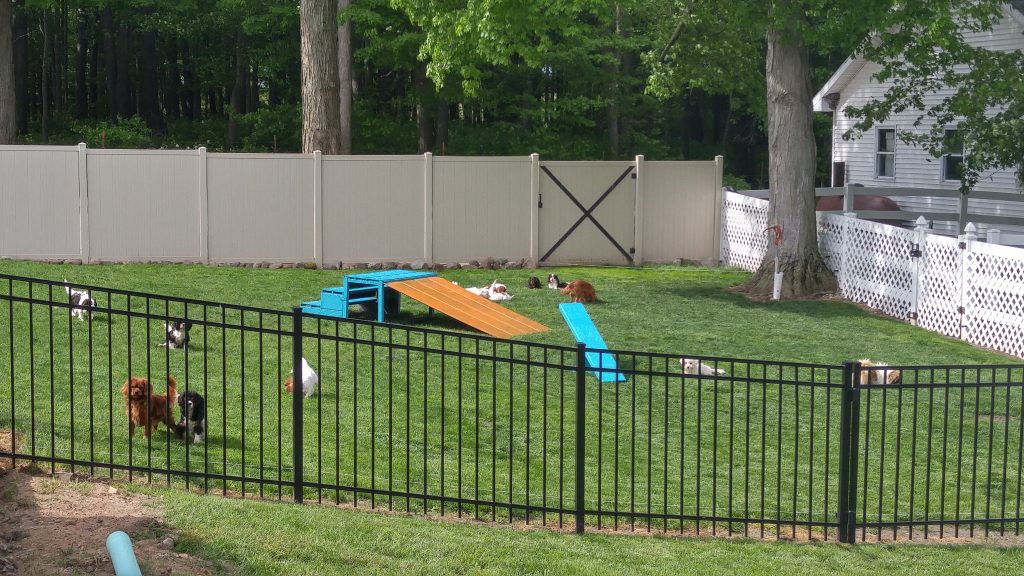
As you browse through these photos, step back for a minute and ask if your own facilities are this good.
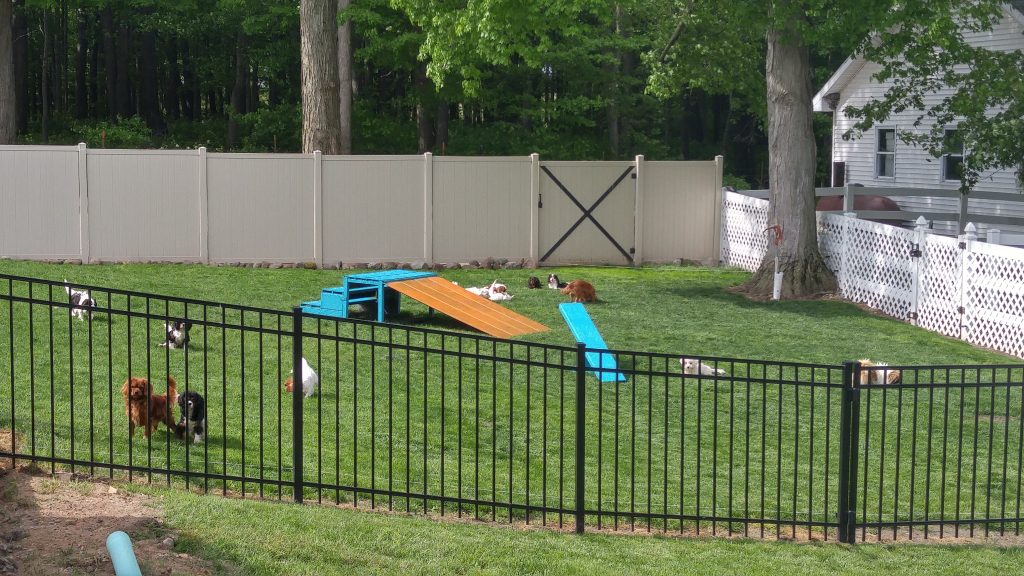

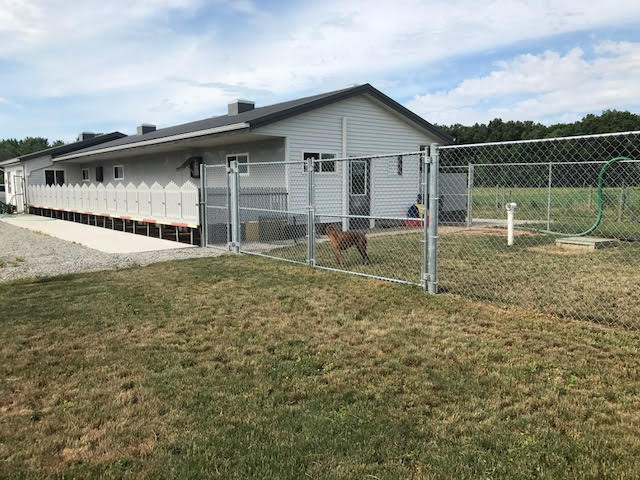
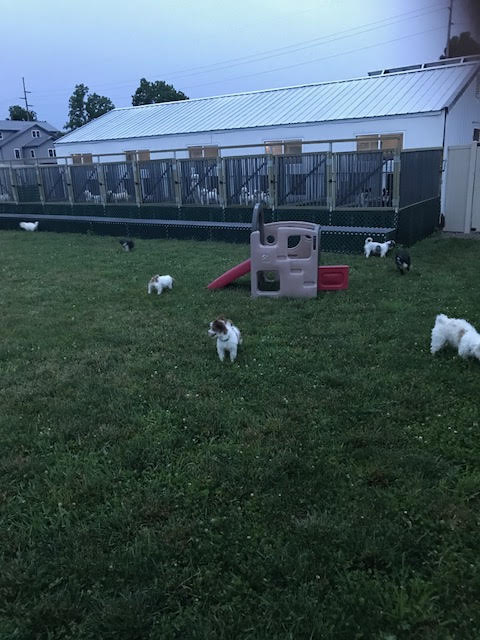
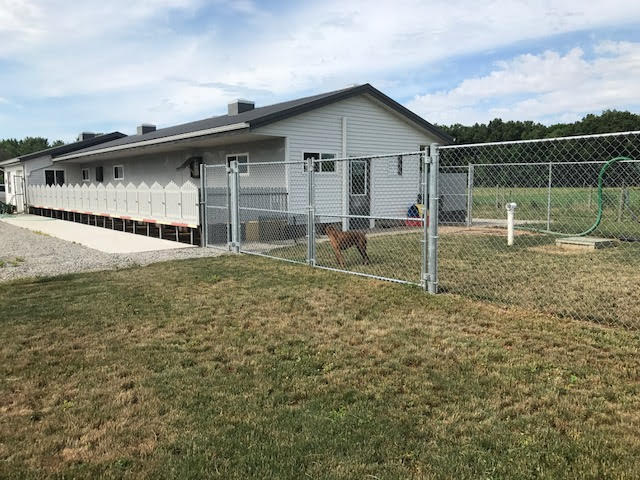

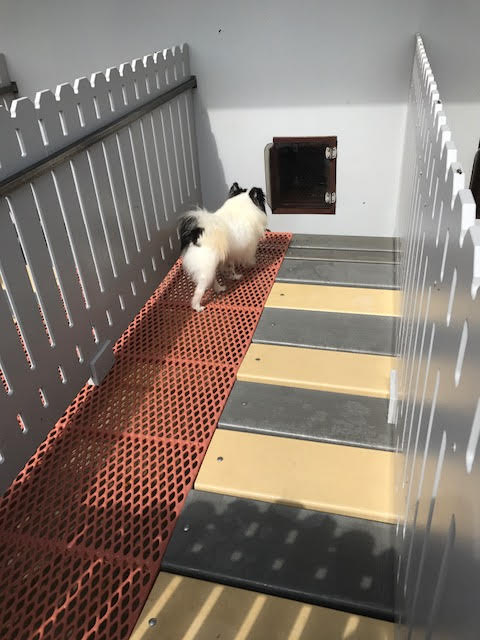

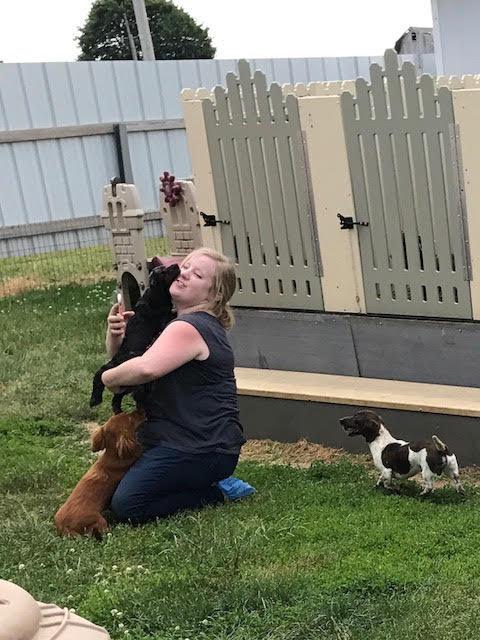
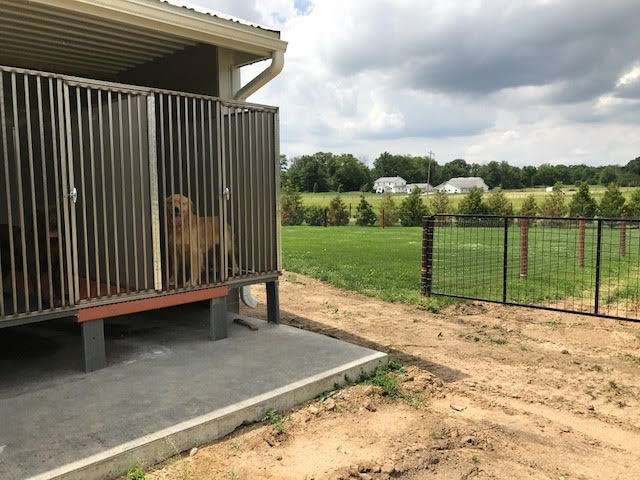
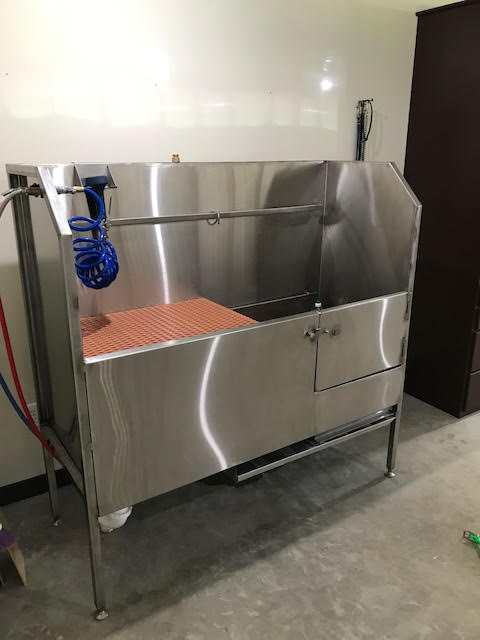
Now, am I so naive as to believe this is a 100 percent compliance situation across the country? Of course not. But I *have* learned that I was naive enough to be manipulated by groups who would like ALL of us to lose the right to own and breed dogs in the manner we see fit.
Keep An Open Mind
I understand this interview may push your comfort zone. It clearly did mine. But I also believe that we should learn lessons from these folks. United we stand. Divided, we fall. Helping commercial breeders improve the quality — and quality of life — for pets they produce for members of the public who are not interested in waiting two years for an exceptionally well bred companion is a win-win. Making healthy pets from veterinary supervised and approved facilities available to new pet owners, instead of feeding the retail rescue industry as just happened in California, keeps all of our pets healthier in the long run. As Craig says in the interview, it’s about the *dogs*.
I hope you will listen with an open heart and an open mind.
LR
Link to Swedish report:
114 – Saving Dog’s Lives: Canine Blood Bank with Dr. Jean Dodds – Part 1
Dr. Jean Dodd’s – Part 1 – Canine Blood Bank
Welcome to Pure Dog Talk’s 4 part series with Dr. Jean Dodds, DVM. In this episode #114 Saving Dog’s Lives: Canine Blood Bank, Dr. Dodds introduces us to how the first canine blood bank originated.
Jean packs an immense quantity of breeder information on blood types, herpes, plasma and more in this episode that I can’t begin to summarize it all… you will just have to listen!
Hemopet – the Canine Blood Bank
Founded by Dr. Jean Dodds, Hemopet provides state-of-the-art blood components and supplies for transfusions to veterinary clinics nationwide.
Hemopet also is a diagnostic testing lab that specializes in thyroid testing which will be featured in Part 2, Episode # 116.
Resources from Hemopet:
Greyhound Adoption from Hemopet Blood Bank
Greyhounds are the primary blood donors for the blood bank. Highly screened for infectious disease and tested prior to inclusion in the blood donor program, these gentle dogs give so other dogs may live.
4 -5 Greyhounds cycle out of the Hemopet program each week and are available for adoption. Find out more at Hemopet.org.
Book Bonus: Canine Nutrigenomics by Dr. Jean Dodds
Listen to our book bonus near the end of episode #114, as Dr. Dodds talks about writing and publishing her two books. We cover Canine Nutrigenomics: The New Science of Feeding Your Dog for Optimum Health today, and next week we cover The Canine Thyroid Epidemic.
Dogwise Books – All Things Dog
For our listeners that are unfamiliar with Dogwise Books, Larry and Charlene Woodward have been publishing books for the dog fancy since the 1980s. Dogwise is a small company out of Washington state that deserves our support. Many of our favorite books, especially breed-specific and training books, would never be in print without Dogwise.
113 – Laura Reeves: On the Road Less Traveled – Stories of Dog Show Journeys
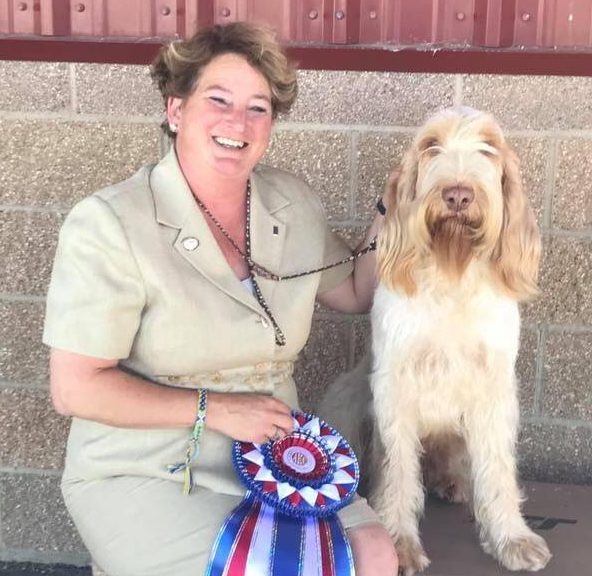
On the Road Less Traveled, Laura Reeves reminds us of takeaways from the dog show journeys themselves, and inherent dangers too.
Stories and Memories of Dog Show Journeys
The annual road trip to National Specialties is a must for any serious breeder. At Pure Dog Talk we have covered this before. But beyond seeing each stud dog for generations, the continuing education for breeders, the treasure trove of mentors, and the reunions of crazy friends that all have your breed as a common bond, dog show journeys offer something else… the road less traveled.
The Road Less Traveled
Traveling in the Western U.S. equates to hours across Louis L’Amour deserts and desolate places. Tornado watches and a mindful eye to the sky are in the midwest as we drive miles of grassy plains. Dark, winding roads, often slick or snow-covered in the Northeast where a momentary lack of attentiveness can be treacherous…
We all have stories, and most importantly, memories of our road trips.
We laugh about being stuck in the middle of nowhere, so remote that we can imagine “banjo music”.
Make Good Memories on the Road
Good memories result from good outcomes. So being safe on the road, preparing properly for your travels, and being aware of personal safety is something that we care enough to ask you to do.
Safety is not an accident!
This workplace sign goes for dog shows and road trips too!
So please enjoy some stories from Laura Reeves in epsiode #113, and listen and take heed to the “near miss” that could have ended in tragedy.
112 – A New Perspective on Westminster Kennel Club: Gail Miller Bisher – Director of Communications
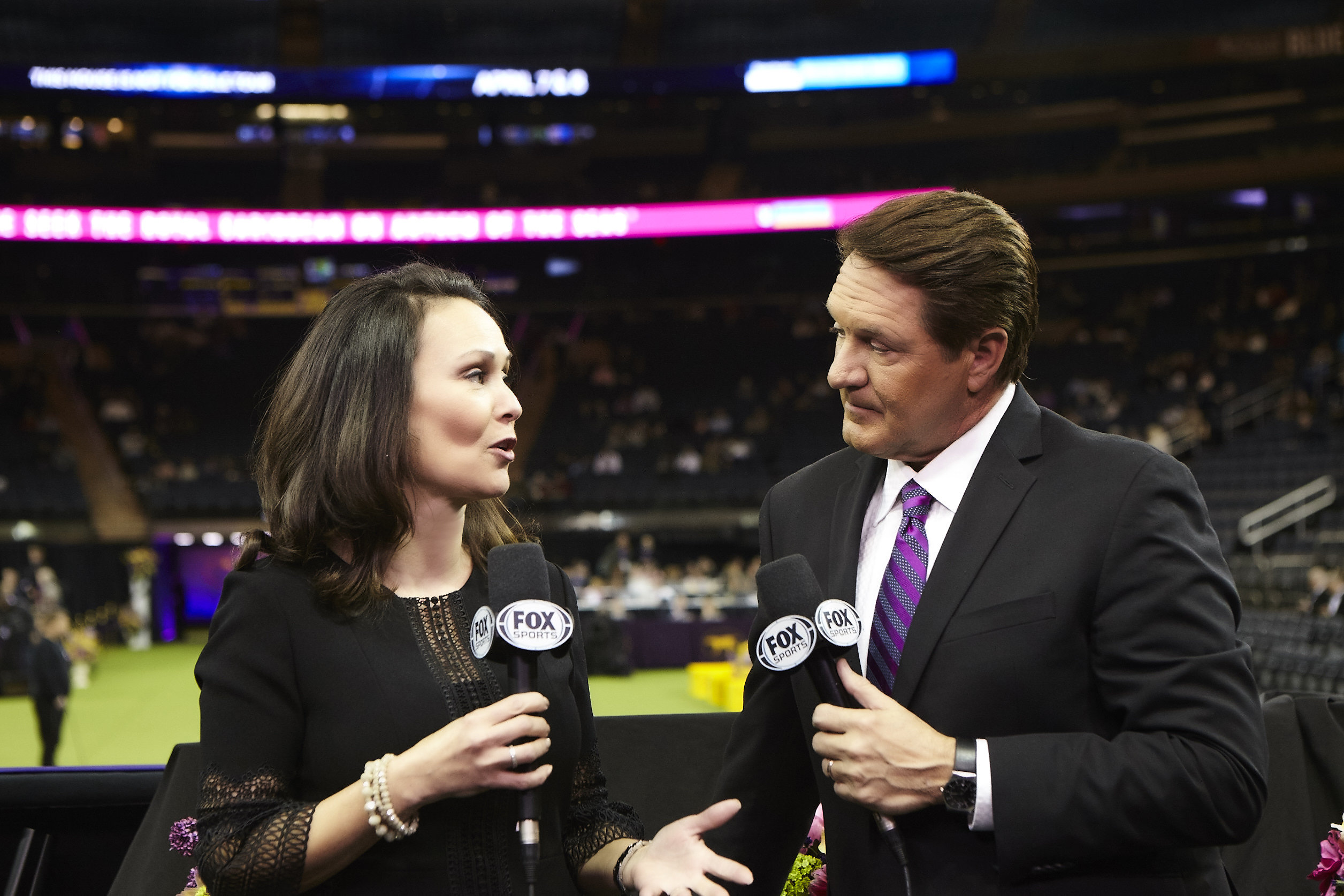
A new public perspective and perhaps public outreach opportunity is offered by Gail Miller Bisher, the Director of Communications for Westminster Kennel Club, in this episode of Pure Dog Talk.
Winning Westminster Dog Show, or affectionately known as, the Garden, has been the dream of many breeders and exhibitors. Any change to the perceived purity of the “Garden” may be met with resistance from the sport.
But as we listen to Gail Bisher, consider this… Westminster has the public’s eyes and ears. Who better than Westminster to be the positive voice, to bring heartwarming stories of the love and dedication of our purebred dogs and fanciers.
While the Garden will always be… the Garden, maybe the show of shows has a greater role to play.
Greener Pastures for the Garden – Westminster Kennel Club
Here are a few highlights for 2018:
- $10,000 Scholarship for Best Junior Handler
- $10,000 Scholarship for Agility
- $10,000 Scholarship for Obedience
- Art Contest – $15,000 total ($5,000 each) – to be awarded to 3 Parent Breed Clubs for Rescue
Gail Miller Bisher – Westminster Kennel Club – Director of Communications
Gail Miller Bisher (pronounced By-sher) is a second-generation dog person with more than 35 years of experience in the sport as a handler, breeder, trainer, writer and spokesperson.
As with many exhibitors in the sport, her experience started as a family affair. Bisher was a team with her parents. While they handled most of the breeding (and her mother was a parent club president for many years) Gail did the grooming, training, conditioning and handling. In addition to conformation, she has earned titles on dogs in obedience, rally, advanced CGC and earthdog.
Bisher handled her first dog to its championship when she was just 12 years old. From her WD win at the first BCCA Specialty in 1979, she continued to handle her dogs and clients’ dogs to National Specialty BOB and BOS and All-Breed Best in Show wins, numerous top ranked positions and Junior Showmanship history. Gail was the first junior handler to qualify for the Westminster Kennel Club’s Junior Showmanship competition with a Beardie and the first to place, capturing second.
Since 1988 she has been judging regional specialties and supported entries and now is an AKC-licensed judge of Bearded Collies, Shetland Sheepdogs and Junior Showmanship competition. In 2015 she judged the BCCA National Specialty. Although time does not allow for much other than a limited number of judging assignments while raising her daughter, Gail has stayed involved by earning four titles each on both of her miniature dachshunds, who recently passed away.
Her club work includes serving the BCCA as a former breed columnist and club-approved breed mentor, specialty conformation chairperson and she is currently the club historian. Additionally, she is a member of the Dachshund Club of America, Morris & Essex, Greenwich Kennel Club and the Dog Writers Association of America.
She has nearly 10 years of experience directing the marketing, brand development and public relations for the American Kennel Club and Webvet.com. In 2003 AKC hired her to be an on-air spokesperson appearing on national media outlets to promote the sport and purebred dogs.
Bisher credits her Junior Showmanship experience for creating the foundation for a successful professional career where she has gained recognition in advertising, marketing and the public relations industries. She is a Clio and Mobius Award winning broadcast producer with 12 years of experience in the advertising industry; has managed licensing programs to LIMA awards and produced a TV PSA that was featured on America’s Funniest Commercials. Additionally, she is an ACE-certified personal trainer, has earned a Master of Arts degree in Communications and created the Super Fit Fido Club to educate pet dog owners about the importance of canine fitness.
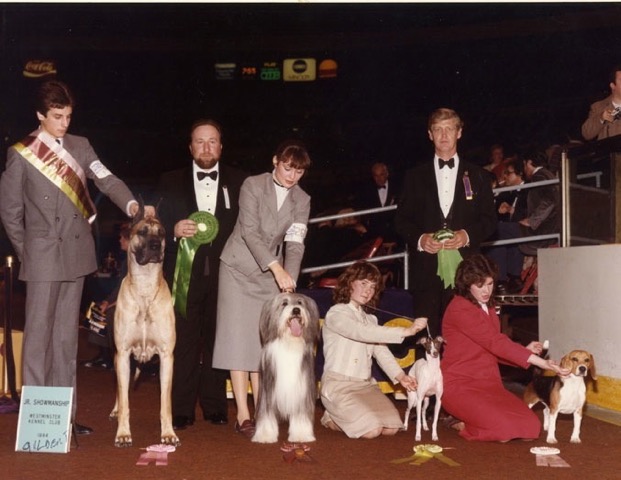
Gail Bisher – Westminster Kennel Club – 2nd Place in Juniors

Gail Bisher – Westminster Kennel Club Jr Finals
111- Gretchen Schultz: The “Queen of Slobber” – PHA Hall of Fame Inductee
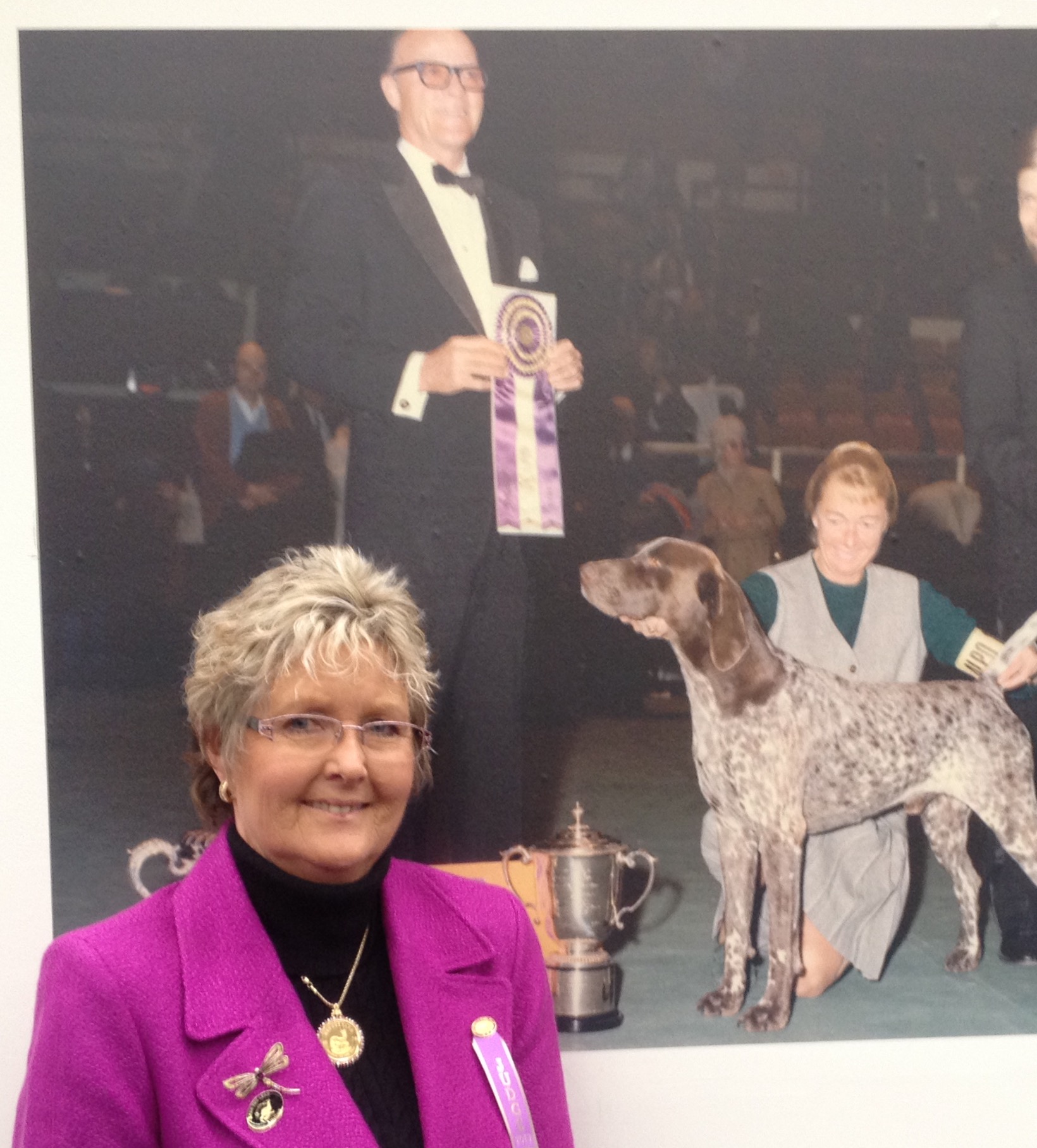
Gretchen Schultz aka the “Queen of Slobber”
For a woman of such tremendously strong opinion and personality, it is remarkably difficult to find much public information about Gretchen Schultz.
I hope you guys enjoy hearing from one of my great idols and, at least distantly, mentors.
I always was slightly terrified of Gretchen even from across the Expo Center in Portland, but she was my original “stalking” victim! I watched *everything* she did. Short of growing a “rat tail,” as they were called in the day, I wanted to be JUST like Gretchen when I “grew up.”
2nd Generation – Daughter of Professional Handlers
The daughter of very famous professional handler parents, Gretchen’s father, Walt Shellenbarger, went on to judge. He scared the bejeezus out of me the few times I was in his ring! Her mother, Jo, handled the famous Traveler, Ch. Gretchenhof Columbia River to Best in Show at Westminster Kennel Club in 1974.
Jo also showed Clumber Spaniels for the one and only Bets Young of Cypress Woods kennels. My parents were very involved in the early 1980s with convincing the powers that be in the Clumber Spaniel Club of America (primarily Bets) that field work should be included in the national events. I have very vivid memories of Jo, toward the end of her career, convincing my 15 year old brother to dance with her at a social event in Bets’ home.
Gretchen and German Shorthaired Pointers
Gretchen grew up with 50 German Shorthaired Pointers, but started her junior showmanship career with an English Cocker Spaniel, because the German Shorthairs were too big for her. She credits her mother with teaching her about breeding dogs and her dedication to her parents’ memories is obvious.
Despite an attempt to break away from the allure of the dog show world, traveling the world and some wild adventures, Gretchen couldn’t stay gone for long. Her passion for the sport runs deep and wide.
How did Gretchen get the nickname Queen of Slobber?
Married for many years to Bruce Schultz, they were a powerful handling team. Gretchen became known as the “queen of slobber” for her most consistent clientele… Bloodhounds and Mastiffs. Gretchen handled the Bloodhound bitch, Ch. Ridge Runner Unforgettable, to the record as the top-winning Bloodhound of all time. Just before Westminster 2001, Gretchen had knee surgery, so Bruce showed ‘Fanny’ to her big Group First win.
Fundraiser for American Cancer Society’s Relay for Life
As a multiple cancer survivor, literally given months to live more than once, Gretchen has become a major fundraiser in the American Cancer Society’s Relay for Life. She remarried in 2013. She and her husband Phil Lawrence are avid golfers.
Gretchen is, if nothing else, forthright in her opinion… She expresses frustration with the judges’ approval process at the AKC and describes the “old days” and a system by which judges “sank or swam” based on their ability to draw an entry and their popularity with clubs and exhibitors. She currently judges 13 breeds along with junior showmanship.

Gretchen Schultz Relay for Life
Gretchen Schultz PHA Hall of Fame Inductee
The PHA is pleased to announce establishment of the Hall of Fame intending to recognize current and past members whose individual effort over the years have made immeasurable contributions to the Association, the dog handling profession, and the sport of showing purebred dogs.
Their unselfish work, guidance, and leadership have permitted the PHA to evolve into a strong, vibrant, and honorable organization that proudly represents the interest of professional dog handlers. Without their lifelong involvement and dedication the Association, nor the fancy, would be the showcase it is today for the exhibiting of purebred dogs.
110 – Cherrie Spring: How To Talk To the Animals – English Springer Spaniels and Animal Communicator
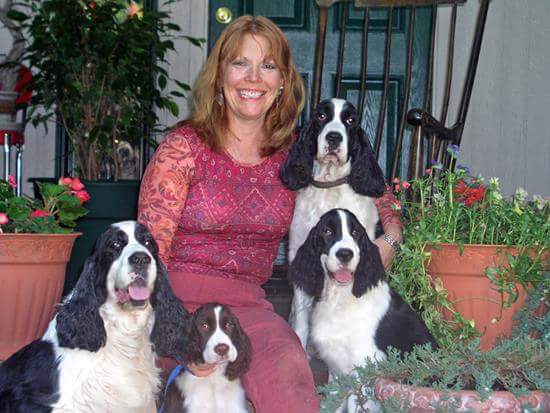
Cherrie Spring – From English Springer Spaniels to Talking with the Animals
Handing her English Springer Spaniel to professional handler Gary Zayac at the National, vaulted Cherrie Spring into the world of dog shows. Balance in dogs, and balance with and through her skills as an animal communicator was not always easy. But just as show dogs learn to use themselves well, Cherrie has honed her communication skills to answer questions between owners and animals.
In addition to her work as an animal communicator, Cherrie Spring has a long, diverse history involved with purebred dogs. She agreed to share some of her most powerful lessons with our PureDogTalk listeners.
Enjoy this wonderful tribute to her mentors! Laura Reeves
Words of Wisdom from my Mentors
…as remembered by Cherrie Spring
Wisdom comes in as many forms as there are teachers. I will share some of the more memorable from the great teachers in my life, recognizing that in saying this I am leaving out many people.
From Debbie Ritter – Pedigrees
I learned that, in reading pedigrees, you must consider the grandparent’s influence as if you are not breeding the two you are considering, but the four behind them. If any of those four, in your estimation, should not be bred, for any reason, the breeding should not be done.
When breeding from a dominant bitch line to an outcross you should never expect to go forward in that generation alone. Only keep out of the litter what your vision is going forward. When breeding to a line-bred dog, you must always consider his stamina, drive and temperament as the foremost component of what you are trying to achieve.
You absolutely, without exception, must know the faults in make and shape and genetic abnormalities that all animals in the first three generations have to make an educated and responsible decision in a considered breeding.
She taught me how to read a pedigree like no one before her or since. She understood our breed (English Springer Spaniel) and the individuals in it that well.
From Karen Prickett Miller – English Springer Spaniels
I learned, you cannot shorten the muzzle of an English Springer Spaniel without compromising everything in head structure which makes the Springer head unique. A shoved in foreface creates a round eye and lack of correct chiseling around the eye and to include the muzzle that is specifically stated in the standard. This shortening also causes the upper lid to lose its shape and become round, another fault addressed in the standard. The loss of length of foreface also creates a lack of room for pre molars. A Springer head with these proportions and faults has no strength or stamina to carry game in its mouth correctly.
You cannot have a short headed dog and have a dog that is proportioned to the standard, as measurements starts with the length of the head. Bone on a Springer is flat. It is not round. Round bones are heavier than flat bones. Make your bones flat and wide, not round and dense. This really applies to legs and rib cage.
Teach them to go (move) on their own. They must go as they stand in profile.
Four Qualities in Breeding Animals
There are four qualities that every breeding animal should have. Strong character appropriate to their breed. Deep underjaws in breeds that are to have a scissor or level bite. Straight front legs. Breed appropriate feet. The down fall of these mark the downfall of the breed.
I have had Anne Clarke tell Gary and I the same things.
From Denis Springer I learned:
You have to be tough as nails on the outside, with hands that are trusted and gentle guided by your love of the dog and the fancy.
He would tell me, “Toughen up Red, regroup and show them what is really inside.”
You must let your hands tell you what your eye lies to you about.
No matter how great a groomer you are, the studied and schooled eye can always know your lie. You can’t hide bad structure, unless you take them apart and restitch them.
From Gary Zayac I learned:
- Many people can get the Best In Show dog in the whelping box. The trick is having the eye to pick the correct one and managing them from the whelping box to the Best In Show ring.
- Silent mouths, silent hands and an always watchful eye wins the prize.
- Teach them (dogs) to trust you and they will give you the world. Teach them to fear you and you have no dog when things get rough.
- When the dogs really trust you, then you can push them past what they fear.
- Be invisible, inside the ring and out, until it is time to not be.
- Believe in the dog on the end of the lead. And believe in the dog you take home.
- Patience is the foundation of all good work in the world.
- Good sportsmanship is the foundation of all that we do and no win is complete without the honor of your fellow exhibitors.
From Chris Terrell I learned:
Be humbled by the magnificence that surrounds you.
Find joy in every day.
Walk gently and honor the life you have.
He taught me so much about how to handle big out of control dogs that were acting out of fear and being overwhelmed. He’s a master at mind control. I learned so much from him about controlling my mind and body. He taught me to not care and let it roll off my shoulders what people thought and said about me and the dogs. Gary, by the way told me the same thing, but Chris was not the husband. (LOL)
From Brenda Albrecht
I learned how to be a really hard worker for a club and to be a part of a community who’s goal was the preservation and promotion of a breed that we all loved. She taught me how to be a selfless club member where the club came first and my needs or schedule was not a huge consideration.
Talking to the Animals – Cherrie Spring
Cherrie Spring reveals her root story of how talking to the animals began in episode #110 of Pure Dog Talk.
I would not want to detract from you listening to her tales, but well-worth your ear.
Cherrie does leave our listeners with a insightful blessing.
Be Still With Your Animals
Be quiet. Be still. Listen deeply. Ask gentle questions. Watch.
This practice of being still with your animals may help you communicate clearer and deeper.
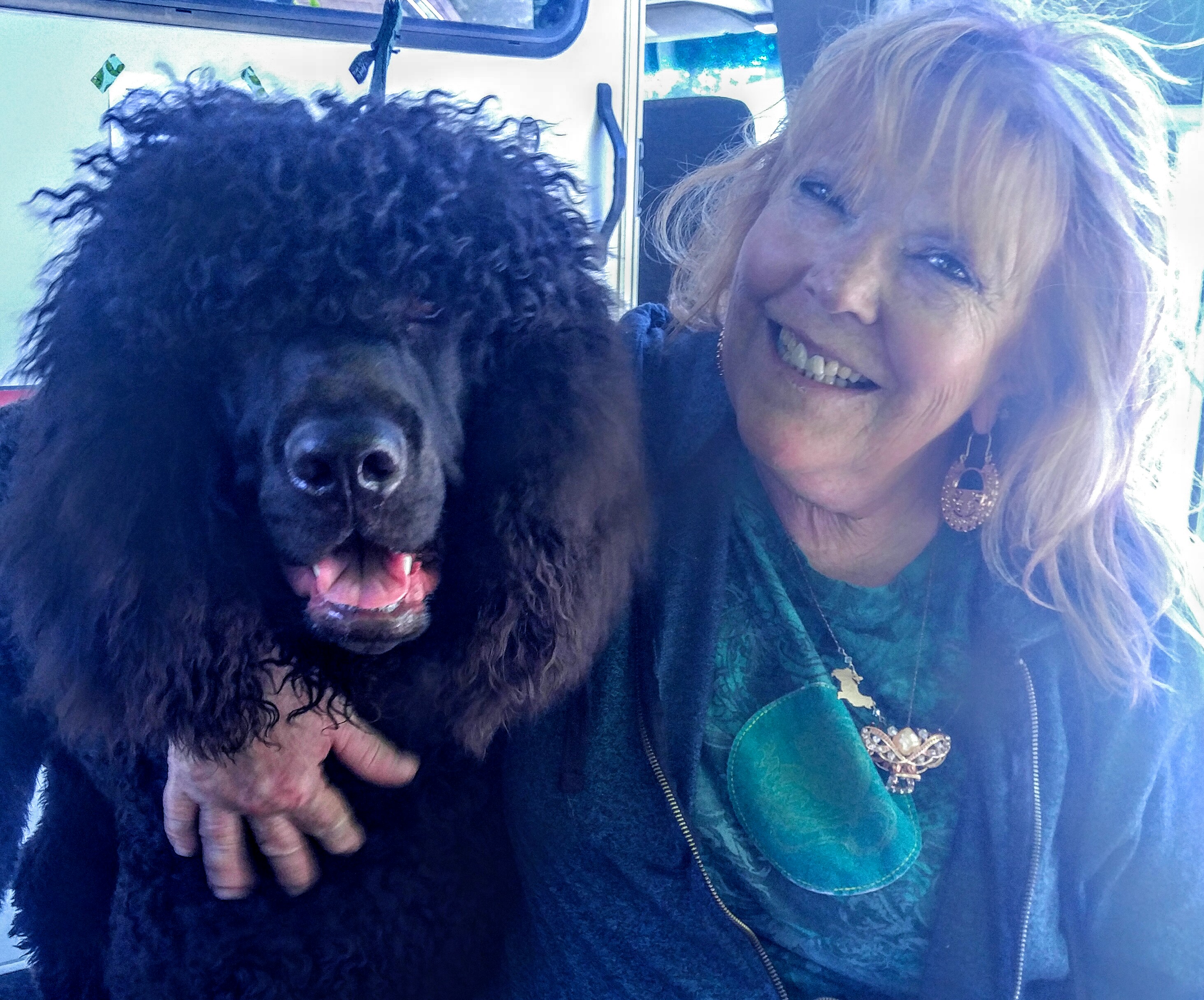
109 – Social Media Sportsmanship: Dog Show Forum and The Dog Judges Report Card with Jacqueline Zwirn
Jacqueline Zwirn: Dog Show Forum and The Dog Show Judges Report Card
Jacqueline Zwirn is 3rd generation dog shows… literally “whelped” into dogs. A successful junior handler of her mom’s Great Danes, Jacqueline continues today to show Miniature Pinschers under the Sidel Miniature Pinschers prefix. Junior Showmanship taught… SPORTSMANSHIP Sportsmanship is ethics, etiquette, manners, losing and winning with dignity and the strive and drive to improve.
Sportsmanship as Administrator of Dog Show Facebook Groups
Sportsmanship skills are a question on Facebook and social media. Why, hidden behind a keyboard, is permission granted to lose the core ethics of showmanship?
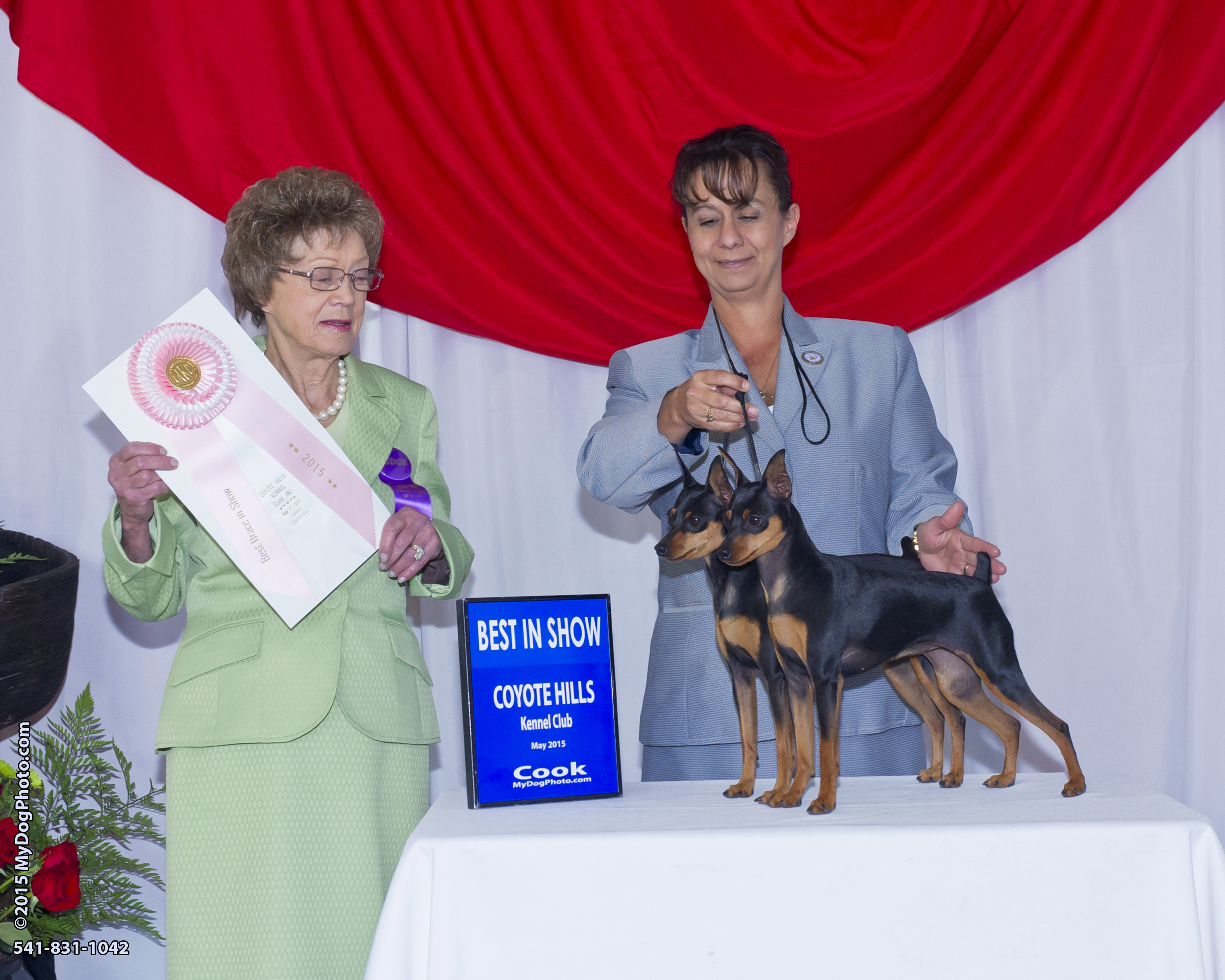
Jacqueline Zwirn winning with her Miniature Pinscher brace under Patricia V. Trotter
Listen to Episode #109 of Pure Dog Talk as Laura Reeves and Jacqueline Zwirn discuss how Facebook and social media groups could mentor exhibitors and breeders in understanding the judge’s opinions, and learn to breed better dogs.
Social Media Thoughts From Jacqueline Zwirn
Rules of Sportsmanship:
- No Slander or Attack
- Give facts of your experience, not your opinions
- Describe what or why you felt something happened
- Listen and learn
- Don’t vent because you lost
Ringside and Judges Perspectives:
- Ringside has more time to evaluate a dog than the judge
- The Judges view is not the same as the ringside view
- Judges may be looking at or for something different than you
Owners:
- Owners that have only one dog may have emotional attachment blinders on, and not be able to see what the judge sees
- Handlers are a great resource for an evaluation.
- Handlers are not emotionally attached to your dog’s critique
- Judges read, hear or talk about what is said online. Don’t kiss up or promote your dog
Dog Show Judges:
- Dog Show Judges are people too!!!
- Judges love dogs
- Judges are human and constantly learning
- Judges spend a ton of money to become judges and make VERY LITTLE!!!
Correctly Assessing a Judge’s Intentions
Even professional handler’s sometimes mistake a judge’s intention, preferences, or pet peeves. Breeder Judges may look for or be harder on something that affected their line or is a problem in the breed. Judges not as familiar with your breed may be more generic in selection.
Evaluation of what a judge might like or dislike in a dog is really hard. There is no hard and fast rule. Try not to categorize them as a head hunter, or a movement judge without systematically analyzing if that is true. Oftentimes the “current opinion” is just gossip and not grounded in fact.
- As a judge learns, their opinions may change
- Different dogs are in the ring, every show is different
- Your “belief” that your dog is perfect, colors your opinion
Boring News… Go Back To Your Breed Standard
Sorry… but maybe if it is said enough times? Go back to your breed standard. Understand your breed standard. Question what it means? Does your dog excel in every part of the standard? If so, get a second opinion!