Posts by Laura Reeves
218 – Legendary Dog Man Peter Green Brings History to Life
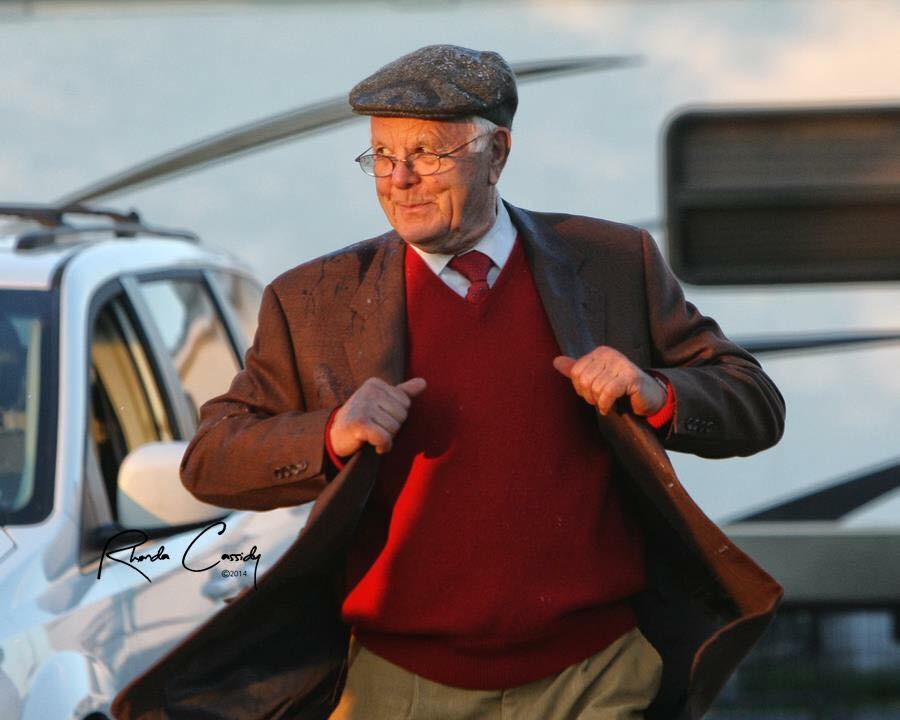
Peter Green riffs on great dogs, great rivalries and great memories
Join a wonderful conversation between legendary dog man Peter Green and his former apprentice Robert Paust, now an AKC judge in his own right. The two old friends reminisce about great dogs of the past, great wins, great friendships and great rivalries.
Green’s Welshman brogue has blurred but not faded from his voice in the 50-plus years he’s been working with dogs in the U.S. Starting in dogs showing Welsh Terriers with his uncle, Green began his career in the States in 1963. As was common at the time, he worked as a private handler for a prominent kennel to learn the business.
WKC BIS with the Lakeland
His professional handling career kicked in to high gear after he won Best in Show at Westminster Kennel Club with the great Lakeland Terrier, Ch. Stingray of Derryabah, in 1968. In a career that spanned 40 years as one of the pre-eminent professional handlers in the country, Green piloted dogs to the big ribbon at the Garden four times. He is slated to judge BIS on the green carpet this coming February.
Green was very definite on his favorite dog of all time. In all the dogs, in all the years, the Wire Fox Terrier, Ch. Sunnybrook Spot On was his choice without hesitation.
Spot On vs Dominator and other great battles
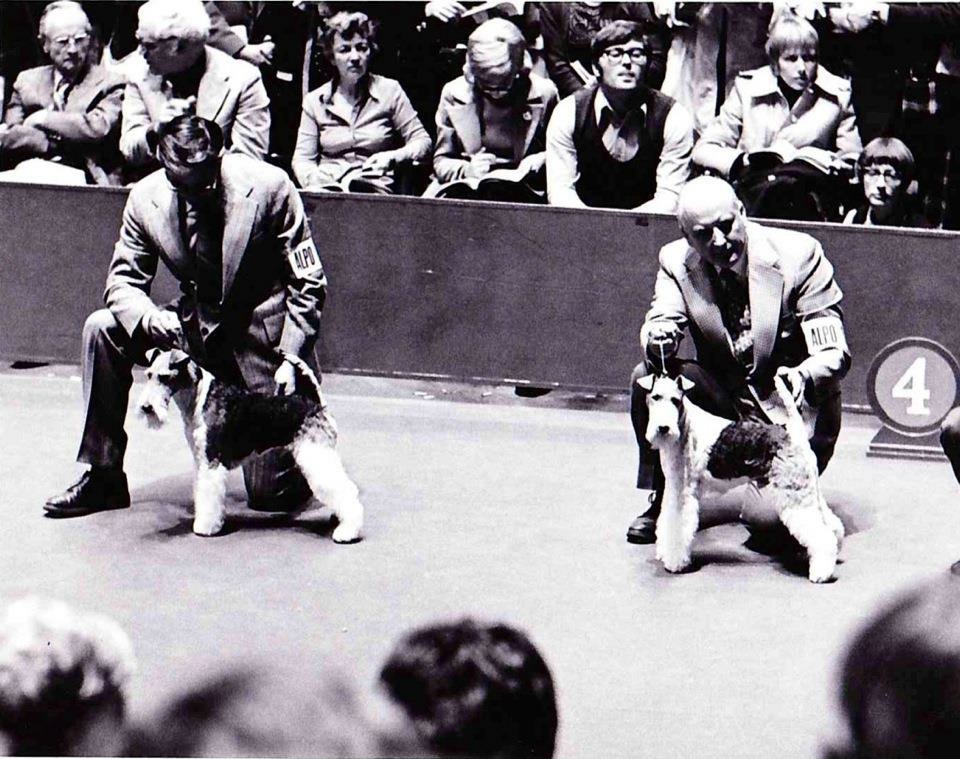
Peter Green, left, with Spot on and George Ward, right, with Dominator in one of the most-watched rivalries of the era.
Listening to Green flashback to the tremendous competition with his friend and rival George Ward, showing Spot On’s son, Ch Aryee’s Dominator, is a rush. Even as he’s reminiscing, Green is teaching without even thinking about it. He talks about how he showcased his dog’s movement in this high-stakes competition.
Dog show drama was alive and well, even in the “good old days,” according to Green. Good natured rivalries, and even those that weren’t so pleasant, behind the scenes stories, flaring tempers and redemption all flow from his memories.
Enjoy this priceless window into history.
217 – Crate Training, Jumping Up, Digging and Behavior Analysis
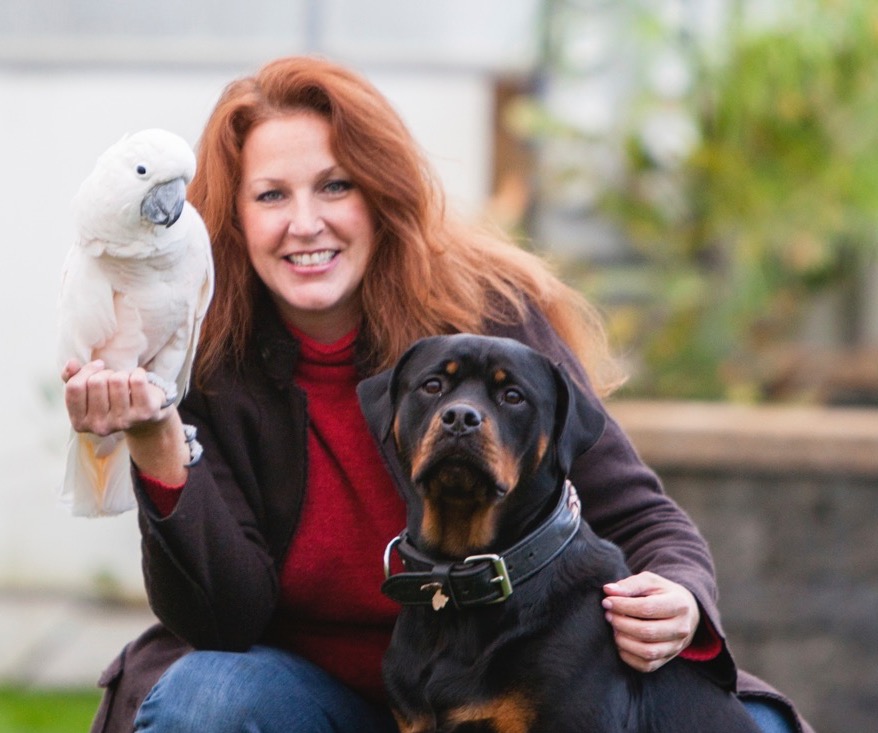
Behavior analysis and positive reinforcement create success
Animal behaviorist Lara Joseph shares her expert knowledge on understanding our dog’s behavior, how to read signals from the dog and use behavior analysis to shape a new future.
Joseph knows for a fact that positive reinforcement training works. She uses it extensively with zoo animals and exotics, as well as companion dogs.
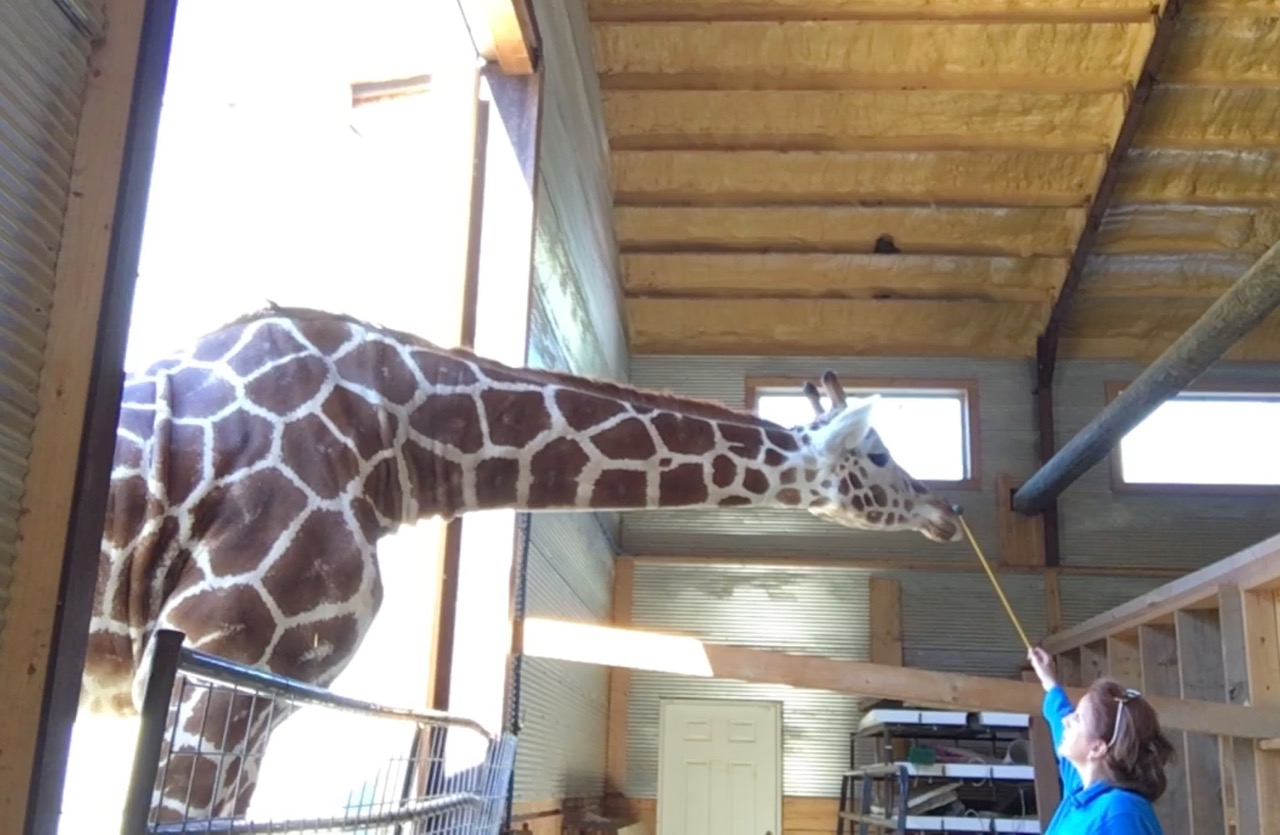
“You can’t use force or aversives on exotics,” Joseph said. “You know you can make your dog sit by pushing its butt down… try doing that with a giraffe!”
Joseph discusses redirecting behaviors by correctly identifying the reinforcers. In other words, what, exactly, does the dog want and how is the behavior he is exhibiting fulfilling that desire.
The “Terrible twos” are a tremendous opportunity to train a dog, Joseph said. The dog is at an age where it is constantly manipulating its environment to get the consequences it desires.
“The animal is learning contingencies and consequences in its environment,” Joseph noted. “If the animal can see, hear, smell or feel you, you are training it, whether you realize it or not. The key question is, what are you training it to do.”
Shaping Behaviors
Crate training, digging and jumping up are all “behaviors” that can be shaped, Joseph said. Redirecting the dog’s behavior requires correctly identifying the “reinforcer” – in other words what the dog wants – and then providing that reinforcer for an acceptable behavior.
She cautions against moving too quickly through a training plan. Start small and reinforce big.
“If you take too big of steps in your shaping plan,” Joseph said, “it can turn what you’re trying to train in to an aversive, something the dog doesn’t like.”
Joseph said that what dogs understand is contingencies – “if I do this, this happens…. If I do THIS, this doesn’t happen…”
Another important option is called a “Conditioned Reinforcer.” In other words, every time the dog goes in the crate, it gets a treat that it is available no other time.
Listen to your dog
Joseph also addressed the topic of aggression in dogs.
“Aggression serves a purpose for the dog,” Joseph observed. “It gets them what they want. If the growl didn’t work, he’ll try a lunge. If you pull your hand back, and the dog wanted you to retreat, it’s now learned what works.”
Hear what the dog is trying to tell you, Joseph said. Reinforce the good behavior. Pay attention to the dog. All dogs really want is attention. Be consistent. Create duration.
Check out our newest advertiser, Trupanion!
Don’t miss Allison Foley’s Tip of the Week from the Leading Edge Dog Show Academy: Overweight dogs and green beans!
Biography:
Lara Joseph is the owner of The Animal Behavior Center, an international, educational center focusing on teaching people how to work with animals using positive reinforcement and approaches in Applied Behavior Analysis. She is a professional animal behavior consultant and trainer. Lara travels internationally giving workshops, lectures, and provides online, live-streaming memberships on animal behavior, training and enrichment. Lara’s focus is on the companion animal community, zoos, shelters and wildlife ambassadors. Her daily work focuses on teaching people through her live-streaming services on animal training, behavior modification, and enrichment to people all over the world via her Projects and Memberships. She sits on the advisory board for All Species Consulting, The Indonesian Parrot Project, and is director of animal training for Nature’s Nursery, a wildlife rehabilitation center in Whitehouse, Ohio. She is also the founder of several animal organizations for animal welfare. She has been asked to co-author and is currently working on international manuals of animal behavior and training. Lara is a professional member of The Animal Behavior Management Alliance, The International Association of Avian Trainers and Educators, and The Pet Professional Guild. She is a published author and writes regularly for several periodicals including The Pet Professional Guild’ BARKS for professional dog trainers, a behavior columnist for BirdTalk Magazine, and contributes to blogging for Deaf Dogs Rock. She is a guest lecturer in the Zoo Biology; Animal Nutrition, Behavior & Diagnostics taught by Dr. Jason Crean at St. Xavier University; Chicago. Lara has presented for a wide variety of organizations such as The Philadelphia Zoo, The Ohio State Exotic Veterinary Club, The Association of Avian Veterinarians, Best Friends Animal Society, The Pet Professional Guild, The International Wildlife Rehabilitator’s Conference, The Autism Model School, and The Wheaton College division of Applied Behavior Analysis, and at Best Friends Animal Sanctuary for the Pet Professional’s Guild’s Workshop. For more information visit her website at TheAnimalBehaviorCenter.com. Also her Facebook page where she live streams a weekly episode on ABA and its use with animals called Coffee With The Critters: https://www.facebook.com/TheAnimalBehaviorCenterLlc/ Find her on Instagram: https://www.instagram.com/theanimalbehaviorcenter/
216 — Vet Voice: Blastomycosis and Other Fungal Infections
Blastomycosis is deadly hazard for dogs
Dr. Marty Greer, DVM, discusses the causes, symptoms and treatment of deadly Blastomycosis and other fungal infections. Greer notes that fully 25 percent of dogs affected by this disease will die.
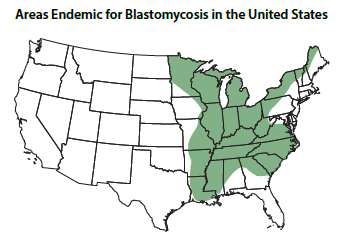
Greer is notably not an alarmist, but she is adamant that Blastomycosis is a deadly and dangerous disease. Specific areas of the country, including the upper Midwest and South/East River valleys, are most commonly affected.

This particular fungal infection is contracted by spores inhaled from disrupted soil, particularly near water. Greer also addresses other fungal infections that can affect dogs.
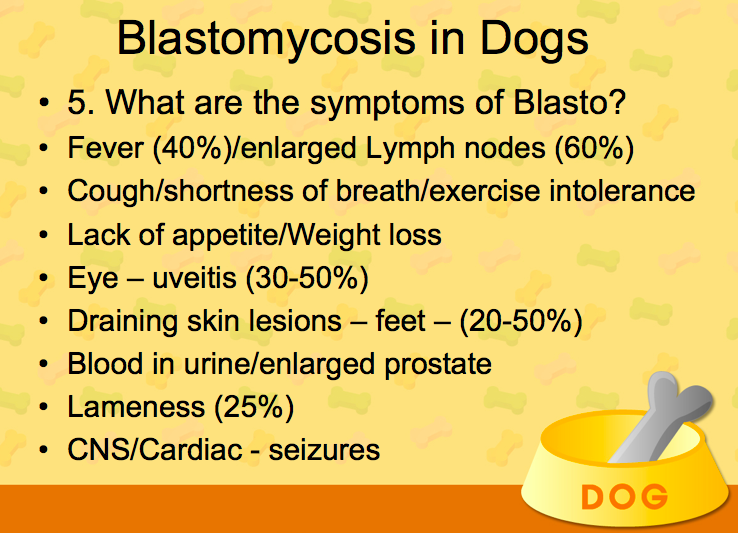
The most common symptom of Blastomycosis is a dog that is coughing, sounding like pneumonia. The dogs will often also present with a draining sore on the foot that is of indeterminate cause.
Diagnostics for the disease are conducted on urine samples sent to a specific laboratory in Indiana. Dogs can decline rapidly, with acute onset of the disease in less than 24 hours. Treatment of the disease is expensive, time consuming and even successful treatment may leave the dog with permanent damage.
Dogs are treated with oral medication, with a 75 to 90 percent success rate, using the urine test to monitor efficacy of treatment.
Zoonotic disease
Blastomycosis is a zoonotic disease, meaning it affects people and animals. People will not be exposed by their sick dogs, but they can acquire the disease from the same source of disrupted soil. The spores live in the soil. She goes so far as to recommend dogs that pass from the disease be cremated, not buried, so as to not release more spores into the soil.
“There have been outbreaks where 120 people were sickened in one event,” Greer said. “It is bad, bad stuff. Nobody messes around with this. It is serious.”
Blasto can be a challenge to diagnose, as the early symptoms are similar to many other diseases, Greer said. She adds that owners should keep track of dogs after traveling to areas where the disease is prevalent.
215 – Lowchen in Danger: Could be Extinct in our Lifetime

Ancient Lowchen breed holds threatened future
Alexia Rodriguez, breeder and Lowchen Club of America Director, talks about these non-shedding, healthy, active “best kept secret” little lion dogs. With depictions dating to the 1400s in Germany, Lowchen see only 80 dogs total registered annually in the U.S.
Rodriguez said that in 2015, only 18 litters of Lowchen were whelped in the US, with an average litter size of only three puppies. On its current path, the club estimates Lowchen could become extinct by 2044.
“Our numbers indicate only 37 percent of dogs in the U.S. contribute to the gene pool,” Rodriguez said. She added that the tight line breeding required to re-establish the breed following WWII is suspected to be the cause of the low litter numbers. Nonetheless they breed and whelp naturally.
Best kept secret
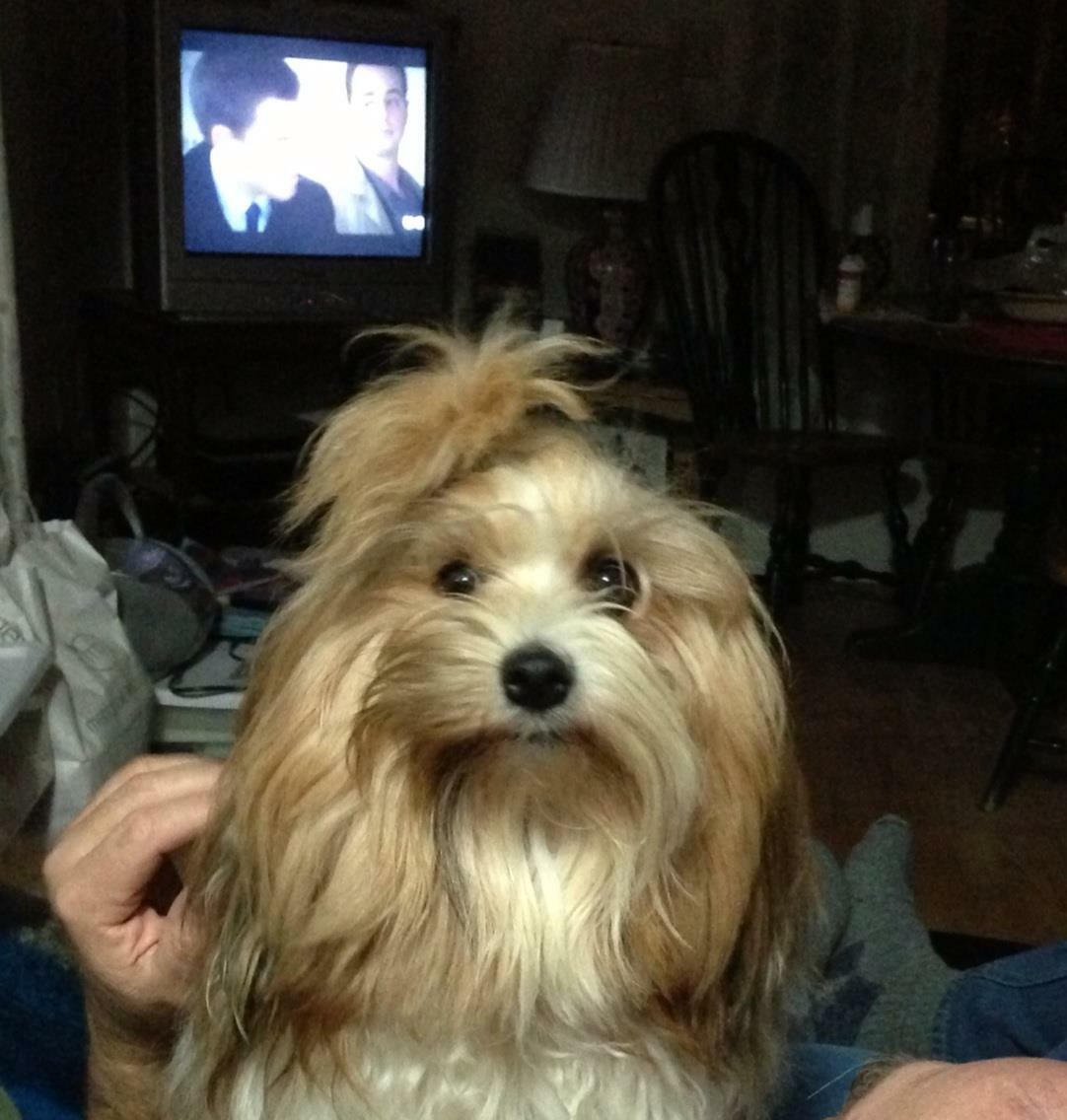
“The thing I love the most,” Rodriguez said, “is that Lowchen can be high level agility or performance dogs, and then they are just as happy to lay on the couch and snuggle for three days if you don’t want to do anything.”
Lowchen’s unique coat and “lion” trim is relatively low-maintence, Rodriguez said.
“You can go tracking one day, and the next day, give them a bath and blow out, and they’re ready to go in the ring,” she added. “If a smooth coated Cane Corso person can handle it, most people can…”
In German, Lowchen means “little lion dog” so they were shaved in the shape of a lion, Rodriguez noted. The trim includes “bracelets” on all four legs, with each leg shaved about half way, the body shaved from the last rib back and the tail shaved about half way up. No scissoring is allowed.
“They are tie- dyed dogs,” Rodriguez noted. “They come in all colors. Sables even look like a lion.”
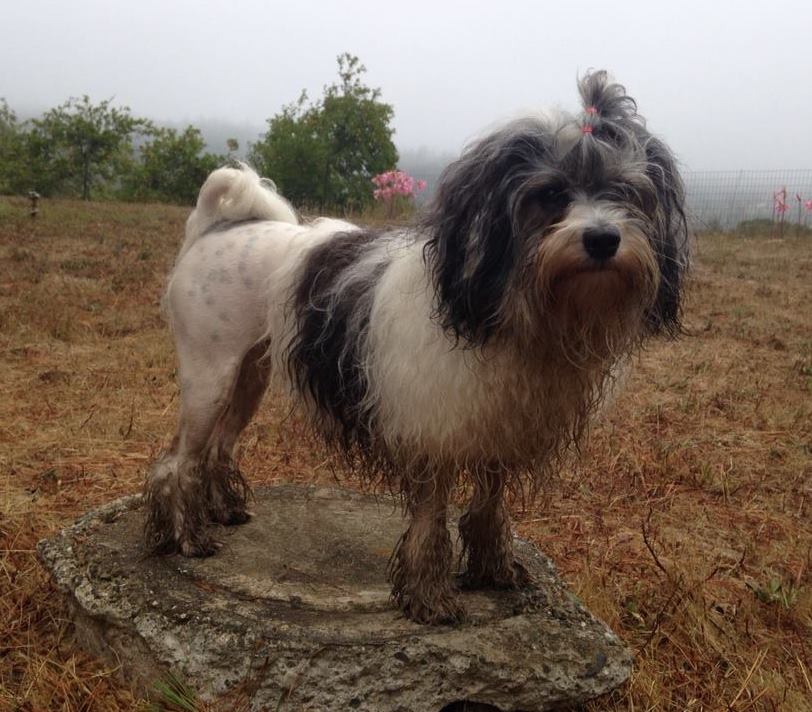
The luxurious coat is not all one texture of hair, Rodriquez said. “Parti colors tend to be a little more curly and cottony,” she added. “White coats are the most difficult and tend to mat. Blacks and sables tend to have more easy to manage coats.”
Legends of the Lowchen
The breed was developed in Germany. One legend has it, Rodriguez said, that if a knight was killed in battle, they put a lion on his tombstone. If he died at home, they’d put a Löwchen on the tombstone.
The breed was rumored to be a favorite of the ladies of European royalty because the dogs would attract fleas and keep them off the people.
Living with the Lowchen
Weighing about 15 pounds, the breed is easy to travel with, Rodriguez observed, and very healthy.
“As a breeder we test eyes, hips, knees. There are not many heart problems. We test for PRA,” she added. “Breeders in the breed are very open, and willingly and publicly share information.”
These healthy little dogs will often live 17 to 18 years, Rodriguez noted. They are resilient and not at all fragile. In fact, Rodriguez commented that they are phenomenal in agility, where they mostly compete in the 12” class.
For more information or breeder referral, visit:
http://www.thelowchenclubofamerica.org/
214 – Dancing with Dogs: Jere Marder, Lambluv OES
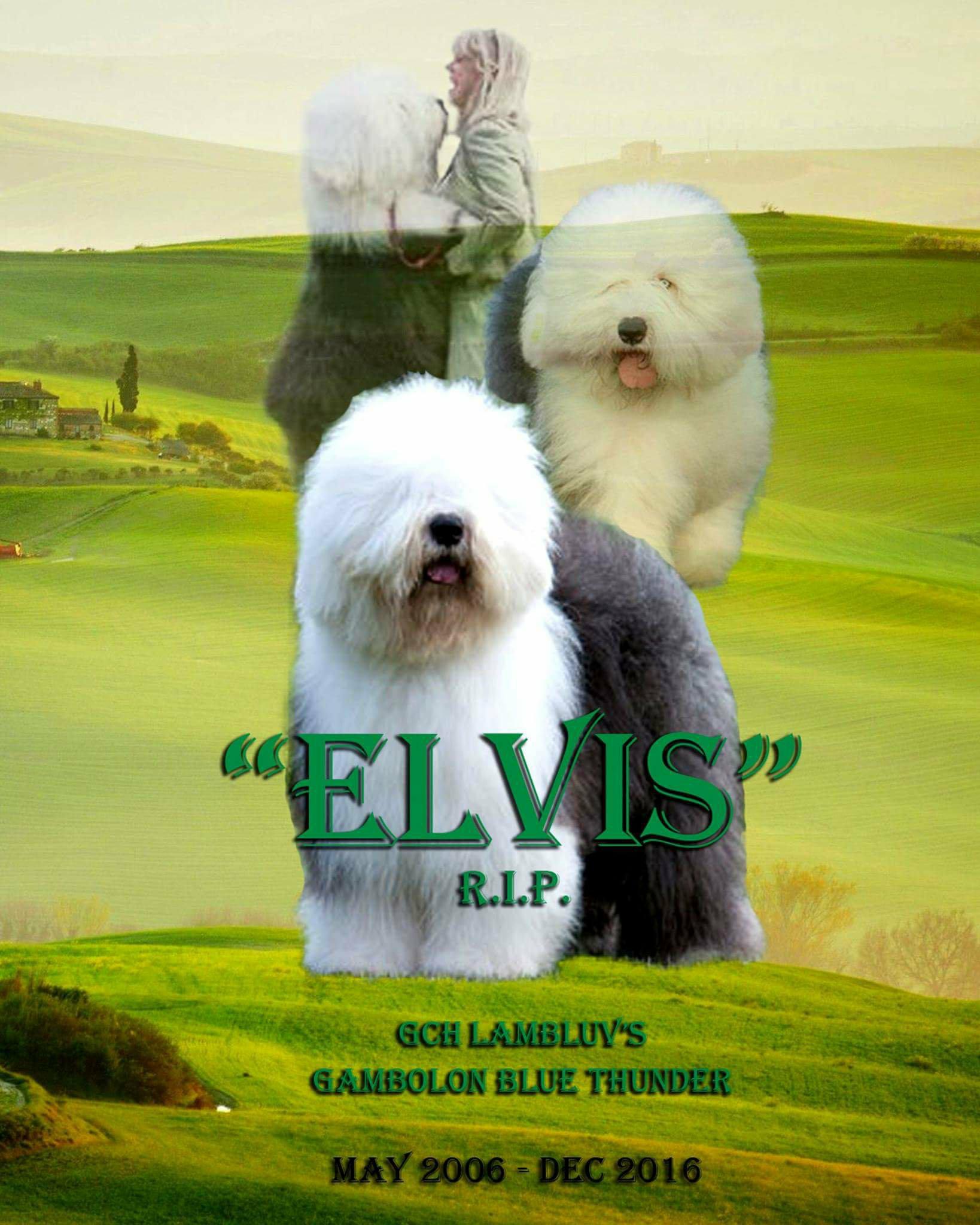
Her Dance Partner is Her Dog
Jere Marder was a high school teacher when her husband brought her an OES puppy as a Christmas present. Her world-renowned Lambluv Old English Sheepdogs are the result of a gift that has kept on giving for more than 40 years. She managed a successful breeding and show program for much of that time from a condo near Chicago.
But before that, she choreographed school musicals and taught at her own dance studio in the city. Lambluv dogs have reached #1 in both the Working group and since it was split in the Herding group. The first few were shown by a local professional handler, Jack Funk, but since then, Jere has taken over the leash and her top specials are exclusively breeder-owner handled.
213 – Scottish Deerhounds in Obedience with Record-Making Trainer
Training Scottish Deerhounds for obedience competition requires patience
The “otherworldly” grace of Scottish Deerhounds first appealed to Debbie Cutter in the early ‘80s as she sought a dog to compete in obedience. Her original breeder told her “do not try to do obedience with deerhounds. They aren’t good at it and they don’t like it.”
In the intervening 35 years, Cutter has finished eight UD titled Scottish Deerhounds, including the first and only two UDX deerhounds.
While there has never been an Obedience Trial Champion (OTCH) Deerhound, Cutter’s current competition dog is well started on her way, “God, I’m hoping,” Cutter said. “That’s my goal. She has 6 OTCH points and her open B first place.”
“The basic essential for training obedience with Deerhounds is to be more stubborn than the dogs,” Cutter added.
Make it their idea
Her secret to success working with an independent breed that is specifically designed to *not* be biddable: make them think everything is their idea.
“Deerhounds will teach you that they can’t do obedience,” Cutter laughed. “Any time you try to impose your will on a deerhound, the dog just says no. You are not going to make me do this and I’ll embarrass you until you quit. They don’t want people to have expectations. Because once the owner starts having expectations that the dog is required to meet, they won’t be able to live their life of luxury.”
Make it FUN
Cutter’s best recommendation is to start young and convince the puppy that obedience is a fun activity. She works primarily with bitches, she said, as the males aren’t as mentally tough. “Teach her that she is in control. She is in charge of dispensing treats. Once they learn that, they see what else they can make you do.”
- Make them think their idea
- Break all exercises into small steps
- Build teamwork after you get buy-in
Deerhounds are very smart, Cutter said, they aren’t easily distracted and they generalize well, but they are not at all biddable. A Deerhound’s first reaction is, “I know what you want me to do, I just don’t care.”
Fair and Patient
“They want to know what’s in it for me,” Cutter said. “They do a risk:benefit analysis on everything.”
“I’m a balanced trainer,” Cutter said. “(Deerhounds) are very rules oriented. You don’t really have a leadership role, it’s fully a negotiated relationship.
“For example, Sighthounds have no genetic desire for a retrieve. It takes a long time. It’s not a casual thing to teach a Deerhound to retrieve. You need to be very fair and patient.”
Listen to today’s episode to hear more training tips and Cutter’s fabulous story about her recent trip to the AKC Obedience Championship.
Debbie Cutter Biography:
I’ve been doing obedience training for 35 years.
My first dog was a German Shepherd; she earned a UD and a TD, and my second dog was my first Deerhound, Scarlet (Fairyfort’s Study in Scarlet UDTX FCH). She was the second Deerhound to earn a UD (Utility Dog) title and the first to earn a TDX (Tracking Dog Excellent) title. I’ve not been without a Deerhound since, although I’ve had some other breeds along the way.
My next Deerhound was Lacey (CH Kyleakin Cardinal at Skyhigh UD TD), then came Caitlyn (CH Highlander Annwn O’Jubalhil VCD2 UDX VC), the breed’s first VCD2 (an AKC versatility title that combines the CDX, TD, OA, and OAJ titles) and the breed’s first UDX (Utility Dog Excellent, which requires earning ten legs by qualifying in both Utility B and Open B at the same trial). This was a very challenging title for us as I really didn’t know if we had the endurance to complete it! Caitlyn was nine when she got her last leg. It was one of my happiest moments in the obedience ring!
Caitlyn had one litter, with Ellen Bonacarti’s Rory (NFC BII DC Chartwell Silver Run Valevue LCM6 SGRC GRC FCH) and from that litter I had Kit (Skyhigh Spitfire O’Jubalhil UD FCH GRC) and Ariel (CH Skyhigh Citabria O’Jubalhil VCD3 UDX SC MX MXJ FCH GRC VCM). Ariel was the most amazing dog I’ve ever known. She excelled in obedience, tracking, and agility, and loved LGRA most of all. She learned to cheat early in lure coursing and almost always caught the bunny. She accomplished everything I asked of her and did it with her own style. She was much smarter than I was, and much, much wiser. She was my most demanding teacher and I treasure the years I had with her.
Ariel had one litter, sired by Intl. CH Intl. FCH Nelungaloo Shadrach. I ended up with two of these offspring, Harper (Skyhigh Kentucky Thunder VCD1 UD OAJ), and Zoe (CH Skyhigh Jubalhil Blue Moon O’Dark Corner VDC2 UD). While Zoe was still alive and doing well on three legs, I acquired Rowan, who is the most talented Deerhound I’ve ever trained in obedience. I’m hoping we have many, many fun and exciting years ahead of us competing in the obedience ring.
Rowan is my eighth UD Deerhound and is close to her UDX. I’ve also earned a UDX on a German Wirehaired Pointer and UDs on two German Shepherds, two Wirehaired Pointing Griffons, another German Wirehaired Pointer, and a CDX on a rescue German Shorthaired Pointer. I’ve earned tracking titles and a handful of agility titles on these other dogs as well. I’m also currently working on a CDX on my Deerhound boy Khamsin (GCH Kyleakin Whirlwind at Skyhigh BN JC CD).
212 – Purebred Dogs Assist Wildlife Biologist’s Research
Bird Biologist’s Wildlife Research is Aided by Purebred Dogs
Dominic Bachman, wildlife biologist, uses his German Wirehaired Pointers to help him conduct research on migratory bird species and habitat management. Bachman spent his childhood with dogs at a wildlife management area in northern Utah, where his father was the manager.
“Any chance I get, I try to bring my dogs into my life,” Bachman said.
Bachman spent his days with his father in the WMA. He watched his father incorporate their dogs into the work.
“Dad would send a dog after a hunter’s lost wounded game,” Bachman said. “The dogs would search hunters who dad suspected had more than their limit. Our dogs would even collect birds killed by disease.”
GWP’s diverse and versatile working ability appealed to Bachman’s father, so he grew up with the breed. He has continued living with the breed and incorporating them into his daily life and work ever since.
Purebred dogs are useful in a variety of wildlife management tasks, Bachman said, including:
- Locating wildlife and assessing populations
- Locating dead bodies, antlers or bone
- Locate scat
- Capturing birds for banding
Bachman specifically used his GWP while working with sandhill cranes in northeast California. He convinced his boss to let him incorporate the dogs into locating the baby cranes, called colts, in order to band them.
Host of his own podcast, Western Bird Biologist, Bachman’s description of capturing baby cranes that are 2 1/2 to 3 feet tall while the crane mothers are attempting to distract the dogs to protect their babies is laugh out loud funny.
Bachman’s research, using dogs, was able to provide valuable information supporting the habitat management plans.
German Wirehaired Pointers are particularly well suited to the work due to their development as very versatile field dogs, Bachman said. They work on land and in water, they track wounded game, they adjust their range to the terrain.
“The versatile hunting dog is a perfect dog for a lot of wildlife research,” Bachman said. “It blows my mind what they can do. There is a dog in biology that has been trained to smell a plant pathogen.”
211 – Dwarfism: When the Right Gene Goes Wrong
The Dark Side of the Dwarf Gene
Dr. Theresa Nesbitt talked last week about the purpose-bred dogs that evolved with short legs to do very specific jobs. Today she talks about “the dark side of the dwarf gene” and what happens when things go wrong when you’re trying to do it right.
Dwarf genes have been around for more than 4000 years, Nesbitt said. They are solidly entrenched in some breeds that are specifically “fit for function” for the job they were meant to do.
“Everything that isn’t normal, isn’t pathological,” Nesbitt said.
Too much of a good thing
Sometimes, though, breeders can get “too much of a good thing,” Nesbitt added. She also shared tremendous information on the various genetic disorders of dogs who aren’t supposed to be dwarfs.
Nesbitt provided layman’s translation for a lot of medical terminology. She helped decipher topics like retro genes, epigenetics, genes that inadvertently land on the wrong chromosome and more.
Making words like achondroplasia make sense to those of us without a medical degree is a gift that Nesbitt shared throughout this episode. “Chondro,” for example, refers to cartilage, Nesbitt said, and “plasia” means growth. The dwarfism gene affects the rate at which animals (including humans) produce cartilage.
“The growth plate at the end of the long bones is like a disc of cartilage that keeps making longer bone,” Nesbitt said. “It pushes out like a pasta machine extruding bone in a perfect column.”
Genes are a “recipe book”
Nesbitt’s discussion of “layering genes,” autosomal recessive genes and the progress being made in the research community as they acquire more advanced understanding of how all of these systems work is fascinating. She also brought to the discussion ways in which research on canine genetics is benefitting people.
Intervertebral disc disease, in which calcification develops between the discs, is an area Nesbitt said research is making tremendous strides in identifying the specific genes responsible.
Genes provide a “recipe book” to the cells, for which epigenetics are the “family notes,” Nesbitt said. She added that the environment can change or modify genetics.
This is a “must listen” episode. And probably more than once! Nesbitt’s enthusiasm for the topic and ability to translate into layman’s terms is invaluable.
210 – Bob & Polly Smith: Foxhounds and Dog Shows
Foxhounds, Fox Hunting and Dog Shows
Two of the most revered and well-known all-breed judges in the American Kennel Club system, Dr. Bob and Polly Smith share their journey starting as breeder-owner-handlers in American Foxhounds.
Polly was started by a Chow Chow breeder who tutored her for school. She showed her first dog at the National Capitol Kennel Club when she was 4 years old and won a blue ribbon. She was hooked from that moment. Bob had dogs all his life, eventually adopting a War Dog his brother brought back after WWII.
“High Church”
“A great mistake is made,” Polly said, “because of low entries at AKC shows, that American Foxhounds are considered a rare breed. There are thousands of Foxhounds out there. The pack hounds associated with horses and riding to the hounds are considered the ‘High Church’ of foxhounds. Many dogs also participate in Night Hunting and Field trials.”
Many different “strains” make up the American Foxhound breed. Bob and Polly shared in depth historical information on these various lines of dogs. Listen to the podcast or check out their book on the subject.
Song of the hounds
“Fox hunting, it’s something… more like a religion than hobby or sport,” Polly observed, noting that she rode to the hounds regularly while she was in college.
She strongly recommends the fictional “Sister Jane” book series by Rita Mae Brown for an upclose understanding of the sport.
Talking about training Foxhounds for the chase, starting them as puppies with an older bitch, foxes who understand scent even better than the dogs, Polly shared her tremendous enthusiasm for the sport. The dogs are judged on speed, drive and finding the fox. They are often run in huge enclosures to ensure the safety of all participants.
“The intent of foxhunting is not to kill (the fox),” Bob said. “It’s the fun of the chase.” Polly added that the foxes even get in to the game, knowing when the dogs are put away and they can come out for marshmallows and treats.
“Hounds sing,” Polly said. “It’s beautiful music. You can tell when a hound strikes. We’re the dummies when it comes to scenting conditions. The foxes know best, then hounds, then us.
“We tried to keep hunting instinct in our dogs. I think we’ve gone away from that in AKC.”
A different era in dog shows
Bob added that dog shows, particularly, are in rough place.
“The state of the sport is iffy,” Bob said. “You don’t have the passion, sportsmanship is not as strong. It’s more of a business than it used to be.”
Polly added that professional handlers of their time, people like George Ward, Dick Cooper and Bobby Fisher, were able to show any breed and were supportive of owner handlers.
“We don’t have as much of that,” Polly said. “They taught us a lot. They didn’t give up an inch in the group ring but they were very helpful in bringing you along.” Bob added that he and Polly always set up with handlers when they were showing dogs, watching, learning and helping them.
Polly said many people today don’t take the long view of a breeding program and instead dog shows are “a race to see how fast you can finish” a dog.
“We have to change with the times, I guess,” Polly said. “But some of us kick and scream going down. The history should not be lost.”
Laura: Pure Dog Talk is the voice of purebred dogs. We talked to the legends of the sport and give you the tips and tools to create an awesome life with your purebred dog, from showing to preservation breeding, from competitive obedience to field work, from agility to therapy dogs, and all the fun in between. Your passion is our purpose.
Laura: Welcome to pure dog talk. I’m your host, Laura Reeves, and I have today two very, very special guests, Dr Bob and Polly Smith, two all-breed judges in our system and people long steeped in history in this sport. And I’m so excited and particularly because I understand, I just heard this Dr. Bob, you’re going to retire at the end of this year..
Bob: I’m not retiring, I’m not accepting assignments except those shows that I particularly want to do… after this year.
Polly: I’m not retiring.
Laura: But… we’re not going to see you as often. And so this was a wonderful opportunities, so thank you. So tell us, tell our listeners the 411. I know some of it, I’m sure I know not even half of it. So how did you get started in dogs? Why did you get got started in dogs?
Polly: Many years ago — my grandparents raised me — and my grandmother sent me next door to be tutored. And the lady that tutored me had Chow Chows and showed them. And so I would study in the morning and then we would play dog show in the afternoon and that’s how she got me to study. And then the first show I showed at was National Capital when I was 4 years old. And I won’t tell you the year
Laura: It was just yesterday!
Polly: Ha ha…And I won a blue ribbon. That road — Columbia Pike — had a number of top breeders — Bill Tuten who bred bulldogs (Rootin’ Tutin Bulldogs) lived on it and the Noppenbergers who raised Collies lived on it.
Laura: And what state and city?
Polly: This was in Ellicott City, Maryland. And that’s how I actually got started in dogs. And after we got married, um, got interested.
Laura: He’s your responsibility, is that what you’re saying?
Polly: Yes.
Bob: Well, I had had had dogs all my life, one type or another from mixed breeds to purebreds. I was fifth of six children and my oldest brother came back from World War II and brought a German shepherd that had been a war dog, actually the messenger dog, and he became my companion, basically. That was my start in dogs, but I didn’t get interested in dog shows until after Polly and I were married.
Laura: And did you start with the Foxhounds right away? How did we come to Foxhounds?
Polly: Bob went back to graduate school down in Columbia, South Carolina. And he was working at the hospital at night, so he got me a German Shepherd. And the lady that ran the Columbia Kennel Club in South Carolina was Lucy Bostick, a well known Cocker Breeder, and she got us into the Columbia Kennel Club with this German Shepherd that Bob bought me. Unfortunately it won at a match the whole working group that Frank MacArthur was judging. He was a handler from them.
Bob: He later became a judge.
Laura: Yes. The name again, familiar,
Polly: And of course we thought we had the top dog in the world, which turned out NOT to be the top dog by any means.
Bob: Not even the top dog . ??? (I don’t know but probably hilarious
Polly: Later on, when when Bob went to graduate school at Vanderbilt for his PhD, we met Chuck Trotter and his first wife, Becky, who showed Afghan Hounds. And Becky also showed a Foxhound for Dr. Fred Vaught and we ended up getting an American Foxhound from Dr. Vaught and that was the beginning of our winning and our success. We got out of German Shepherds.
Bob: At that time we had moved from South Carolina — actually from Vanderbilt — up to Michigan. I was teaching there and a member of the Kalamazoo Kennel Club was attending a match that we were at with the Foxhound and I didn’t win the Hound group. I guess I went second in the Hound group and he said that’s the end of the German shepherds and it was.
Polly: It was Tony Stamm of Anstamm Scotties. And we got in the Kalamazoo Kennel Club.
Laura: And how long were you guys in Michigan for?
Bob and Polly: Seven years. Seven years. And then we went to Mississippi and then we cam back to Virginia.
Laura: That’s where I think of you is Virginia
Bob: But we were in Mississippi for about 20 years.
Polly: And then we moved to Virginia and we’ve been there ever since. Bob is a native of Virginia and I’m a native, of course, of Maryland; so we were very happy to get home.
Laura: Yes, yes. That would definitely be more comfortable than Michigan. If you’re from the southeast then Michigan would be terrifying. Oh my goodness. And so talk to me about American Foxhounds and then maybe we can do a little bit of compare and contrast because we’ve added so many new Hound breeds that fall into this group that even I am confused sometimes.
Polly: Well the great mistake that’s made among people in AKC is because of the low entry and the low number of dogs registered with the American Kennel Club, they think of American foxhounds as being a rare breed, They are anything but a rare breed. There are thousands of American Foxhounds out there. And really we have two types — we have the pack hound which you associate with the horses, and riding, and fox hunting, like the English style and really that is what we always called the “High Church of Fox Hunting” — and then you also have those people, primarily in the southeast and some of the Midwest,
Bob: They go as far west as Texas and as far north as Pennsylvania – and even New York, I guess.
Polly: They hunt at night
Laura: So they do the night hunting that we think of more traditionally with Coonhounds or something.
Polly: Well, not the same way.
Bob: Yes, but it is night hunting, yes.
Polly: And they do more of the field trial. Almost any huntsman, the ones that have packs, have only ever been to field trials that were run with pack hounds. And they know the voice of every hound they have and if they don’t they’re not very good at it. And they all have a distinct voice to them.
Laura: Well you think. I mean I can tell which one of my dogs is barking, so it makes perfect sense to me.
Bob: Sure — same principle.
Polly: But with the pack hounds, most of the hunts will want an even pack — either in color or size. They’re primarily right now, I’m not sure, i don’t think we have any totally English packs anymore — of just English Foxhounds.
Polly: We have the Crossbred Hound — which has a standard for that breed.
Laura: Is that the English American foxhound?
Polly: No, no. It’s the Crossbred, but it’s a cross between English and American. Don’t feel bad. And then you have the American Foxhound, the English Foxhound, the Crossbred, and then we have the Penn-Marydel Hound, which I think of as… IT is an American treasure. Now. AKC.
Laura: Nothing. I know nothing about this. Tell me about that.
Polly: You can show Penn-Marydel Hounds in an AKC show as an American Foxhound, but with the Masters and in their shows, they are shown as a separate breed. I have done their National and they are a beautiful dog.
Laura: So tell me the difference…
Polly: Sightly different head, the head type The head, body… just a different all over hound.
Bob: Because it is a different breed, a different breed. But there are several strains of American Foxhound. Today, in this day and age, it’s primarily two breeds or strains — the Trig and the Walker. Those are the two predominant strains, but over the years there have been a number of others – Trigs and Julys and Goodmans and…
Polly: Mostly what you will see at an AKC show is a Walker. We bred a combination of Trig and Walker. And you also have the July Hound, which is a wonderful breed and you have the Goodmans.
Laura: And these are all separate breeds that come into AKC and show as American Foxhounds.
Bob: They are strains of American Foxhounds — yes.
Polly: Now the Trigs still hold their own National, separate from the International Foxhounds,
Bob: Which is probably predominantly Walker Hounds.
Polly: And Walkers are the fastest hounds. They will win most of your field trials and they predominantly win your bench shows.
Laura: So you guys have gone and ridden,yes?
Polly: Actually, when I went to college I took my horse down to Mary Washington. I had ridden and hunted as a child in Maryland. And then I took my mare down to Mary Washington and hunted while I was in college.
Laura: Awesome. So this is gonna sound weird, but tell me about that. Just the joy of it. I do horseback field trials with pointing dogs, so I want you to share with our listeners how amazing that is.
Polly: It’s more like a religion than a hobby or a sport because people that foxhunt are adamant about it… whatever type they do. You have different people that hunt in the packs. You have some that hunt because they like to ride, and they want to be out and they want to be cantering across the field. You have the others who hunt because they liked the work that the hounds do. stocks And anyone who is interested in learning about it should read Rita Mae Brown’s books — well she’s written different series, but she has a series of Sister Jane who is the master of her own pack and outside Charlottesville.
Laura: And is this a true story?
Polly: No.
Bob: No. Actually Rita Mae is the master of her own pack.
Laura: Oh my gosh.
Polly: And actually she came over to our shows last January. We have the American Foxhound National and she came over and presented the trophies. And I mean, you could tell how into the hounds she was because she was up at ringside watching from the sweepstakes that Edd Biven was judging on through all the classes. She was watching to see how they did it…
Polly: And were they doing it intently and I thought…don’t go in and tell them they’re doing it wrong.
Laura: Yeah, no, you could see it on her face. Right?
Bob: Don’t screw it up.
Polly: It’s a wonderful breed. It brings together two, At the Foxhound National years ago, not so much now because we have run out of places to hunt open as I’m sure you find with your dog.
Laura: Yeah
Polly: But but we would have the bench show on Sunday and it was divided. We never show puppies to get their championships.
Laura: Interesting
Polly: Well they can’t be entered in the hunt so therefore they can’t be.
Laura: So how old do they have to be to be in the hunt?
Polly: A year old. Well, most of them, they come back after their puppy in a year and then they are entered the next season in as they’ll go cubbing and they learn.
Laura: Cubbing? I love that.
Polly: And so at the national you have Derby Dog, Derby Bitch, All Aged Dog and All Age Bitch. So the Derby Dogs run in their own field trial and they can’t be over two years old — they have to be between a year and two years. The All Age can be two years and up. It doesn’t matter how old they are. And if you want to hold your bench winnings, your confirmation winnings, then you must be cast in the field.
Laura: I love that.
Polly: Now you can be scratched,
Bob: You can even hope that you are scratched.
Polly: And most of them that are show dogs hope that they are scratched.
Laura: Oh my goodness. And that is a rule of your National Club?
Polly: Of the international Foxhounds, not the AKC,
Laura: You hunt them three days. They cast them 15 minutes after sunrise, and then they’re blown off about noon, and then you pick them all up. It’s not as hard to pick ’em up anymore because we have tracking collars. It makes life so much easier. It makes life much easier when tracking collars. So the Derbys are on for three days and then they All Ages run for three days.
Laura: Amazing. And so you run them like in the morning for three days straight?
Polly: Right, and you go to a different casting ground each day.
Bob: And they have judges, most of them were on horseback right? Nowadays it’s a 4 wheeler.
Laura: Oh, do they use the a 4 wheeler?
Polly: Well a 4 wheeler really breaks up the hunt – horseback or mule is much better.
Laura: I agree. As we’re starting to see that in field trials too.
Bob and Polly: They are judged on several things too — speed, drive, finding the fox.
Polly: You know, and a lot of times when you’re training and we train a lot in puppy pens, now we have fox pens, which the animal rights people don’t like, but they’re wonderful. The foxes are given rabies shots, they’re fed, their dens… everything.
Laura: And so, okay, this is going to be forever. I’m so loving this. Tell me about how you train a foxhound with a fox.
Polly: Well, it’s instinct — you don’t start puppies young because if they’re really good, they’re going to run, and they’re going to run themselves out. But how we did it years ago, and we’ve hunted in the open. We had big tracks of forest in Mississippi and a very good friend of ours who was a fox hunter, trained a lot of our hounds and we went with them. And you’d normally you’d have an old bitch rather than a dog. It’s almost always an old bitch who’s really good at finding the fox.
Bob: It doesn’t have to be a bitch, it could be a dog, but they are mostly bitches.
Polly: And once she hits, you’ll put her out, when she hits and you’ll have two or three dogs and whether you’ll throw a couple puppies out. You never want to throw a lot of puppies together out because their little minds…
Laura: Yeah they pack up and they’re gone.
Polly: Yeah, and this is how you do it. And then you’ll bring ’em in. Well, normally in the hunt packs they’ll have two different packs, either a bitch pack and a dog pack or two mixed packs. So like if you hunt two days a week, you’ll hunt Tuesdays and Thursdays or Wednesdays and Saturdays, or whatever. You never hunt the same pack twice in a week.
Laura: So you don’t want to run them out.
Polly: No, you don’t want to run ’em out. And now with the fox pens you can take your dogs up, and you’ll normally cast ’em around 8:00 or 9:00 when it’s getting dark and they’ll run and you can listen to them and they’ll learn. And the strange thing is that the foxes also learn, so they know when you…
Laura: It’s a game isn’t it?
Bob: It is a game
Polly: It really is a game. And in the pens the foxes when they hear you calling the dogs in and they know they’re all up, then they’ll come up to get marshmallows or cookies or something they want to eat
Bob: It’s important to stress I think that the intent of fox hunting is not to catch the fox. Every fox that you kill is one you can’t hunt the next time you go out. So it’s really the fun of the chase.
Laura: Right. And I’m still obsessing about these pens. So the fox lives in the pen and you let it out?
Polly: Well down in Emporia, Billy Poole has two or three — and they are 250 to 500 acres and it’s all fenced. It’s got 6 foot fencing with overhang. And then it’s got fencing underneath.
Laura: That’s a lot of money invested.
Polly: Oh yes. And they have kennels within the pens.
Laura: The foxes do?
Polly: The hounds do too, because we run a lot of our field trials and bench shows in pens now too. Because of the highways.
Laura: Right Safer…Fascinating
Polly: It is. I like the riding to the hounds.
Laura: I’m a horse girl. I had horses before I had Dogs, right? So my father, this is how we went up in dogs. My father said — get rid of these bleeping horses and I’ll buy you any purebred dog you want. For me when I discovered horseback field trials — I pretty much it was manna from heaven, you know.
Polly: So it’s an interesting sport. It really is. Once you get into it, if you like the outdoors and you like hounds, you have to like hounds. And hounds, they will sing, they will get to howling or baying or whatever. And it’s beautiful music. It really is. And you can tell when the hound strikes. And on the other hand, you can watch a fox, a fox can be setting on the hill and because of the scent, foxes know scent the best, right? Then the hound, and then us, we’re like the dummies.
Laura: So we can’t smell it
Polly: No. And there’s so many different things that go into scent and whether it rises or it settles or where it is right is and how warm or cold, wet or dry, particularly dry.
Bob: People who foxhunt are passionate about it. And this friend that Polly referred to earlier, this Vernon who helped us train our dogs, he always said if anybody asked me what my religion is, I tell them I’m a foxhunter.
Laura: All right, crew,
Laura: We’ve got some information for you, so join me as we visit with Vicki Ronshette. She’s going to give us more information about Show Dog Prep School, which there was a podcast a few weeks back. If you didn’t listen to it, we’ll make sure there’s a link in the show notes. Vicki, tell us a little bit more about Show Dog Prep School and some of what you’re seeing with the students.
Vicki: So Show Dog Prep School has been in the making for a while. It’s the first all online conformation school. And we’re dedicated to conformation handling, training and anything having to do with dog shows. So anything that you could possibly need for your show dog — training the dog to gait, training the dog to stack, talking about raising puppies and dealing with shy or fearful dogs, traveling with your dogs, nail trims, — your own course on canine structure.
Laura: Sure. Yes.
Vicki: All that kind of stuff. Yeah, we’ve got all that. So I’m really excited about it.
Laura: What do we call that? We call that full disclosure. I am – thank you very much — honored to be one of the instructors for Show Dog Prep School. And I just think this is a really great opportunity for people who don’t have necessarily all of the resources they need right at their fingertips. Yeah,
Vicki: Exactly. Exactly. A lot of people that I coach all over the world actually are in need of a little bit more help for the show ring. They are finding classes in there area sometimes, but it’s more of a run through class, not a lot of instruction and sometimes they’re just lost. And then there’s also people who’ve been doing this for a long time but they’re either stuck with a particular dog on an issue or maybe they just feel like they never really got great free stacks. They really never learned how to do that or some other thing and so that’s where we come in and are able to give them access to all these great instructors and all this information from home.
Laura: And I think that that is invaluable for a lot of people. We hear it all the time here on Pure Dog Talk, how grateful they are to be able to have access to information and they live where they don’t have any other way to get that information. So I think this is an incredibly valuable service that you are providing to the purebred dog community and it is showdogprepschool.com, correct?
Laura: Yes. Excellent. All right. Listeners, we are back to the podcast. It is, I think such a great passion and so many of the things when we do with our dogs that they were designed to do and that is so important.
Polly: We always tried to keep the hunting instinct. Now we did not hunt the dogs that we campaigned and won Best in Shows and groups with. You can’t do it anymore then you can do it with the ones that won a lot at the Foxhound bench shows, because to keep them in field trial or hunting condition is entirely different. But we always had some of our foxhounds out and we would also… if hunters came up and wanted to breed to some of our dogs — these dogs were not AKC registered.
Polly: If It was good hunting gyp, which is what the hunters called their bitches. We would breed to ’em. We might use one of our young stud dogs, so we might use one of the top stud dogs. And it also kept the hunting instinct in. And also some of our own puppies Vernon would take and we would take and they went hunt. But if they’re not trained, they’re not going to hunt. They have to be trained properly.
Laura: And they have to be introduced to it early age and those things.
Polly: Yes they do. Right, and that’s how we’ve gotten so far away from it, I think, in AKC.
Laura: I wouldn’t disagree with you. I’ve worked very hard in my wirehairs, and my mom brought the first Best in Show winning dual champion in German Wirehair Pointers. And it was amazing. That dog finished his dual and his amateur and his Best in Show by the time he was 4 years old. And they were running him and trialing him and he was an All Age dog and when we say an All Age dog in horseback field trials, that dog was running just three miles out there, you know.
Laura: And he also plays like opposite at the National a couple of times, you know. So I think that that type of focus is so important.
Polly: I agree. And one of the breeds here that still has a lot of the dual are the Brittanys, they very much try and keep that.
Laura: Brittanys, Wirehairs, Shorthairs…
Bob: Gordon Setters
Laura: Really the pointing brands are doing well. A lot of the Spaniels are doing well. Unfortunately. You see, you know the split, you see a divide between a type, a show type and a field type, which is hard. I mean, before I had anything else, my dad had field trial Labs. Trust me, they don’t look anything like what you saw today.
Bob: No. I agree.
Polly: And the field trial Labs are not anything like a hunting Lab either. They have gone to the other extreme. And I must say some of the field trial people in the Foxhound world have gone to the extreme with the Foxhounds that they put in the field trials.
Polly: They’re not what is going to hunt or what would be in a pack riding. Though, I must say that when we were breeding, we did send some of our dogs. We sold them to the Howard County Hunt and also the Green Spring Valley Hunt. At that point that dog couldn’t hunt in the pack because he was too fast, so they used him to breed to some of their bitches and…
Laura: To bring your speed up?
Polly: To bring speed up and also to bring a different type into it — a little more class or type.
Bob: Well and to bring his speed down.
Polly: Yeah, the Walker is such a speed demon that you’ve got… What the huntsman wants is a pack that you could cover with a blanket.
Bob: They stick together as a pack.
Polly: The Walker Hounds, and the Trigs, and the Julys to an extent, have the desire… they want to be in the front. They’re very competitive and some will overrun, which is not good.
Laura: Overrun is when you go past where the fox is, and as they go past it you’ve lost it because of going too fast and you miss.
Bob: You lose the scent.
Polly: Or cutting it — if you cut or if you hit… if there are two foxes out there you don’t want them to get off of the track that they’re on for the original one and then the pack to take another one that’s hotter or whatever. So you don’t want that. You want them to stay on that fox.
Laura: Fascinating. I just thought we could talk about this all day. Okay. All right. So talk to us a little bit about what can we as long time people do to help encourage new exhibitors. What can new exhibitors
Bob: You are talking now about the sport?
Laura: I am talking now about AKC conformation dog shows. So we have gotten back away from Foxhounds. Come on Bob. This is your bailiwick.
Bob: Well, it isn’t totally my bailiwick, but I think the state of the sport is iffy at the moment. I don’t think we have the intense interest and passion that we used to have as exhibitors and I think the sportsmanship is not as strong as it used to be. I think it’s become more of a business or more of a business. Not more of a business than a sport, but more of a business than it used to be… it used to be almost purely a sport and only a little bit business and now it’s more 50/50.
Polly: We were owner-handlers back in the day and no disrespect or not a great deal to the handlers of today, but the professionals years ago were true professional handlers. The George Wards, they handled Borzois, he handled Poodles, he had Setters, he had Terriers. Dick Cooper, many of these, I think Bobby Fischer is one ones now who was the last of the true professional handlers who could show any dog, we don’t have as much of that anymore and they taught us a great deal. Now they didn’t give up an inch in that group ring, but they were very helpful in bringing you along and I think the owner-handlers at that time were dedicated and winning. They knew they had to work harder.
Bob: And we were, I think, fairly smart about how we went about it. Any show we went to we would always go set up with the handlers and we would watch them and we would help them. Right. And if they got in a jam and needed someone to take a dog in, we could go in and help them. And you know, when that was the way we learned a lot as well.
Laura: That’s how I learned.
Polly: Right. And I think the judges, they came out of a different era. There were a number of owner-handlers that were judges and multi-group and all-breed handlers like Carley Harrimann and Louis Mehr and people like that. And then you had the Percy Roberts and people that came from the handling ranks, but they were very knowledgeable and they were very helpful to people too. I’m not sure today.. it’s not a race to see how fast you can finish a dog, and it should be on the breeding of the dog, that you’ve bred or where you want to go. And I don’t think today many of the people have the long view of a breeding program. I was talking to some of the German Shorthair people yesterday and they were saying the same thing.
Laura: Yeah, I would definitely. I see a lot of that.
Polly: And I think we need to get back to the sport. We need to get back to…don’t get a ribbon just to make somebody feel happy. Make them earn that ribbon.
Bob: And I blame AKC for a lot of this. I think they’re in the mode of trying to make everybody happy. Make everybody happy and keep ’em coming.
Laura: And I think this is such a great conversation because there’s this fulcrum, this balancing point, between encouraging new exhibitors who we need.
Bob: Which we need.
Laura: And keeping the exhibitors we have by educating them, which is what this whole thing is about. And living in a society where participation ribbons and whatever are sort of…
Polly: Expected!
Laura: Yeah!
Polly: And I also think if you look… Now, this show is very lucky. They have a lot of specialties with them which bring in the class dogs. But I know with our show what we do have two group shows, so the hounds and the terriers will get majors and points, but we’re not seeing the entry in the classes where you’re seeing the big entries are in the breed, and what we need is people breeding newer dogs. I mean this is what the sport is about.
Bob: And this has come about since the institution of the grand champion, and the grand champion purple, and the grand champion, whatever — they go all the levels. And so that’s why people instead of bringing out a puppy, they keep showing, they keep recycling the same dogs over and over.
Polly: The other side of that, which I hear particularly from people that are enthused about it, is because they live in town, they can have that many dogs. So they want something to do with their dogs.
Laura: There’s the legislative pieces, there’s all of the pieces and we know those pieces are there and we know it’s an uphill struggle and so now it’s a question of so where do we find that? What’s that balancing point?
Polly: And it’s a very hard point to find.
Laura: And I believe you hit on just a minute ago. Breeders, we have exhibitors, right? Where we are lacking is in a growing number of breeders. We have new exhibitors coming, often not young people, interestingly enough, I can tell you statistically this podcast, our market 55 to 65 year old women. Serious — that who’s listening to this.
Bob: Well and we are an aging sport to a large extent. We’re basically… well there are those of us at our age and then there are the former junior handlers who are sticking with the sport. Right?
Laura: And there are more women in the sport now, then then. Which I’m not sure, and I can’t say it is a really good thing, because I think we need the men too.
Bob: Some men don’t think that.
Laura: That’s true.
Polly: Years ago you were breeding dogs, the women were staying home so they weren’t working. Now you have a society where the husband and wife both have to work if they want any standard of living, and so much disposable income. There’s two income families. There’s kids – and those kids have a lot more to do now.
Laura: Yeah… I used to go ride my pony and climb trees.
Laura: I mean today they’ve got a Nintendo and an Atari and I don’t even know all the stuff they have.
Polly: You know, and there is so much more in the sports — there’s soccer and lacrosse and field hockey and little league.
Bob: And still baseball, football and basketball.
Laura: I feel bad for parents having never had children. I borrowed children. Right. My assistants that work for me
Polly: It’s better, it’s better that way.
Laura: It’s a great system. But I feel sorry for parents. I mean think about like my assistant comes from a family of six kids. Can you imagine six kids from 18 to 8 going in 10 different directions? I can’t. It makes me just weak.
Polly: But it’s a different sport today and I’m sure in 20 years it’ll be an entirely different story.
Bob: You have to change with the times. You have to adjust
Polly: As hard as it is for some of us to do it. We have to do it.
Bob: Well some of us kick and scream,
Laura: Right going, going down, but I think bringing the knowledge to the conversation right, and there are good pieces of our past that should go forward.
Polly: The history of this sport should not be lost. I hope with the moving of the museum to New York and what they’re planning to do with it will influence more people who are up for Westminster or are in New York for a trip, to go there and to learn about the history and learn about the great people. Because you talked to a lot of people today about men and women that were famous as breeders or handlers or judges — and they have no idea who you’re talking about.
Laura: And I look at Paul and Bo’s book the Best in Show book. I love that. It sits on the dash of my motor home, right, every dog show. And if I’m bored I sit and read a chapter if I get time.
Polly: The old magazines used to carry not so many ads as great articles and things and the pictures.
Bob: Popular Dogs was particularly good.
Laura: The podcast is … that’s part of what this is, right, is to save this history and then each of these podcasts will have accompanying material. There’s a blog post on the website and so I’ll ask you guys to send me photos and we’ll include some photos. And Lorraine Boutwell I interviewed her and she sent me pictures of Victor running his dog in a field trial. You know, stuff like that. And it’s just so important for people to have that context. And my thing is I sit, you know, you’re on social media and you go to these things on facebook and rate your judges and this and that. I’m like, that’s all it makes my head spin off because… can I introduce you to Bob and Polly Smith and let you hear it from their mouths and then maybe you’ll understand.
Polly: Well, and people think if you show to us… they didn’t tell us we were taking them to be our best friends. We are in there to judge. And a lot of times when you’re judging, when you have to really get down to serious judging, you have to think about this and you can’t be smiling, you know, you’re thinking.
Laura: You can hear the wheels turning in here.
Polly: You have to make a lot of compromises when you judge. And there’s some things you won’t compromise on.
Laura: Give us a for example, because this is very important and I think that people need to understand this.
Polly: One of the things, because I’ve seen it come back and bite too many people is… bite, missing teeth, particularly a wry mouth.
Laura: You’re not going there, this is your no forgiveness.
Polly: I’m pretty hard on that. I’m pretty hard.
Laura: Bob, what’s your thought on a no forgiveness item?
Bob: I stress gait. Well side gate in particular. The down in the back, I’ll forgive a little bit on the down and back, but the side gate I think is very important. In most breeds. Now, every breed is different.
Laura: You don’t want a Chow Chow that moves like a German Shepherd.
Polly: Well I wish we would get the Chow Chows back to the stilted gait, that’s what I wish.
Bob: Or the bulldog with the rolling gait
Polly: and the Peke. But you talk about gait — years ago and I was judging down in Louisiana and this man, and I can’t think of his name, but he was showing a Basset Hound. And I had gone over it.. down and back and I said… do that again. Went down and the back. And I said, do it again. He came back and he said … Polly… It’s not gonna move any different. And I said…well what is it? And he said.. I have no idea. And I said as a matter of fact I don’t either!
Polly: He had no idea, I had no idea, but whatever it was, it was not correct and it was not pretty? So that’s it.
Polly: But he knew it and so many owner-handlers or handlers, if they’re good, they know what they have on the end of their lead and they know what you have on the end of the lead. Particularly in groups, they will know what they have to emphasize to the judge and where your dog is not that strong. Right. And that’s simply being a good handler, whether you’re a professional or an amateur.
Laura: Absolutely. Emphasize the good, ignore the bad.
Polly: That’s right. And there’s certain things you’re just never going to correct on that dog.
Laura: There is no perfect dog.
Polly: Never has been and never will be. Again, I don’t care how good a dog may be. It still has faults.
Laura: Absolutely. Okay, so with that, let’s see if we can do it. Maybe you guys can do a combined one. My favorite question. Your all time favorite. Best in Show lineup?
Polly: Well I know if we start by group. And then you can do it. My favorite from the sporting group would be Ch. Salilyn’s Aristocrat – the English Springer Spaniel.
Bob: Oh you want our favorite individually?
Laura: Yes. Oh yeah. Each. Each group. Who’s your group winner to make your best in show lineup for your favorite? Just your mystical. I’ve seen them — all these dogs and these were the most beautiful of all time. Time.
Polly: I’d say I have two dogs in the hound group. That would be my all time favorite.
Laura: Oh, this is the tough one.
Laura: The sight hound would be Punky the Greyhound (CH Aroi Talk of the Blues) handled by Corky Vroom . And the other would be Winslow that George Alston showed – the English Foxhound.
Bob: I totally agree on Winslow. I think Winslow… I guess he’s the one that still gives me chills. Oh yeah. I think I agree with Polly on the sporting group. I think aristocrat kind of was kind of the ideal…
Laura: that set that standard in your mind
Bob: I’m not sure which one of George Ward’s Westies I would choose, but it would be one of them.
Polly: Yeah.
Polly: I don’t know I might choose Mick — Bill McFadden’s Kerry.
Bob: Mick was a great one
Laura: I love that dog. I was showing an Irish at the time. He had that out and I saw the back end of that dog a lot.
Bob: I had the pleasure of judging that dog.
Polly: The toy would be David Fitzpatrick’s Peke that just died. (Bernie) I thought that was one… and Peke’s are a breed that are close to my heart and that would be it. And in non-sporting it would be the White Standard Poodle that Frank Sabella won the Garden with of Ed Jenners — Bart (Ch. Acadia Command Performance) It was just great, great one.
Bob: Great one… yes I agree.
Polly: Working I don’t know, I can’t choose.
Bob: I don’t think I can choose a working dog.
Polly: Maybe one of Janie Forsyth’s boxers would be the one that I would choose.
Laura: Oh, I can’t think right off the top of my head, but her daughter Sioux was talking about the one that she did on budget – she was such a classic type Suzie (Ch. Arriba’s Prima Donna) she was a classic
Polly: For Herding it might be Kent Boyles’ German Shepherd bitch that just won the Garden t German Shepherd – the one from the Garden.
Bob: Rumor The one I had the pleasure of judging
Laura: You liked her the best… she’s the most beautiful in that whole history.
Bob: Yes I agree with Polly on that one too… I think she was outstanding.
Laura: I’ve had a couple of people mentioned her. Yeah, I don’t know enough, but you know, I looked at her. I’m like, yeah, it’s beautiful. , so now now is the hard one who goes Best in Show?
Polly: I’d put Aristocrat. I’d put the Springer, I’d put Aristocrat. Bob…You’d put Winslow.
Bob: I would probably put Winslow — Right now it would probably be between Winslow and Rumor.
Laura: Wow, okay. Yeah. I made somebody do reserve
Polly: You know and I probably shouldn’t say this, but but I will anyhow. You talk about the Reserve Best in Show and for years when judges did Best in Show… then they would come and say you were my second choice.
Polly: Or the prize thing was the judge who is doing Best in Show when you took a second in the group would come and say… Oh, if you just won the group tonight. I’m thinking –right easy for you to say.
Laura: You’re killing me here
Polly: And I roll my eyes because I’m thinking, oh yeah, right. but this has been great fun.
Laura: Thank you so much for joining me Polly. You have to go judge Best in Show So I’m going to let you go. I appreciate your time tremendously.
The Dog Show Superintendents Association is a proud supporter of Pure Dog Talk. Our dog show superintendents are the hardworking people who make the dog show function. They are advocates for education and mentorship in the purebred dog fancy, so stop by the supers desk at your next show, tell them how much you Pure Dog Talk and give them a shout out for their support. That’s all for today. Thank you for joining us on Pure Dog Talk.
209 – Made in the USA: Breeding Our Own Bomb Dogs
Bomb Dogs: Purpose bred, purpose raised, purpose trained
Mark Dunn, AKC’s Executive Vice President, has been leading the charge to develop a program to produce purpose bred, purpose raised and purpose trained dogs domestically for explosives detection work.
“There is a growing demand for dogs who can help protect us,” Dunn said. “It is driven by companies and organizations, as well as police and military. Universities, arenas, sports leagues – they are all requiring detection dogs to clear the venue ahead and work the crowds.”
All of these dogs are currently coming from eastern Europe, Dunn noted. United States military and independent contractors acquire 80-90 percent of their bomb detection dogs from the same countries where the entire world shops.
“We’re trying to outbid Saudi Arabia or Israel or Indonesia to buy dogs from these kennels in Europe,” Dunn observed.
In our first conversation with Dunn, he outlined the goal of developing breeding programs in the U.S. to protect our country.
“We have to find a way to bridge the gulf between the U.S. breeders and people training the dogs to do the work,” Dunn said. “U.S. breeders don’t raise dogs for anyone but themselves. Generally, our breeders don’t raise a puppy to 10-12 months to sell.”
The government is looking for a dog that’s ready to do the work, Dunn added. The dogs need key skills – a high hunt drive, environmentally stable, accustomed to noises and moving objects. These need to be well-socialized and exposed puppies who grow up to be confident and capable dogs.
AKC has created a task force and a conference to bring all of the stakeholders together.
“This is a great example of how purposeful, thoughtful breeding by American breeders can help protect our country,” Dunn said. “It highlights the important role that purebred dogs play in our country and it reflects well on ALL breeders who are thoughtfully and purposefully breeding dogs.”
One of the potential stumbling blocks, Dunn agreed, is the question of what happens to dogs that don’t make it. What happens when a dog’s useful working life comes to an end?
“It’s important that AKC play a role in this,” Dunn said. “No one has answered that question well yet. And parent clubs and fanciers are asking it. We can get those sort of things in place. There should be a way for me to breed a dog, deploy it to this important work. And still be able to have a first right of refusal at the end of it’s career. These dogs often retire with their handlers. But, as a breeder, I would want to be able to play a role in the dog’s future.”
Update on the AKC US Detection Dog Taskforce.
- Since 911 the demand for Explosives Detection Dogs has steadily increased.
- Recent attacks are accelerating the push to deploy more dogs and worsening the supply problems
- 80% of detection dogs used to protect our country and our overseas interests are from Eastern Europe
- Experts agree that the US is not getting enough dogs and that the dogs we get are not the best
- Demand is coming from State and Local Governments, Universities, Corporations, Entertainment Venues in both the developed and developing worlds.
- It is understandable that many “pointy eared” dogs come from Europe
- However, new demand is for Sporting breeds and these are also being sourced in Europe instead of leveraging US capacity and aptitude for these breeds.
- Sporting dogs are preferred for the public detection work over the patrol type breeds for several reasons, including:
- Less intimidating to the public
- Less reactive when used in close quarters for personal searches
- Drive to hunt birds all day can be transferred into a drive to hunt for explosives all day
- Some shelter dogs can do the work, but due to high training costs and washout rates, the recipe for success is:
-
Purpose Bred
-
Purpose Raised
-
Purpose Trained
- The AKC Board formed a Taskforce to address the domestic detection dog supply crisis in 2016
- The Taskforce has focused on the following tactics:
- Using AKC Gov’t Relations and Public Relations to impact awareness and policy
- Networking and collaborating with all stakeholders interested in the detection dog crisis includingbreeders, AKC Parent Clubs, trainers, brokers, gov’t employees, researchers and other academics
- Establishing AKC as the hub for all stakeholders, including the development of the AKC Detection Dog Conference
- Exploring the development of model breeding and puppy socialization program specifically targeting the need for explosive detection dogs
- Establishing a database for US detection dogs, including genotyping and the collection of phenotype information such as certifications or other measures of capability
Allison Foley’s Tip of the Week from the Leading Edge Dog Show Academy Training dogs to walk in a straight line and leash/collar placement.