

Posts by Laura Reeves
243 – Jet Setting Dogs: Advice for International Import/Export

Import/export tips and tools for success
 Marlene Weiss is a “pet escort” who flies with dogs internationally, for a fee, to ensure the dogs’ safe transport. This is a listener requested topic on the question of import/export recommendations.
Weiss said one of the most important points is to start the import/export process as early as possible. In most cases, the earliest you can transport a dog is four months of age, at which point they need an international (ISO) microchip and a rabies vaccination.
“International travel is pricey,” Weiss said. There is no easy way around that. Dogs coming from Europe must have a European “pet passport” which is the equivalent of a shot record.
Dogs traveling internationally can go in the cargo hold or in a carrier on the plane, size dependent, just like flying domestically. It will cost twice as much to have Weiss or another “escort” travel with the dog. But the price ensures a designated individual is keeping track of the dog, managing any flight changes, travel delays, etc.
Weiss strongly recommends shipping to and from major airports. Part of her service is to know which airlines and locations will best serve her clients’ needs.
“You cannot take every airline for every breed, or every airport,” Weiss said.
Do’s/don’ts
- Don’t feed dog right before you ship it. They’ll be ok for eight hours without food…
- Have them used to a crate…
- Make sure they are well exercised and pottied
- Check references of potential escorts
- Communicate, communicate, communicate
“I get it. People want a bargain. But this is an instance that you don’t want to go cheap,” Weiss said. “Demand is high and there are a lot of scams out there.”
Red flags
- Lack of communication
- Asking for money without a contract
- No purchase contract
Contact Weiss for more information at: Apexpetescort@gmail.com
Stick around for Allison Foley, from the Leading Edge Dog Show Academy as she joins us to talk about pretty feet!
242 – Veterinary Voice: K9 Flu and Puppy Vaccination Protocols

K9 Flu Is Serious Risk Because Dogs Have No Natural Immunity
Dr. Marty Greer takes us through the outbreaks of Canine Influenza (K9 Flu) in the United States. She also offers recommended vaccination protocols for adults and puppies.
Outbreaks of two different strains of Canine Influenza have left U.S. dog owners struggling with if and when to vaccinate against this virus. Greer advocates strongly for “yes” and “annually.”
K9 Flu causes pneumonia
“No dogs have natural immunity to the disease,” Greer said. “Unless vaccinated, dogs are at serious risk. I have my personal dogs on a three-year protocol, but even Dr. Ronald Schultz is advocating that owners vaccinate for influenza in ALL dogs.”
Greer notes that the 2015 virus outbreak came with Korean meat dog “rescue” imports and spread rapidly. Dogs traveling for competition at the highest risk of contact.
Influenza in the dog causes pneumonia, Greer said. The symptoms look like kennel cough to start, but progress rapidly to pneumonia, including a hemorrhagic variant.
“Eight percent of infected dogs die,” Greer said. “This really is a big deal.”
An ounce of prevention is worth a pound of cure
Treatment with two weeks of antibiotics, iv fluids, possibly even oxygen, is common Greer said. Follow up xrays to confirm the pneumonia is controlled are required. Even dogs less severely affected are infectious for up to 3 weeks.
Two vaccine companies offer products which cover both strains of the disease and are readily available, Greer said. The vaccinations require two injections, two-four weeks apart, with an annual booster. Since the vaccines have only been available since 2016, there isn’t sufficient data to determine if they are effective longer than that.
Impacts on puppy vaccination protocols
Adding the K9 Flu vaccine into a puppy vaccination protocol can be a challenge, but Greer said the vaccine can be given as young as seven weeks of age. She recommends inoculating on a staggered schedule. She also strongly recommends the nomograph system of establishing vaccination timing for puppies. Her recommendation is to pull blood on the dam at the same appointment in which ultrasound confirms pregnancy. This blood is shipped off to a laboratory that measures the bitch’s immunity levels to disease and pinpoints exactly what date the puppies should be vaccinated.
Canine Nomograph – What is it?
A nomograph is an estimate of the amount of antibody passed to a litter of pups from the mother via her colostrum. During the puppy’s first hours of life, its intestinal tract is able to allow colostral antibody to be absorbed into the bloodstream. This passive antibody helps to protect the newborn from all the diseases that the mother is protected from. As the puppy grows up, maternal antibody breaks down in approximately 2 week “half lives” until it is no longer present in the pup. While this antibody is at higher levels, it is able to neutralize viruses such as canine parvovirus and canine distemper virus. Because of this neutralization, puppy vaccine can be blocked. Maternal antibody interference is one of the most common causes of vaccine failure to immunize! The reason that puppies are given multiple doses of vaccine is because most of the time we don’t know what their maternal antibody titers are, and so don’t know when the vaccine will be effective. Nomograph testing helps us understand the best timing of vaccination to assure a litter will be effectively immunized. Because the nomograph is limited by the ability of the dam to make colostrum and for the pups to receive it, nomograph results should not be used as a definitive indication of protection from disease. If you are a breeder who is experiencing a disease outbreak, please contact us prior to submitting a nomograph.
(Reference: Baker, Robson, Gillespie, Burgher, and Doughty. A nomograph that predicts the age to vaccinate puppies against distemper. Cornell Veterinarian, Aug 1958, page 158-167.)
Listen to Dr. Gayle Watkins in an early PureDogTalk interview on the topic of nomographs.
241 – Southern Handlers Charity League Taking Care of Our Sport
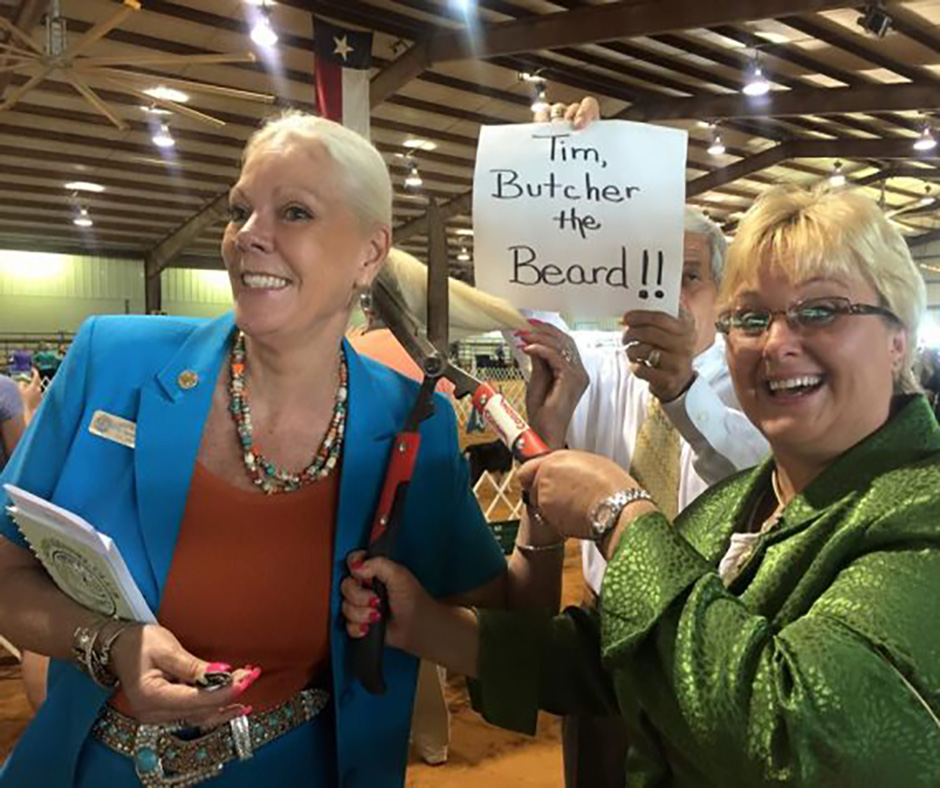
Southern Handlers Charity League: It’s All in the Family
Jill Bell, former professional handler, now working as a superintendent with Onofrio, joins me to talk about the good work of the Southern Handlers Charity League.
Created in 2001 by a group of handlers in response to a death in the dog show family, Southern Handlers Charity League (SHCL) raised money to help with funeral costs. In the intervening 17 years, the non-profit has helped all kinds of people in the purebred dog community, Bell said.
Potlucks and raffles
Owner handlers, photographers, judges, and anyone in the sport, Bell said, have been assisted by the organization. The group raises funds through potlucks, raffles, and creative events like the “Butcher the Beard” contest in which Onofrio’s own Tim James agreed to shave his renowned beard for charity.
“If there is a need, we help out,” Bell said. They have donated to hurricane victims from Katrina through Harvey. “We ask nothing in return. Every single penny goes to charity.”
Centered in Texas and the southern region, SHCL is proudly supported by the dog show superintendents, professional handlers and vendors.
“Dog show people are the most dysfunctional family you’ll ever belong to,” Bell said. “We fight amongst ourselves, but let somebody need something, it’s like a pack of bees… It’s what we do.”
Funding the Future
 Their current undertaking is massive. They have joined forces with Florida handlers and are sponsoring three different huge projects in Orlando, Fla. during the week of the AKC National Championship.
- A clothing exchange and shopping spree opportunity specifically for junior handlers, with clothing available to all exhibitors for purchase. A donation fund has been established to provide juniors with coupons to shop free if they need assistance. This massive shopping opportunity will be staged at the Juniors Benching area, courtesy of AKC and Michael Canalizo. Clothing will be available from Tuesday to Saturday, with new items arriving daily. Proceeds will be divided between two different junior showmanship scholarship funds.
- A “chuck a duck” 50/50 competition to benefit the Onofrio Junior Achievement Challenge Scholarship on Friday.
- An enormous raffle, with the drawing on Saturday.
“This is an opportunity for everybody to work together for the betterment of the kids and the fancy,” Bell said.
Visit SHCL Facebook page for more information and to purchase raffle tickets online: https://www.facebook.com/Southernhandlers
Tip of the Week:
Remember to listen to Allison Foley from the Leading Edge Dog Show Academy on how to “carve the picture” of the ideal dog while trimming.
240 – Human-animal bond will *literally* save your life
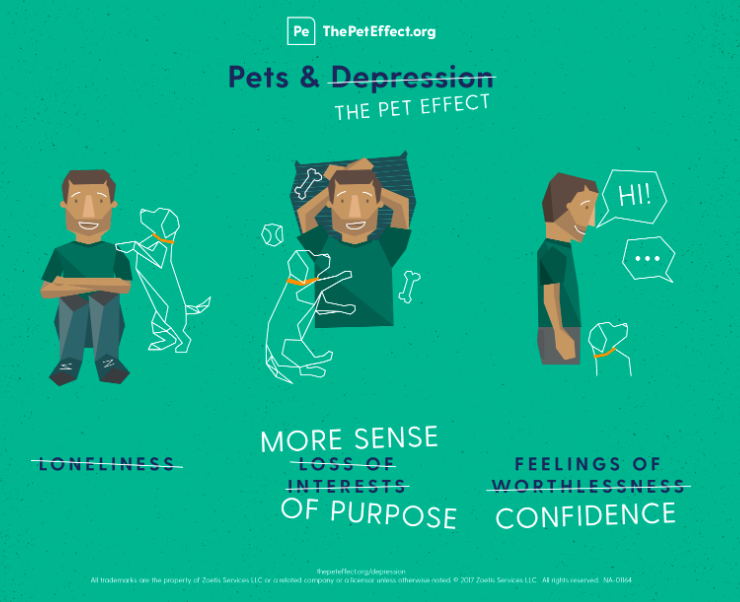
Human-animal bond will save your life
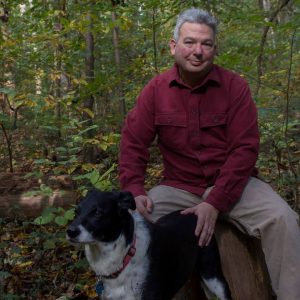
Steve Feldman, Executive Director of HABRI, with his dog.
The human-animal bond developed over the course of 30,000 years in which people and dogs co-evolved, according to Steve Feldman, executive director of HABRI.
The Pet Effect Campaign, led by HABRI-founder Zoetis, is a multi-pronged campaign aimed to introduce pet owners to the health benefits of the human-animal bond, and to understand how important their veterinarians are for happy, healthy pets.
HABRI has assembled scientific evidence that demonstrates how pets improve heart health; alleviate depression; increase well-being; support child health and development; and contribute to healthy aging. In addition, companion animals can assist in the treatment of a broad range of conditions from post-traumatic stress to Alzheimer’s disease to autism spectrum disorder.
From therapy dogs for autistic children to service dogs for PTSD veterans, research is proving that dogs lower people’s bad neurochemicals and increase their good ones, Feldman added.
Pets are the fountain of youth
Dog people have always known dogs are the fountain of youth, but Feldman cited a study from Sweden that looked at three million people over the course of 12 years. It showed that people who own pets live longer. To the point that doctors are beginning to actually *prescribe* getting a pet to improve a patient’s health.
“Breeders are responsible for healthy dogs, but they are also responsible for healthy people, families and even a healthier society,” Feldman said.
One of HABRI’s current studies is examining the potential role of pets in preventing teen suicide. As Feldman said, what the dog community knows anecdotally, they are working on proving empirically.
HABRI, which was founded by Zoetis, has created a promotional campaign to talk about this called The Pet Effect. The shareable videos and graphics are powerful outreach to the public about the importance of our pets.
239 – New School Programs Provide Kids with Facts and Fun
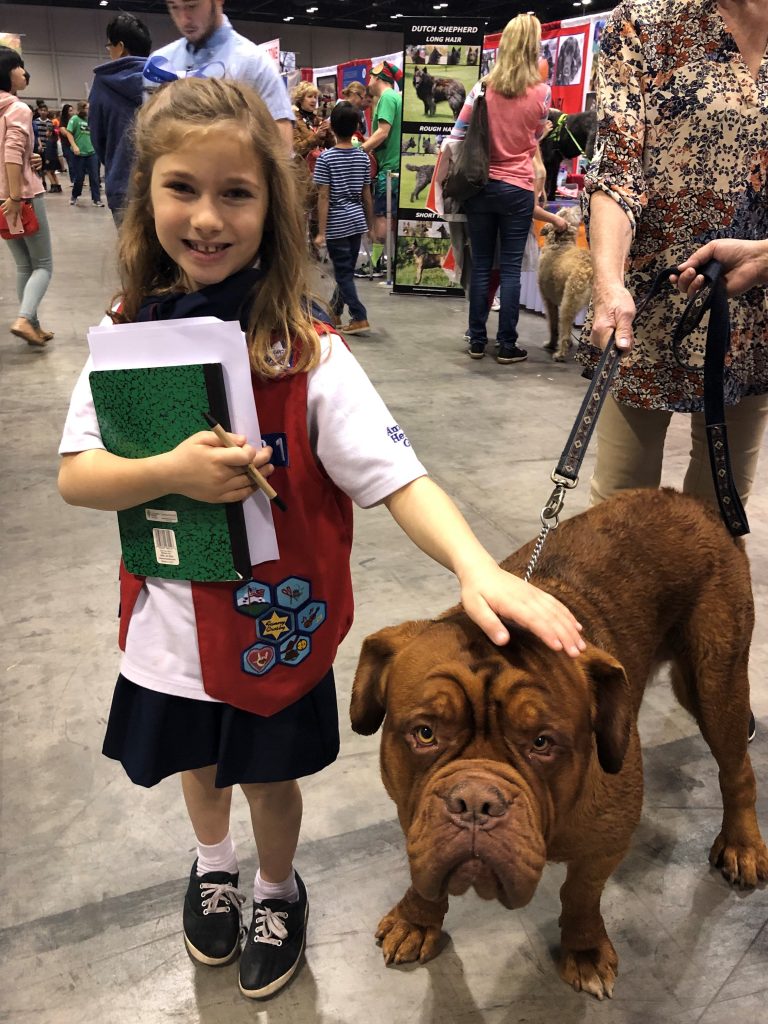
Public Education school programs reach out to the future
 Ashley Jacot, recently promoted to Director of Education at the American Kennel Club, joins me to talk about the exciting school programs that AKC has developed in the last year.
Jacot, a former school teacher, was hired in 2017 to lead the development of new programs for schools as an outreach to the public. She and her team have developed 10 new programs in 18 months.
“We are providing kids with a way to think about dogs,” Jacot said. “We’re giving them an alternative narrative to the “adopt don’t shop” mentality. They are learning the truth about purebred dogs and what we do. We provide facts and give them an amazing experience. They walk away and they have a different feeling about purebred dogs and AKC than they did when they got there.”

The Public Education department is continually producing lesson plans for K-12 that are aligned to national curriculum standards. Jacot said that today’s testing requirements mean they have to provide what teachers need. The lesson plans are rigorous, but reachable, she added.
“This really lets us open the curtain to the world of purebred dogs,” Jacot said. “People don’t know this world exists or they misunderstand what it is.”
Through these programs, AKC has made connections in communities, Jacot noted.

Learning about purebred dogs and dog shows.
“The running theme we found is the opportunity to make a lasting impact on students, teachers, families and entire communities,” Jacot said.
Lesson plans might include something like “compare and contrast breeds for tall and short in kindergarten. Compare the height of a Bichon to a Corgi, which taller by inches, in 3rd grade. And in an 11th grade lesson plan, the students are taught to use a Punnett square to learn inheritance of coat color,” Jacot said
Some of the programs implemented in the last 18 months include:
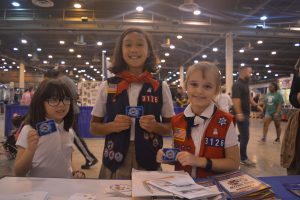
AKC Patch Program participants.
AKC Patch program. Public Education is hosting a program at AKCNC for the second year. Jacot said they had to close registration, with 446 children registered over two days. “We get to share the excitement of the dog show with these kids,” she added.
Art contests such as the one hosted by Portland’s Rose City Classic are also a huge hit with the community.
“We have so much work to do, we need more hands,” Jacot said. “We are growing and serving the fancy.”
Stick around for Allison Foley’s Tip of the Week from the Leading Edge Dog Show Academy about what and how to use stripping tools.
238 — The friendships and journeys of a successful owner-handler

Sealyham Terrier owner-handler at the 2018 Westminster Kennel Club
Olga Forlicz and Leslie Jaseph, Sealyham Terriers breeders, share stories about the international friendships and journeys of a successful breeder owner-handler.
Details matter
Jaseph shares her experience showing in the hyper competitive East Coast terrier groups, many of which are dominated by top professional handlers.
“You have to go in the ring with your dog trained and prepared like any other person in the ring,” Jaseph said. “You have to understand preparation and trimming. You can’t make an excuse. You and your dog have to be prepared.”
No excuses
Jaseph’s highly successful bitch was entered at Westminster Kennel Club, but she didn’t bring her because she wasn’t quite back to top condition from her litter of puppies.
“You have to have high standards,” Jaseph said. “Never bring your dog out unless you feel it can win.”
US versus Europe
Forlicz, who lives in Poland and is the breeder of Jaseph’s competitive bitch, compared European and American shows. She said that the general level of grooming and overall presentation is much higher here in the US.
“In Europe we have famous breeders, but not as many professional handlers,” Forlicz said. “It is maybe easier for the average person to compete at a high level.”
Forlicz added that while there are more shows in the US, Entries are typically much larger in Europe.
International partnership
Jaseph approached Forlicz to purchase a dog because she was “looking for something tightly bred, that phenotypically was a good match for anything in the US.”
Breeders should “Get out your ruler and measure the dog,” Jaseph said. “Compare it to standard, break it down.” She also noted that within style variations, balance is the key in the breed.
Her general assessment of the breed, although it is numerically threatened worldwide, is that overall coats and movement are good. Her observation is that breeders should pay attention to tailsets and the length and strength of heads.
The full-length video interview also is available at the Pure Dog Talk YouTube channel, here: https://www.youtube.com/watch?v=6qr5CEfpFIk
237 — DNA Genetic Testing Prevents Bottlenecks, Promotes Diversity
DNA testing can provide useful information for all breeders
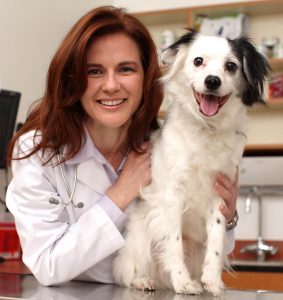
Angela Hughes DVM PhD, Veterinary Genetics Research Manager, Wisdom Health
Testing our dogs’ DNA provides details on everything from ancestry in mixed breeds to disease mutations and genetic diversity in purebred dogs. Dr. Angela Hughes, Veterinary Genetics Research Manager at Wisdom Health, talks about the different types of DNA genetic testing.
“A breed is a specific combination of alleles,” Hughes said. “And 99 percent of the DNA in a Great Dane is the same as a Chihuahua. It’s that one percent that is so important.”
DNA Panel tests, Hughes said, test for genetic mutations. The Wisdom Health Optimal Selection panel tests for 180 different specific diseases that are broken out by which are identified and correlated within each breed.
Focus on genetic diversity.
“Studies show that losing genetic diversity causes loss of reproductive health, increased disease incidence, even decreased hunting ability,” Hughes said.
Purebred dog breeders are succeeding with test and replace breeding theories, Hughes believes. She referenced a study of dogs in the U.S., mixed breed and purebred, in which of all diseases tested for, 34 disorders were found only in mixed breeds, not in purebred dogs.
While Hughes acknowledges that “you can have healthy highly inbred dogs,” she notes that breeders have to be incredibly selective to achieve that.
“The average breeder doesn’t have the time and resources, the number of dogs necessary or enough information to be that highly selective,” Hughes said.
Genetic diversity in dogs will be different even in full siblings, Hughes said. For full littermates, on average, about 50 percent of the DNA is the same. This power of DNA testing, Hughes noted, is that it can help identify which of two dogs, similar in quality and pedigree, is the best match in terms of genetic diversity. Simple pedigree analysis and COI (coefficient of inbreeding) can’t provide that information.
Skip the Bottleneck
The diversity testing also helps avoid bottlenecks in a breed’s gene pool due to popular sire syndrome. She defines this as any sire with more than 100 puppies produced. In an example based on studies of Golden Retrievers in England, in a gene pool of six generations, with 31,259 individual animals represented, the testing revealed only 67 genetically unique individuals.
“DNA testing doesn’t tell you who to breed, it tells you who to breed to,” Hughes reiterated. “This is the last piece. Do all the other testing – conformation, temperament, health, function – then do this.”
Importantly, Hughes also noted that breeders should be careful to not lose the “essence of the breed” in search of genetic diversity.
“You want to move the needle,” Hughes said. “Just shift the curve in the direction of diversity.”
https://www.optimal-selection.com/
164 – Busting the Genetic Testing Myths: Dr. Jerold Bell|Pure Dog Talk
Stick around for input from Allison Foley at the Leading Edge Dog Show Academy about tips for successfully using a flat iron to groom drop-coated dogs.
And take a minute to stop by https://blog.feedspot.com/dog_podcasts/ and check out the top 15 dog podcasts! Of which we are one!
236 – CHF Research Examines Neurological Diseases
Epilepsy is the number one neurological problem in dogs
Dr. Diane Brown and the Canine Health Foundation are doing battle with neurological disease, specifically epilepsy, in an effort to improve the lives all dogs, and their people.

Dr. Diane Brown, CEO, AKC Canine Health Foundation.
“Epilepsy is a complex disease,” Brown said. “It presents in different ways. It is present in all dogs, mixed breed and purebred, and in people.”
Epilepsy is a catch all term applying to different breeds, different ages, different causes of seizures. “Idiopathic epilepsy” in layman’s terms means, “we don’t know why your dog is having seizures, but we’re calling it epilepsy.”
Brown notes that seizures can be caused by clearly genetic cases, toxicity, structural defects, inflammatory diseases, brain tumors and other underlying issues. Even more terrifying, up to one-third of epilepsy cases are noted to be resistant to current medication
“We really wanted to make a concerted, multi-year effort trying to address epilepsy in dogs,” Brown said. She added that the research effort is focused on two broad areas: genetics and developing new therapies for the disease.
Break throughs and new studies
A CHF funded grant has already identified a new dosing option for dogs with seizures causing an emergency situation.
“It’s been 20 years since a new drug was identified that can be used in an emergency situation,” Brown said.
Alternatives to standard therapies are also being studied. Brown highlighted a study into the effects of treatment with CBD oil in a large clinical trial with rigorous scientific standards. The research is the first of its kind in the country, and CHF was the first to invest in this exciting effort.
As other studies investigate gene identification, the most recent breakthrough was identifying a form of epilepsy in juvenile Rhodesian Ridgebacks that is directly related to pediatric epilepsy in humans.
While the goal is to develop a DNA test for epilepsy, Brown notes that genetics are complicated and it’s rarely as simple as identifying one gene to breed out of a population.
An even more fascinating study is examining the role of the intestinal tract, the so-called gut-brain axis, that may have influence on neurological health
“We are for the health of ALL dogs. It can create a false impression that purebred dogs are less healthy, but the reality is, they are the ones who contributed to the funding to solve the problem,” Brown said.
Pure Dog Talk‘s interview with Liz Hansen on epilepsy research.
235 – Finding Common Ground to Grow the Purebred Dog Fancy
Common Ground Brings Everyone to the Table
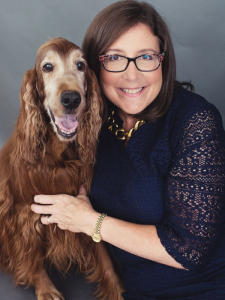
Debra Hamilton helps clients work through high stakes, high intensity situations through the use of mediation.
Attorney Debra Hamilton finds common ground in the most challenging situations. Whether in interpersonal, transactional, public or even adversarial relationships, the solution, Hamilton suggests, is simple. Just listen!
Can’t we all just get along?
“We are so passionate as a sport that we sometimes can’t find common ground on which to speak with people who disagree with us,” Hamilton said. “How do we carry on a conversation that helps the greyhounds, for example?”
Stop, drop and roll
Hamilton has an excellent and easy to remember format for working through difficult conversations.
- *Stop* talking and listen. Keep yourself grounded. Breathe a lot. No name calling. Pause before talking or typing.
- *Drop* the need to be right. You are right, this is how you feel. Nobody can tell you you’re wrong. You’re just listening to someone else talking about what they think is right. If you listen, you might find something to support your point.
- Let what they say *roll* off your back. Don’t wallow in the mud. When people are angry, if you engage with them, they aren’t going to give up the ghost. If you listen to understand, they may come back after thinking and acknowledge your points.
- Listen to understand, not reply. Think about consequences of all sides of decision.
“It’s important that everyone has the opportunity to talk. If everyone feels as if they are heard, respected and understood, a solution is going to come out of it,” Hamilton said. In Colorado participants in a workshop “took legislation off table so they could have more conversation.”
Entrenched positions
In extreme situations, find a neutral party in the argument, Hamilton encouraged. Somebody with “no skin in the game.” Ensure a situation in which the parties are not simply for and against. The conversation needs facilitation in these instances.
“Animals bring out the most potent emotions in people,” Hamilton said. “They will go to the mat for their animals. Normal, sane people will take up the gauntlet and not listen to another point of view.”
For more information:
http://hamiltonlawandmediation.com/
https://www.goodreads.com/book/show/26545822-nipped-in-the-bud-not-in-the-butt

Check it out!!! Pure Dog Talk is getting some recognition, even in the real world!! TALK ON!
234 – Raising Support for the K9 Reproductive Specialists of the Future
Supporting reproductive specialists for the future of our dogs
Reproductive specialists in veterinary medicine are known as Theriogenologists. In a world where spay/neuter is the “popular” approach to veterinary care, the Theriogenology specialty was on the verge of collapse. The American Kennel Club and Canine Health Foundation have joined forces to support these “OB/GYNs of the dog world.”
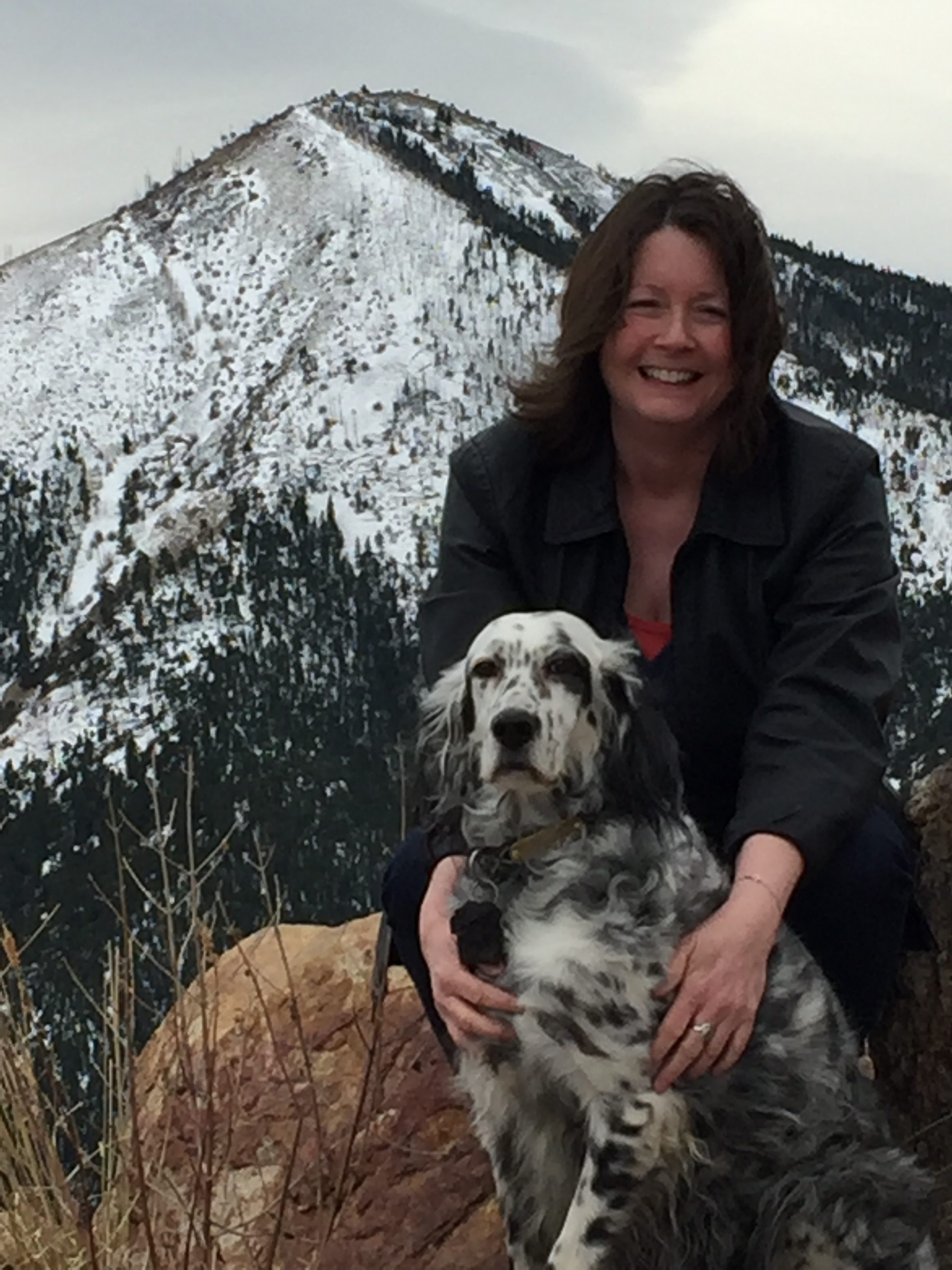
Dr. Diane Brown, CEO and Chief Science Officer of the Canine Health Foundation.
Many breeders know the frustration of trying to find a modern veterinarian who will work with them in developing their breeding programs. Dr. Diane Brown, CEO of Canine Health Foundation shares her insight on this forward-thinking collaboration to promote and encourage canine reproduction veterinary specialties.
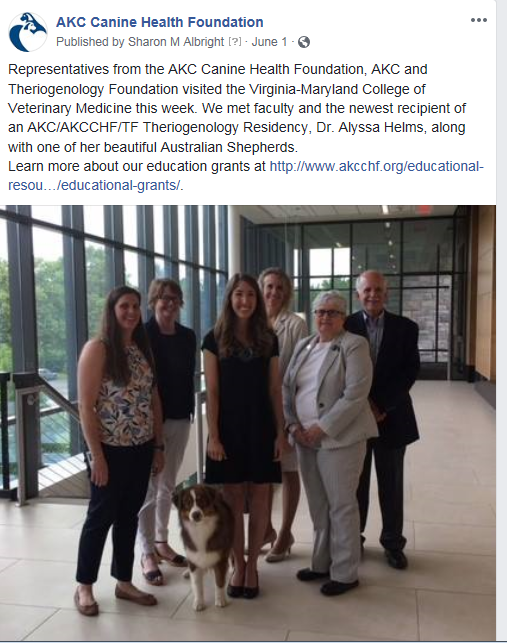
Recipient of the AKC/CHF Theriogenology Residencies
“There are a limited number of board certified practitioners in Theriogenology,” Brown said, “And most of them are in the large animal industry.”
The AKC/CHF Theriogenology Initiative grew out of a collaboration between AKC and the Theriogenology Foundation to provide funding to vet schools to train new practitioners in reproductive medicine for dogs.
Brown noted that many veterinary schools have not emphasized reproductive medicine for companion animals and students have expressed less and less interest in the field.
“Schools are teaching vet students to spay and neuter and sending them out into the world,” Brown said.
Getting out Front
The Theriogenology Residency Program, developed by CHF, enables AKC and the purebred dog fancy to get in front of the curve, encouraging and supporting vets who want to train for specialized work in therio.
“We’re already seeing an increase in dialogue, raising of awareness, involvement of breeders,” Brown said. “They’re all coming together. It’s bringing people around the same table to talk about this. Local breeders are working with students. Residents are working with local breed clubs.”
Ongoing residencies since 2016 have been awarded to universities through a competitive process in which grant proposals submitted. The proposals undergo a rigorous scientifically reviewed process competing for this money.
A 501c3 non-profit, CHF enables purebred dog enthusiasts to support this program directly by donating and designating the Theriogenology Residency program. Literally 94 cents of every dollar goes to actual research programs that meet the mission, Brown said.
AKC Canine Health Foundation:
Article in Dog News by Sue Copeland about the “theriogenology residency program”:
http://ebooks.dnmagazine.us/volume_03/issue_08/dnm.html#p=52
Article on most recent residency awarded at Virginia Tech:
https://vtnews.vt.edu/articles/2018/09/vetmed-theriogenology-2018.html
CHF/Today’s Breeder article highlighting the 2016 class of residents:
http://www.akcchf.org/educational-resources/library/articles/a-dog-breeding-roundtable.html